
Literary translation facts you probably didn’t know, from Harry Potter to the Little Prince
 17 November 2015
When Oxford mathematician Charles Lutwidge Dodgson penned Alice’s Adventures in Wonderland under the pseudonym Lewis Carroll, he could never have predicted its success. First published on 26th November 1865, the whimsical adventure has become one of the most iconic examples of children’s literature. 150 years on, Carroll’s legacy lives on with a big screen Disney adaptation of the Wonderland sequel Through the Looking Glass in post-production.
Alice in Wonderland is one of the most widely translated books with 174 different language adaptations. While words easily translate, imagination does not. Interpreting the enchanted land of curious creatures and oddities into hundreds of different tongues created some interesting variations. In a Provençal dialect, the phrase for “he’s crazy” literally means “he broke the marble” and so the Mad Hatter became the Marble Mason. In the Japanese edition, Alice doesn’t argue with the Mad Hatter because it is frowned upon to disrespect one’s elders.
Other famous literary works have faced similar translation problems:
Don Quixote by Miguel de Cervantes
Miguel de Cervantes is credited with producing the first modern European novel to contain a fictional narrative in prose. To give it its full title, El Ingenioso Hidalgo Don Quijote de la Mancha, more commonly known as Don Quixote, has been translated into 48 languages. Cervantes is so closely tied to Spanish that it is often referred to as “la lengua de Cervantes”.
Cervantes found himself in the crown jail of Seville twice between 1597 and 1602. It was during this time that Cervantes is believed to have first thought of the story that would become Don Quixote.
The very first English translation of Don Quixote didn’t quite exemplify the words of Cervantes. For instance when Cervantes idiomatically used the word “dedos” meaning “inches”, the English version took “dedos” too literally and translated it as “fingers”.
Harry Potter by JK Rowling
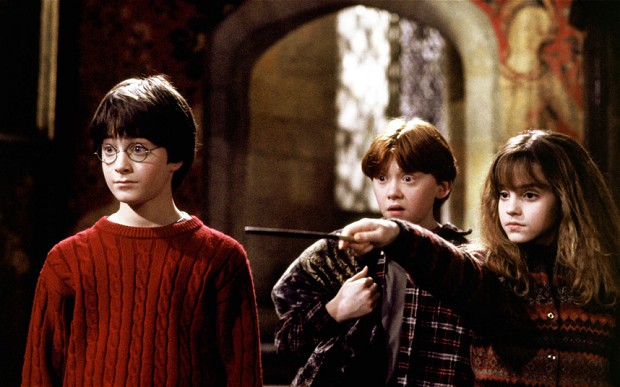
From one magical world to another, JK Rowling first introduced the Harry Potter universe in 1997 with the release of the Philosopher’s Stone. It has since gone on to become a global phenomenon with seven novels, eight films, several video games and a spin-off film and West End stage play in production. The value of the Harry Potter brand is estimated to be $15 billion.
The Harry Potter series has been translated into 68 languages. As with Alice in Wonderland, the magical elements of Hogwarts were not so easily translatable.
Many of Rowling’s inventions had names with a play on words. The Pensieve for example was an object used to review memories. The word is a portmanteau of the words “pensive”, an adjective to describe being in dreamlike thought, and “sieve”.
The play on words doesn’t quite translate to foreign languages and so had the Pensieve had to be changed. In German it became Denkarium, from the verb denken (to think) and aquarium. In Norwegian it became Tanketank which translates as thought-tank. In Swedish it became Minnessåll which literally translates as memory’s sieve.
The Little Prince by Antoine de Saint-Exupéry
The Little Prince is a poetic tale in which a pilot stranded in the desert meets a young prince fallen to Earth from a tiny asteroid. Though styled as a children’s tale, the story is philosophical and includes social criticism about human nature and relationships. Written by French author Antoine de Saint-Exupéry, the novella has been translated into more than 250 languages and dialects.
Despite being published in 1943 in French and English, Saint-Exupéry did not survive to see his work published in his own country. The book was made available in the United States, but due to his controversial political views, his works were not easily available under the Vichy regime until the liberation of France.
To this day his death remains a mystery. On a 1944 reconnaissance mission for the French Air Force his plane disappeared and he was never seen again. The author’s body was never recovered. In 1998 a fisherman made the unusual catch of Saint-Exupéry’s silver identity bracelet off the coast of Marseille. In 2000, the remains of Saint-Exupéry’s plane were found by a diver in the same place.
The editorial unit
























Facebook
Twitter
Instagram
YouTube
RSS