
The Origin
 6 October 2022
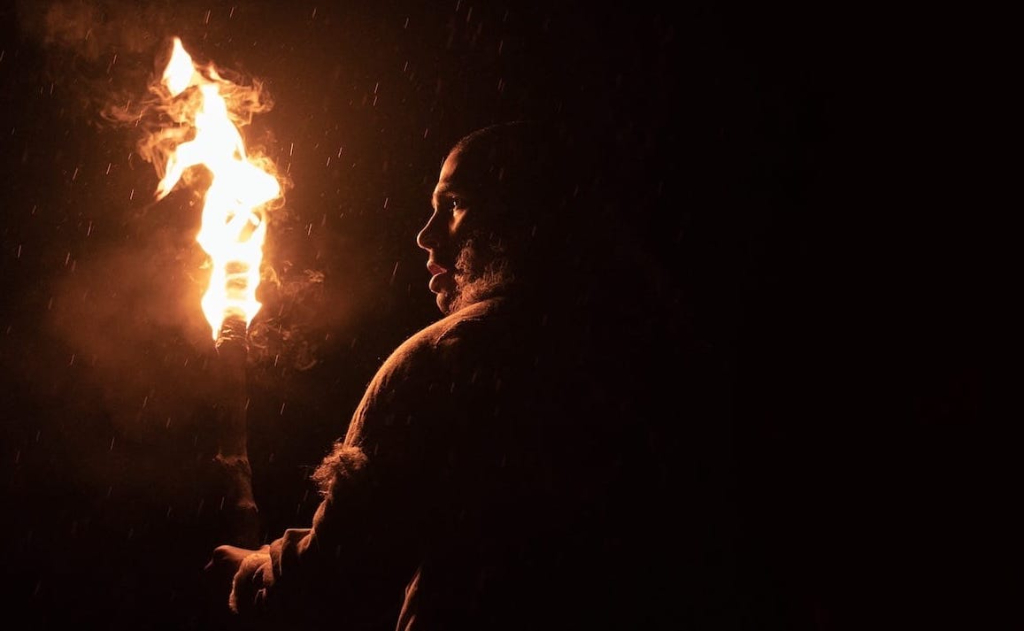
Familiar horror preoccupations are transposed to the unfamiliar cinematic landscape of the palaeolithic age in Andrew Cumming’s intriguing, atmospheric debut. The Origin opens with the scene of a small, close-knit, stone-age tribe huddled around the campfire, with its elder, Odal (Arno Luenig), telling stories of odysseys characterised by hardship and futility. Here is the first thread that connects this prehistoric family to the audience of a film whose philosophy ruminates on the paranoia, brutality and tribalism that is as inherent in us now as it was 45,000 years ago; like tribe leader Adem (Chuku Mudu), his pregnant partner Ave (Iola Evans), Gierr (Kit Young), adoptee of the group, Beyah (Safia Oakley-Green) and Adem’s son, Heron (played by female actor Luna Mwezi), we are huddled together, basking in the power of storytelling, a power which has not diminished since the dawn of time.
The narrative concerns the tribe’s expedition to a land which is subsequently found to be barren. Not only is the land barren, but it is already settled upon by a mystery predator, one which Odal is convinced is a demon stalking the realm of the living. Every day grows more and more tortuous as the distance between them and their last meal grows ever further, and the desperation of their situation grows more existential. Evocative, growling sound design, angular shots which almost creak and cinematography which shrouds the land in the kind of murky mist, which leaves to the imagination the beasts which could be lurking within its protection, paint a desolate picture of paranoia and despair.
The Origin draws upon the “us and them” trope of Wes Craven’s The Hills Have Eyes in its depiction of a supposedly savage, unrelenting predator which lurks in the caverns of the mist-shrouded mountains, a predator which the group fears because they don’t understand it. The production location, shot in the Scottish highlands, intentionally or otherwise, actually calls back to the Scottish legend of Sawney Bean upon which Craven’s landmark horror is based. This is perhaps the touchstone through which the moral and social implications of The Origin can be best understood. It is a film about polarisation and othering, an inherent reflex which creates an enemy when faced with something we do not understand. Its title and setting suggest the perpetuity of these tendencies. But far from being nihilistic, it feels as if Cummings is merely holding up a mirror that reflects the dark side of our instincts, saying, “Come on, it’s been 45,000 years. Should we not have learned our lesson by now?”
The final act brings these questions to the fore in a thrilling, pulsating sequence which follows a frustratingly paced, albeit haunting, first two acts in which many twigs are snapped by footsteps, followed by rapid camera pans to reveal nothing but the great void. Pacing problems and repetitive devices aside, it does amount to a hauntingly believable experience, with the consultations of archaeologist Dr Rob Dinnis and linguist Dr Daniel Andersson – the latter having developed an original language for the dialogue – providing an immersive edge of authenticity.
Like the recent A24 outing Bodies Bodies Bodies, The Origin shows that humanity’s paranoia and ignorance are its own worst enemy, and Cumming should be given credit for trying to put philosophical cinematic musing back where it belongs: in the dark heart of horror.
Matthew McMillan
The Origin does not have a UK release date yet.
Read more reviews and interviews from our London Film Festival 2022 coverage here.
For further information about the festival visit the official BFI website here.








Facebook
Twitter
Instagram
YouTube
RSS