
After the curtain call: where London’s autumn evenings go once the theatres empty
 19 October 2026
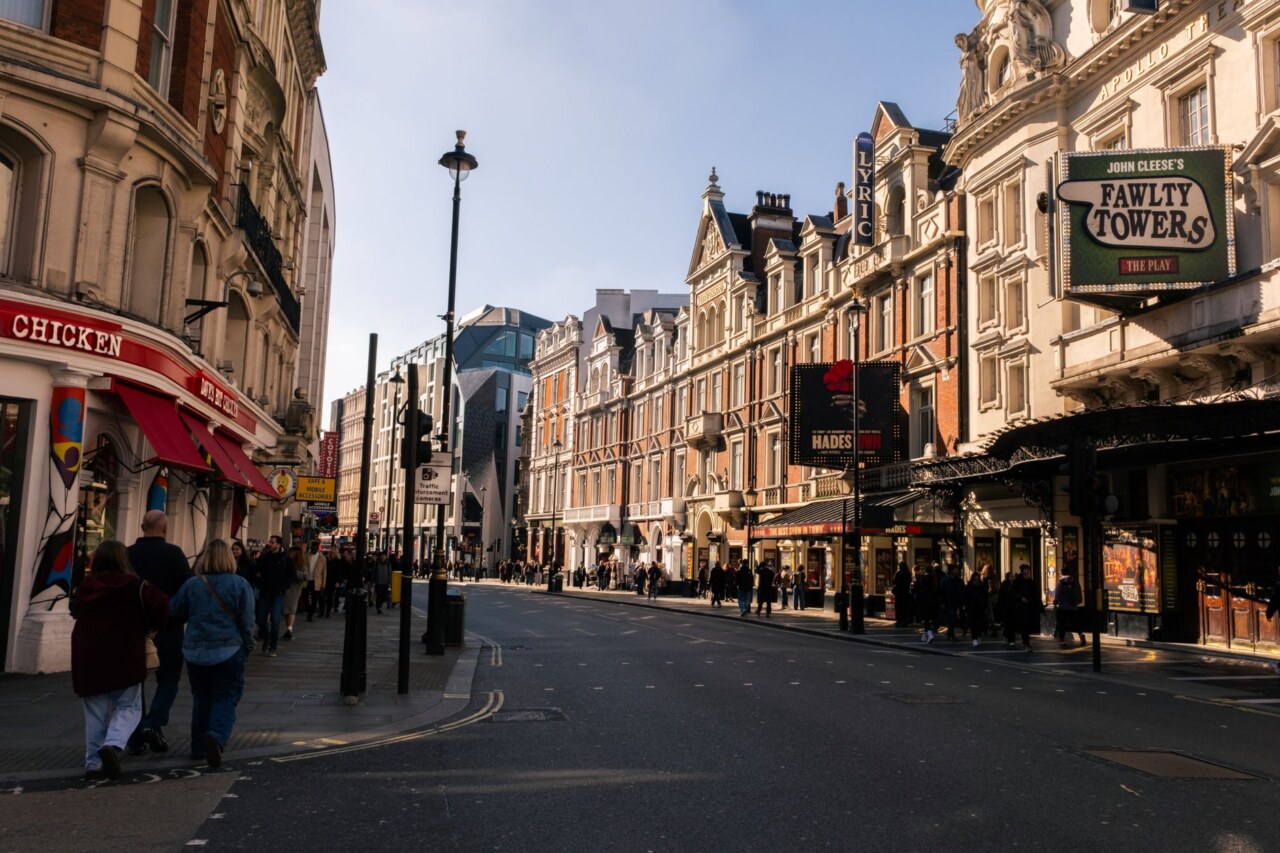
London rarely lets October pass quietly, but this year the diary looks unusually crowded. The 70th BFI London Film Festival runs from 7 to 18 October, opening with Simon Stone’s Elsinore at the Royal Festival Hall, and Musical Con brings its fifth anniversary weekend to ExCeL on 17 and 18 October. In the West End, Christine Baranski and Richard E Grant are camping it up in Hay Fever at Wyndham’s until 12 December, a Coward revival The Upcoming’s reviewer found “brimming with wit”. Over in Kensington, the Design Museum is lining up an autumn exhibition on the making of LAIKA’s Wildwood.
What Londoners do after the curtain falls is its own category of evening. The show at Wyndham’s ends late, and plenty of theatregoers now carry the next part of the night home on the Tube with them. The journey has a particular kind of quiet industry about it: restaurant bookings for the weekend, messages that went unanswered during the second act and, for some, a game on the phone before bed. For that last group, there is a regularly updated guide to the best casino sites in the UK that compares newer platforms with long-established names on design, account verification, age checks and safety features, which makes it a useful starting point for anyone still deciding where to play once the train pulls away from Leicester Square.
Why the newcomers feel different
Anyone who last looked at online gaming platforms around 2020 would notice the change quickly, and very little of it is down to the platforms themselves. UK rules for online games have been tightening in stages for years, and the brief history matters because each layer shapes what a newly launched platform is allowed to offer.
Game design was reined in first. Features built to keep players tapping without a pause have been stripped back, and clearer labelling now sits alongside plain guidance on what game age ratings mean, together with an end to the jingles and flashing effects that used to celebrate trivial moments as though they were milestones. Stricter expectations on age verification followed, so platforms now have to confirm a player’s age before a game can be opened, rather than afterwards.
The most recent changes focus on time. Many platforms now show a clear session clock, remind players how long they have been playing and offer optional breaks that pause an account for a set period. Industry standards also expect anything labelled a “time limit” to actually stop play when the limit is reached, which closes off a piece of creative wording that some platforms had leaned on in the past.
The practical upshot for a new entrant is that it cannot compete on louder games or tougher small print. It has to compete on the quality of the games themselves, on how smoothly sign up and verification run and on how easily players can step away for a break. Clean menus, honest age gates and settings that are simple to find were rare five years ago. Now they are close to the minimum expected.
The West End stays up late
For all the movement onto phones, the physical late-night venue is still woven into central London’s map in a way most cities can’t match. Arcade bars and games lounges sit within a few minutes’ walk of Wyndham’s, and Leicester Square itself is ringed with places that keep their lights on well after midnight. Head west towards the Edgware Road and late-opening restaurants carry on trading, while the Mayfair clubs keep their own quieter hours.
What makes these rooms work as part of an evening is rarely the games. Several of them run restaurants and bars that stay open long after the pubs have called time, which fills a real gap in a city still grumbling about early closing. For plenty of visitors the games are almost incidental: a late steak or a cocktail after a show is reason enough to walk through the door, and nobody is obliged to play anything.
The online and physical versions now overlap more than they used to. Some venues stream tournaments and live game nights from their own floors, so a table passed on the way to a screening might be the same one someone is watching from a sofa in Walthamstow.
One ticket among many
The sensible way to think about any of this is the way Londoners already think about a night at the theatre. Decide how long the evening should last before leaving the house, and when that time is up, the night is over. A gaming session belongs in the same column as a gallery late or a gig, as something chosen for fun and kept to a sensible length.
That framing is built into the tools as well. Many platforms now prompt new players to set a time limit when they first sign up, and it takes little effort to choose one that sits comfortably alongside the rest of a weekend’s plans and still leaves room for a decent night’s sleep.
As it happens, the cheapest seats for Hay Fever start at £85, and weekend passes for Musical Con start at the same price. It is a handy benchmark for planning a weekend. If a quiet half hour of gaming after the show would stretch into the small hours, a second trip to the West End is probably the better use of a Saturday night.
The editorial unit























Facebook
Twitter
Instagram
YouTube
RSS