Stones for the Rampart

- 1
- 2
Duran Duran at the O2 Arena
Selina Begum
- 3
George Michael: The Faith Tour
Antonia Georgiou
- 4
- 5
Merry Christmas Aubrey Flint
Andrew Murray





Meet Jessica Rosval, the world’s best female chef
Food & Travel Desk
Godzilla Minus Zero
Christopher Connor
Players Social launches free challenge zone The Box in Spitalfields
Food & Travel Desk





I Play Rocky
Umar Ali
Think of England
Antonia Georgiou
Stereophonics celebrate 30 years with new greatest hits album Tune!
The editorial unit





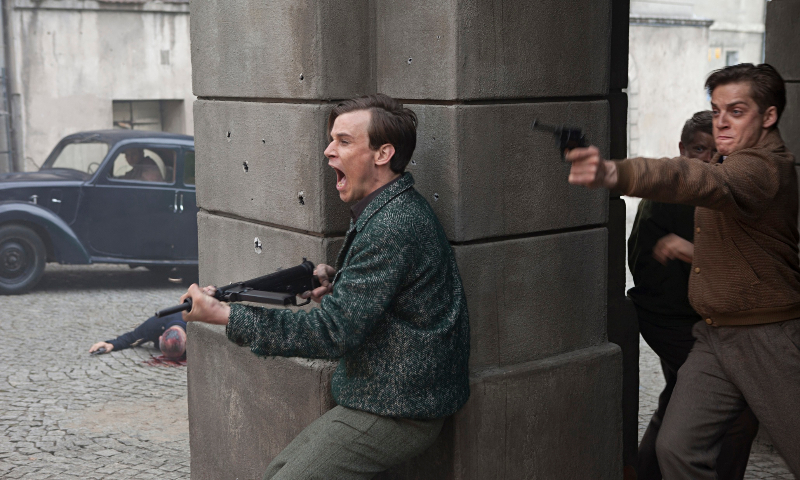
Based on the famous 1943 Polish novel of the same name, which itself was inspired by true events, Stones for the Rampart tells the story of three friends who join an underground resistance in their home city of Warsaw during the Nazi occupation.
Rudy (Tomasz Zietek), Sophy (Marcel Sabat) and Alek (Kamil Szeptycki) are part of a scout movement called the Grey Ranks, the aim of which is to consistently undermine the Nazis’ authority using a series of ragtag guerrilla tactics. They steal firearms, sabotage homes, avenge murders, plant traps and generally cause as much trouble as possible using any resources they can find. Things go awry when unit commander Rudy is captured by the Gestapo and the scouts conduct a plan to bring about his rescue.
Stones for the Rampart is well-acted, with Zietek and Sabat being the particular stand-outs. The filming and editing appears to be deliberately chaotic, which gives a sense of the urgency and intensity of the boys’ situation. It is, however, not an easy film to watch. It is violent, dark and bleak, and while the notion of courage is definitely explored, the story as retold here lacks a sense of true connection and depth. This could be down to the sheer number of characters we meet, their names and nicknames constantly interchanged or mumbled on the backdrop of movement, violence and chaos. There are glimmers of romance, which add a measure of hope, but again, the audience is not particularly invested due to the continued lack of depth.
There are some truly painful and touching moments around Rudy’s struggle, particularly one in which his mother comforts him with humour; these are the film’s strongest scenes, and credit where it’s due to director Robert Glinski.
While a film centred on Nazism is always going to be bleak, this theme provides opportunities to examine the full complexity of the human struggle. Sadly, this film misses the mark, and is most likely to slip into cinematic memory.
Erin Bassett
Stones for the Rampart is released nationwide on 17th April 2015.
Watch the trailer for Stones for the Rampart here: