
Is London safe for tourists in different areas?
 22 March 2026
London is generally safe for tourists, with low levels of serious violent crime. However, some areas – particularly busy central districts, nightlife zones and transport hubs – experience higher levels of theft and pickpocketing. Visitors who stay aware in crowded environments can explore the city with confidence.
London is one of the world’s most popular travel destinations, welcoming millions of visitors each year. The city offers iconic sights, historic landmarks, museums, markets, parks and a vibrant nightlife. Despite its global appeal, many travellers ask a similar question before visiting: Is London safe?
The short answer is that London remains generally safe for visitors compared with many other large international cities. Serious violent crime against tourists is rare and many people explore the city without incident. However, London is a busy, complex metropolis of more than nine million residents and thousands of visitors every day. Crime patterns differ widely between neighbourhoods. Some areas experience higher levels of opportunistic offences such as theft and pickpocketing, while others remain relatively quiet.
This guide explains the most common types of crime tourists should be aware of and highlights the areas that visitors should research before travelling to London.
What do London’s crime statistics show?
London’s crime statistics reflect its size, population and role as a major global hub. According to metropolitan crime data for 2025, theft and robbery remain the most commonly recorded types of offences. Theft and robbery accounted for around a third of all recorded crime in the capital, with violent crime, anti‑social behaviour and burglary making up smaller shares of overall figures.
Metropolitan Police statistics show that in the first half of 2025 Westminster recorded more than 41,000 crimes, the highest total in any borough in London. Camden and Newham also recorded high numbers of offences, with around 20,000 and nearly 20,000 respectively in the same period.
Visitors should be aware that overall crime figures can be driven by the very things that make London attractive: large crowds, busy shopping streets, transport hubs and nightlife districts. High crime rates in central areas often reflect the volume of people passing through, rather than elevated danger for visitors per se.
Central London and tourist hotspots
Tourist hotspots such as Westminster, Covent Garden, Soho and Oxford Street sit in central London. These areas draw millions of visitors annually and are generally busy and well policed. At the same time, they tend to report the highest number of crimes – not because they are inherently unsafe, but because they concentrate crowds and opportunities for opportunistic offences.
Westminster, for example, has a very high crime rate when measured per 1,000 residents. A detailed borough‑level analysis shows Westminster’s figure exceeds 460 crimes per 1,000 residents, far above the London average, largely because of high volumes of people and visitor activity.
The most common offences in busy central areas relate to theft from a person, pickpocketing and shoplifting. Mobile phone theft from pedestrians and bags in crowded locations has risen in recent years and remains a concern in the West End and similar districts.
For visitors, these statistics underline the importance of remaining alert in crowded streets, shops and transport hubs. Awareness of surroundings significantly reduces the likelihood of becoming a victim of opportunistic crime.
Is Camden safe for tourists?
Camden is a borough that combines historic markets, music venues and a lively nightlife scene. As a result, it attracts large crowds of day visitors and night‑time revellers. Crime data shows that Camden consistently ranks among the areas with higher crime totals in London, with theft being the most commonly reported category.
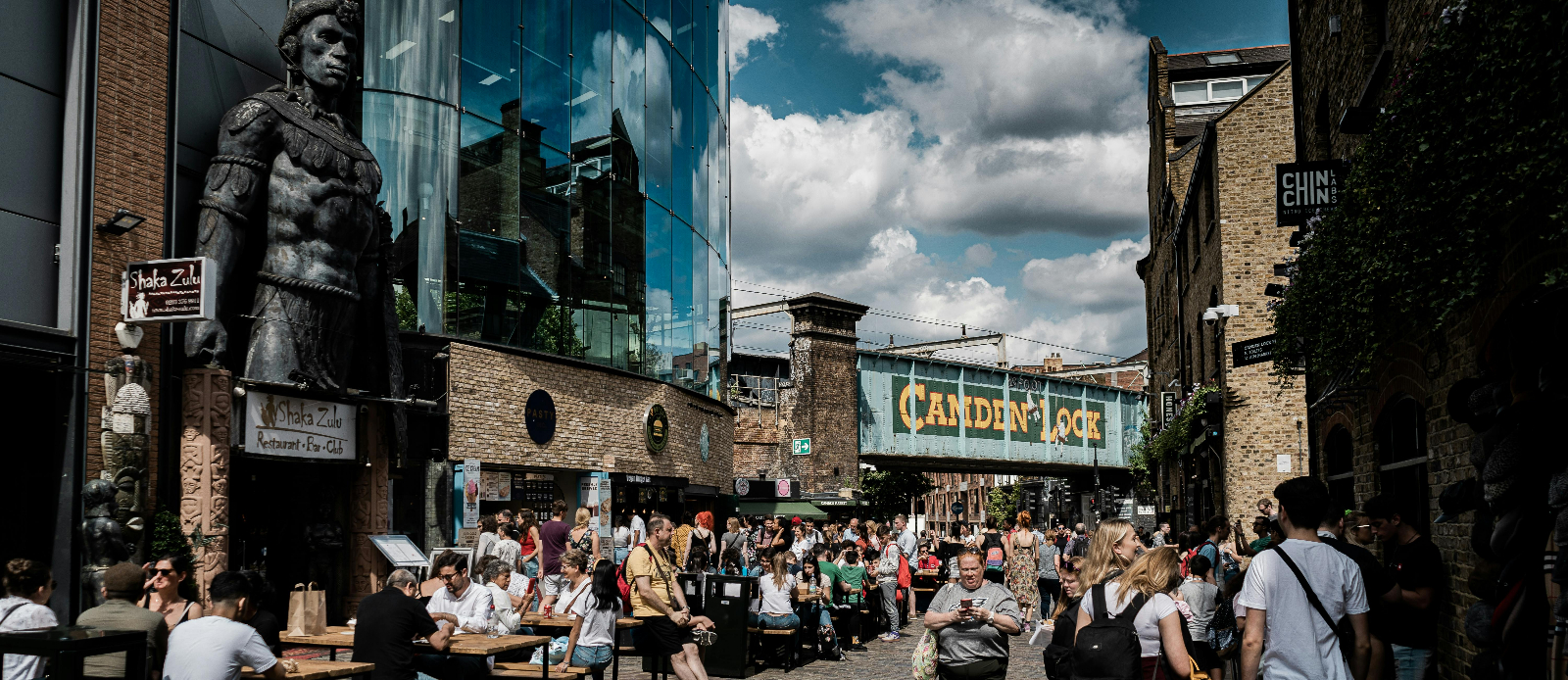
Pictured: Camden Town London, a vibrant entertainment district
Areas around Camden Town and the markets can be especially busy. Markets often attract tourists carrying valuables and cameras, and crowded conditions can make pickpocketing easier. Similarly, nightlife districts such as parts of Camden High Street can see higher levels of minor offences late into the evening.
These trends don’t mean that Camden is unsafe overall. Many streets and local attractions are perfectly safe. They do indicate, however, that visitors should take extra care with personal belongings and remain aware when exploring busy market areas and nightlife districts.
East London, transport hubs and urban density
East London boroughs such as Newham and Tower Hamlets also record relatively high crime figures. Newham’s reported crime total places it among the higher‑volume areas in London, reflecting its mix of residential communities, busy transport interchanges and large population.
Stratford, a key part of Newham, is home to major shopping centres, Olympic Park attractions and one of London’s busiest transport hubs. These factors make Stratford attractive for visitors, but they also mean that the area can be a focus for opportunistic theft.
Tower Hamlets and neighbouring boroughs feature a combination of commercial streets, markets and transport nodes where visitors should stay alert, especially during peak commuter hours and weekends.
Understanding where transport hubs and popular attractions coincide helps visitors plan their routes and be aware of busy environments where theft can be more common.
South London and riverside attractions
Southwark and Lambeth are two boroughs on the south side of the Thames that also attract many visitors. Southwark includes the South Bank, Borough Market and the Tate Modern area, while Lambeth is home to attractions such as the London Eye and Waterloo station.
Both areas report higher crime totals than the London average, partly due to their popularity with tourists and commuters. Reports from Lambeth include significant numbers of theft and violent offences recorded in entertainment and transport districts.
Again, this does not imply that these areas are dangerous for visitors. It does suggest that travellers should take standard safety precautions, such as watching personal belongings on busy streets and not leaving bags unattended at outdoor attractions.
Outer boroughs and lower crime areas
There are parts of London that consistently report lower crime rates, often located further from the city centre. According to borough‑level data, Richmond upon Thames, Sutton, Bexley and Merton are among the areas with some of the lowest recorded crime rates per 1,000 residents in 2025. These outer London boroughs tend to be more suburban and quiet.
In contrast, east London borough Newham – one of the most diverse areas in the capital, with large immigrant communities including Muslim immigrants – has among the higher overall crime rates in London. These patterns are generally linked to factors such as population density, transport activity and urban dynamics rather than any single demographic factor.
However, most visitors will spend the bulk of their time in central London and busy inner boroughs where attractions are concentrated. The data on safer outer areas is valuable mainly as a point of comparison, showing the wide variation in London’s local crime landscape.
Which areas of London should tourists be most careful in?
Visitors should be particularly aware in:
- Westminster and the West End
- Soho and nightlife districts
- Camden markets and entertainment areas
- Stratford and major transport hubs
- Busy shopping streets such as Oxford Street
These areas are not dangerous in a broad sense, but they are places where theft and pickpocketing are more likely due to crowds.
Common crimes tourists should know about
Across London as a whole, theft and robbery are the most frequently recorded offences. Metropolitan Police statistics for early 2025 show that theft accounted for a large share of recorded offences, including theft from a person and shoplifting, while violence against a person appeared as the second most common category. These figures illustrate patterns, not necessarily direct risk to any individual visitor.
Mobile phone theft remains prominent in busy areas, particularly in central zones with heavy pedestrian activity. High footfall and crowded streets increase opportunities for opportunistic thieves. Pickpocketing and bag theft are also common in markets, transport hubs and major shopping areas.
Violent crimes do occur, but serious assaults on tourists are rare. Most violent offences happen between residents or in situations disconnected from tourism.
By focusing on personal awareness – for example keeping valuables secure and avoiding distractions in crowded places – visitors can significantly reduce the likelihood of becoming a target.
Practical safety tips for visitors
Understanding crime data is one thing; staying safe in practice is another. Tourists can reduce their risk by adopting a few simple habits. Keeping phones and wallets in zipped bags or inside pockets makes opportunistic theft harder. Using well‑lit streets and sticking to busy thoroughfares after dark adds an extra layer of safety, especially in entertainment districts.
Planning travel routes in advance and taking public transport or licensed taxis rather than walking long distances late at night can also help. Transport hubs are busy but generally well monitored. Avoiding poorly lit side streets or parks after dark makes navigation simpler and safer.
These measures don’t guarantee that crime won’t happen, but they help visitors enjoy London’s many attractions while staying aware of their surroundings.
Final verdict
The city remains a major global destination where most travellers feel comfortable and secure. Serious violent crime is low by international standards, and millions of visitors navigate its streets each year without incident.
At the same time, London’s crime patterns are uneven. Central and busy areas with heavy tourism, nightlife and transport activity tend to record higher crime figures, often linked to theft and opportunistic offences. Tourists should research the areas they plan to visit, understand where crime is more frequently recorded, and adopt sensible precautions.
With awareness and preparation, visitors can enjoy all that London has to offer – from historic landmarks to vibrant neighbourhoods – with confidence and peace of mind.
FAQs about areas of london and safety
Which areas of London have the most crime?
Central boroughs such as Westminster, Camden and Newham report higher crime totals.
Are there dangerous areas in London for tourists?
Most areas are safe, but busy locations can have higher levels of theft.
Is central London safe at night?
Generally yes, especially in well lit and busy areas.
Which areas are safest for tourists?
Quieter residential boroughs and well policed central areas during the day.
The editorial unit























Facebook
Twitter
Instagram
YouTube
RSS