
Women on Trial
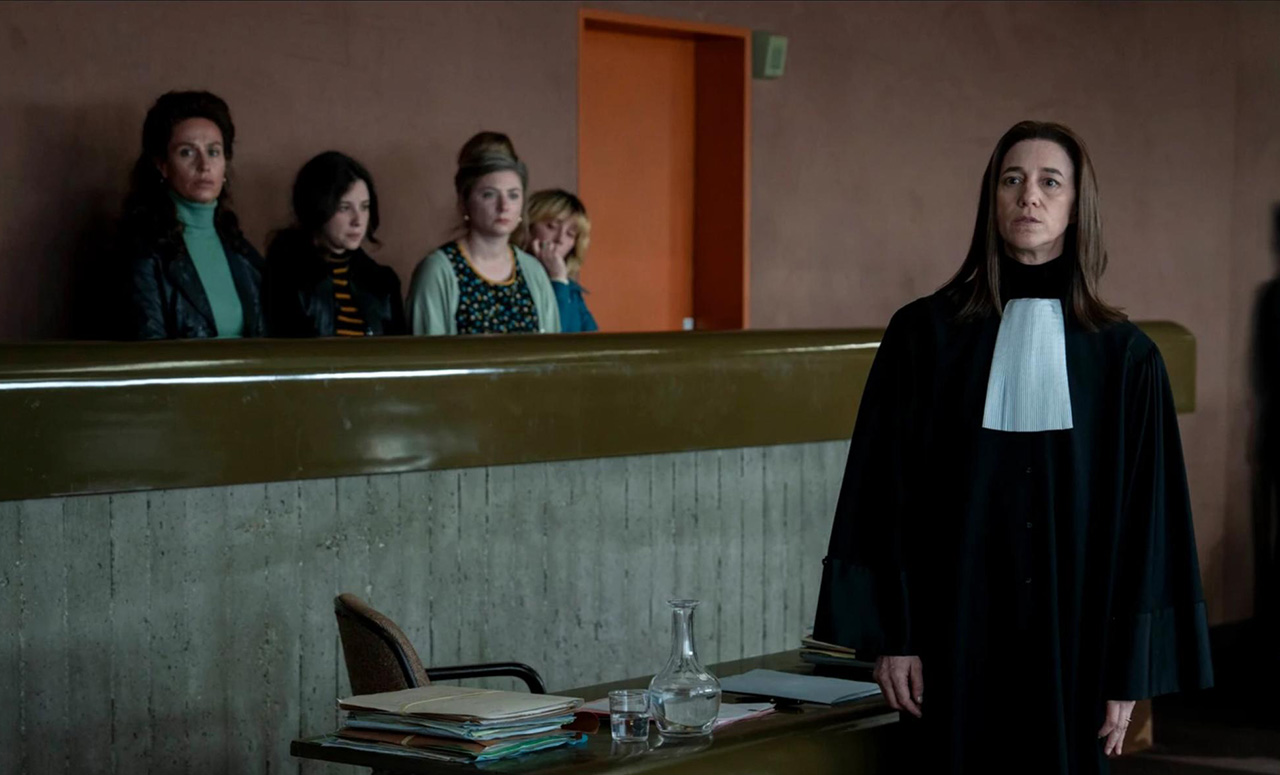


Lauriane Escaffre and Yvo Muller’s Women on Trial dramatises the landmark 1972 Bobigny trial, in which a teenage girl and the women who helped her obtain an illegal abortion faced prosecution in France. But rather than a conventional courtroom drama, the film is foremost a vehicle for Charlotte Gainsbourg, who plays Gisèle Halimi, the lawyer determined to challenge not merely the charges against her clients but the law itself.
For an actress so often required to communicate through silence, expression and atmosphere, the role offers Gainsbourg an opportunity to demonstrate her command of dialogue, particularly in extended courtroom monologues. Her Halimi speaks with measured precision, her composure unwavering even when confronted with the most infuriating arguments. There is little theatrical indignation in her delivery, but her sincerity and conviction are unmistakable. She understands that an acquittal alone would leave the underlying injustice intact, and that her clients must not be made to apologise for their actions.
The decision to devote considerable attention to Halimi’s personal life, rather than confining the narrative to Marie-Claire Chevalier (Saül Benchetrit) and her mother Michèle (Cécile de France), proves particularly effective. Her difficult relationship with her traditional mother, who questions her refusal to conform to conventional expectations of womanhood, demonstrates how thoroughly these attitudes are embedded in society, including among women themselves. The trial, for all its historical significance, is ultimately only one manifestation of a much larger system of inequality.
This becomes particularly apparent in the courtroom, where the contrast between those administering justice and those awaiting it is striking. The public gallery is occupied by a diverse gathering of predominantly female spectators, ordinarily dressed and watching the proceedings with palpable anxiety. Opposite them are five men in judicial robes, representing the authority of a state whose laws govern experiences entirely foreign to them. The disparity is as much visual as ideological.
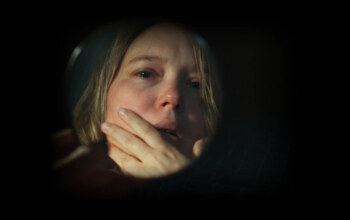
Frequent close-ups capture the tension in the spectators’ faces and the restrained emotion of the defendants. Elsewhere, a warm, muted palette lends the domestic scenes a certain intimacy, giving way to colder colours and harsher lighting in the courtroom. The change reinforces the distance between the women’s private experiences and the impersonal institutions passing judgement upon them.
The film occasionally makes its political arguments more explicit than necessary, but its strength lies in recognising that the injustice extends far beyond the individuals involved. With Gainsbourg providing an assured centre, Women on Trial is less concerned with whether these women will be found guilty than with why they have been forced to defend themselves in the first place.
Christina Yang
Read more reviews from our London Film Festival 2026 coverage here.
For further information about the event, visit the London Film Festival website here.

















Facebook
Twitter
Instagram
YouTube
RSS