
Supergirl
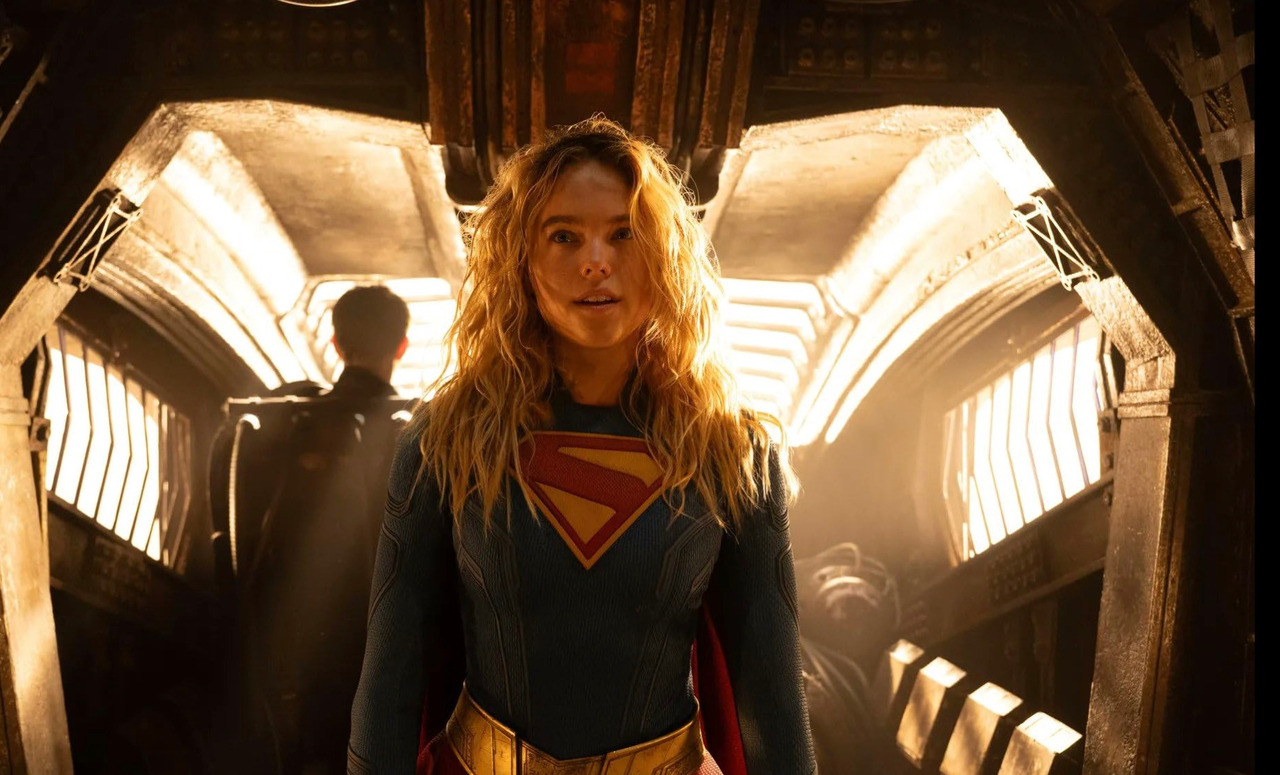



There once was a time when female-fronted superhero films were deemed inferior to the machismo-fuelled traditional comic book adaptations. The proliferation of the manosphere in recent years means that such contempt has taken on a new, particularly toxic form, so any film headed by a strong young woman – particularly one who doesn’t acquiesce to the male gaze – is inevitably going to be met with misogynistic outrage. But with its rebellious girl power, Craig Gillespie’s Supergirl is a middle-finger response to such derision.
Milly Alcock is the jaded, orphaned Kara Zor-El, aka Supergirl, who spends her days drinking and clubbing. Living in a perpetual hangover, her only friend is her beloved rescue dog, Krypto, with whom she gladly shares a squalid, ramshackle spacecraft (complete with dog urine-soaked newspapers featuring Kara’s estranged elder cousin, Superman). After Krypto falls ill, she reluctantly dons her Supergirl cape to procure an antidote. Along the way, she teams up with alien bounty hunter Lobo (Jason Momoa) and Ruthye Marye Knoll (Eve Ridley), who seeks to avenge her father’s murder at the hands of the evil Krem (Matthias Schoenaerts), leader of the Brigand.
Alcock does a fantastic job of capturing Supergirl’s sardonic Weltschmerz, and she works well alongside promising newcomer Ridley and DC multiverse veteran Momoa (once again chewing the scenery). Ana Nogueria’s script is awash with feminist overtones, the most notable of which sees Ruthye ask Kara why her cousin gets to be Superman but she’s relegated to “girl”. There are also apparent allusions to Epstein via the human trafficking operation of the Brigands, who prey on the young Ruthye. Both she and Kara live with familial trauma that has hardened their exteriors and thus presents itself in a way that’s unpalatable to the patriarchy.
For all its feminist subtext, Supergirl ultimately slips into the tropes and clichés that have long blighted the DC (and likewise, Marvel) cinematic universe. The quips between elaborate fight scenes feel tired and, at this point, groan-worthy. Likewise, the film packs so much in that there’s little time for the relationship between Kara and Ruthye to develop organically. Kara pivots from apathy to big sister mode so rapidly that it’s emotionally bereft.
But perhaps it’s this familiarity that will endear longtime DC fans to Supergirl, a decidedly contemporaneous tale of female empowerment. And, in Alcock, the DCU has a formidable new face.
Antonia Georgiou
Supergirl is released nationwide on 25th June 2026.
Watch the trailer for Supergirl here:






















Facebook
Twitter
Instagram
YouTube
RSS