
I Wish to Die Singing: Voices From the Armenian Genocide at the Finborough
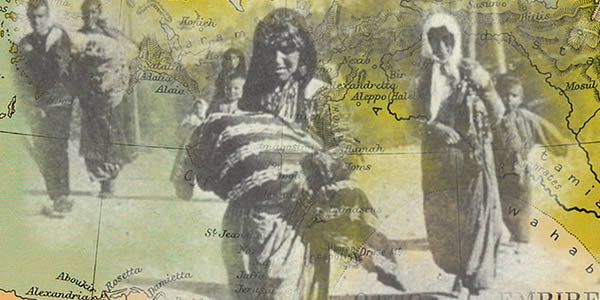


The Armenian genocide is an often overlooked historical event, notwithstanding the widely known fact that the design to destroy the Armenians and its brutal implementation is what inspired Hitler to organise the Jewish Holocaust. The staging of I Wish to Die Singing coincides with the 100-year anniversary of that lesser known holocaust, in which over one million people are estimated to have died. On 24th April 1915, the Ottoman government set into motion the premeditated mass killings of the Armenian population living in the land that is modern-day Turkey. It was deemed that their physical destruction was the most effective way to avoid issues concerning their status.
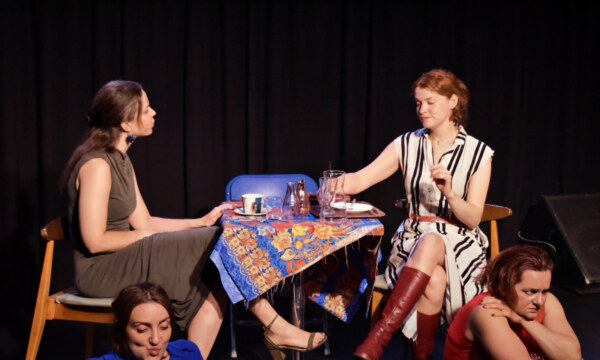
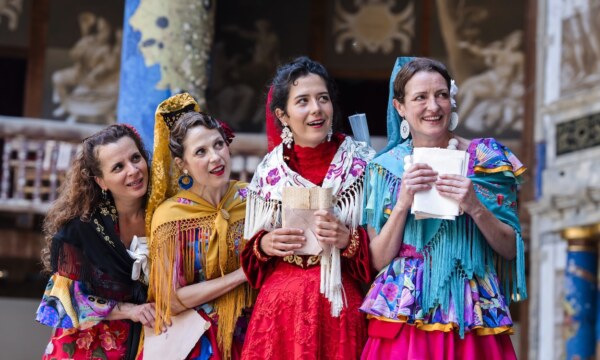
The performance opens with a scene depicting Easter celebrations, which gives the viewer a glimpse of what normality looked like for the Armenians before the massacre and mass deportation took place. The play mainly focuses on factual information told through personal accounts of eyewitnesses. The characters are of varying ages and provide a wide picture of the people’s concerns, ranging from practical and emotional questions to political matters. Their testimony is blunt and their descriptions graphic. The horrors witnessed by elders and children are vividly recounted as the speakers fluctuate between detachment and bewilderment.
Through their narratives, the characters traverse the various stages of genocide, as outlined by Gregory H Stanton, from the initial categorising of a set of people as separate from “us” to their gradual isolation and dehumanisation, and finally the justification of their murder. After mass killings subside, denial usually ensues. The play aims to commemorate the events, but it is also concerned with the aftermath and with assigning the massacres a firm and indisputable place in history. The narrator states that the injustice did not end with the physical atrocities, but continues to this day in the form of dismissal, with only 24 countries having formally acknowledged that these criminal proceedings are to be classified as genocide. The narrator ends by calling attention to the fact that the UK itself does not recognise the genocide as such, and calls for action.
A powerful and controversial reportage, I Wish to Die Singing can be classified as documentary theatre, as it places the historical facts in the foreground while minimising aesthetic elements and standard dramatic features. It adopts visual and aural material to hone in on the facts and bring prominence to the overpowering cruelty that often distinguishes fanatical nationalism. The plea for recognition is the final message, and while it is imbued with political overtones, it is ultimately a natural need for a humane response from the outside that can perhaps deliver some level of closure.
Mersa Auda
I Wish to Die Singing: Voices From the Armenian Genocide is on at Finborough Theatre until 16th May 2015, for further information or to book visit here.
















Facebook
Twitter
Instagram
YouTube
RSS