Gold Coast
Strong performances and visceral feel throughout.

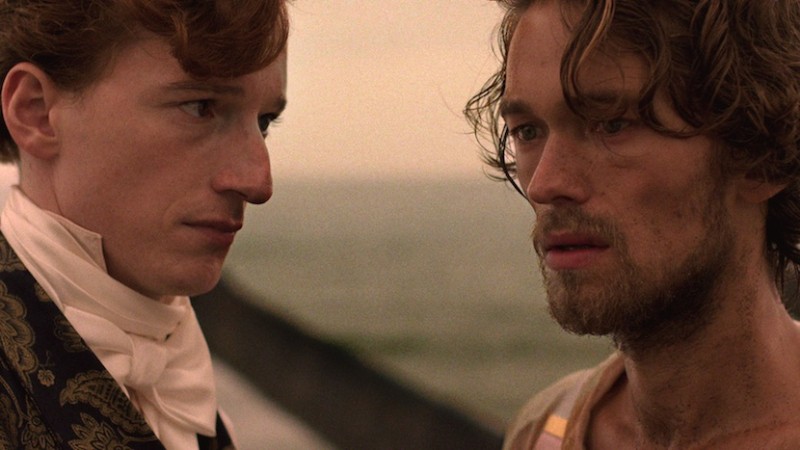
Making a move from documentaries, Swedish editor and now director Daniel Dencik debuts his first fiction feature, Gold Coast. It’s a story about a botanist sent to establish a coffee plantation in Danish Guinea in the 1830s who comes to realise that the practice of slavery is still endemic.
Although Denmark was the first European country to ban the slave trade, as Dencik’s film tells it, the practice was allowed to continue illicitly until the late 1840s. Accepted by the native population, the film’s martyr-hero, Wulff Joseph Wulff (Jakob Oftebro), first sets about teaching them how to grow a successful plantation before shifting his mission to free men, women and children from the oppressive regime amid resistance from the Ashanti tribe leader who brands his own slaves and beheads his enemies.
Gold Coast opens with a graphic scene from the end of the story, setting the tone that Dencik will not be afraid to expose audiences to the harsh realities of debauchery. Juxtaposed against a sub-themed love story between Wulff and his betrothed, Flitsbue (Luise Skov), Gold Coast shimmers with images of hope and love further epitomised through the presence of two young missionaries who strive to bring light and God to the black community.
Dencik often sets aside the storyline for insights into Wulff’s state of mind, which is skilfully captured by Oftebro, who convincingly shifts from robust, hopeful exuberance to a weakened and emaciated state as his struggles increase. This only assists to make more wretched the evilness that seeps through the Gold Coast. The audience winces with Oftebro as he is forced to witness a child being whipped by an officer who claims, “a good feature of the nigger is that he can’t feel pain.”
Beautifully shot on location, with strong performances and a visceral feel throughout, Gold Coast brims with emotional richness. What is difficult to determine is whereabouts the film sits, for the writing lacks enough insight to be a truly arthouse film whilst, at the same time, it is not narrative-driven enough to work as a historical drama. Nonetheless, Dencik screens the narrative with an intensely varied and raw texture that leaves its imprint and still manages to provide some historical context to a dark moment in European history which examines human ethics in a way that still applies today.
Theodora Munroe
Gold Coast does not have a UK release date yet. This is part of the Journey strand at the 59th London Film Festival.
For further information about the 59th London Film Festival visit here, and for more of our coverage visit here.
Watch the trailer for Gold Coast here:
- 1
A Talent for Murder
Umar Ali
- 2
- 3
Noah Kahan at the O2 Arena
Katherine Parry
- 4
I Am Helen
Andrew Murray
- 5
Giant – The Play
Natallia Pearmain


Focker-in-Law
Antonia Georgiou




Nine Night at Kiln Theatre
Thomas Messner