
Animals: Art, Science and Sound at the British Library


Animals: Art, Science and Sound is the first major exhibition to explore how animals have been written about, visualised and recorded, which is surprising given that humans have been documenting our animal neighbours ever since the first cave paintings 40,000 years ago. The show features more than 100 artworks, manuscripts, sound recordings and books, many on display for the first time. The space is cool, breezy and dimly lit for the sake of the materials on display, but this also creates a contemplative atmosphere for the visitor. Split into four zones (darkness, water, land and air), each has a bespoke soundscape created from the library’s mind-bogglingly huge archive of 6.5 million recordings of speech, music and wildlife.
The selected items span 2,000 years, from a fragment of papyrus on the reproduction of dogs from Ancient Greece, to images from the present day. Some animals are featured for their weirdness (the star-nosed mole for example) and others for the large space they occupy in the human imagination through their utility to us, like the noble horse.
There are many treasures to pick out. The section on birds of paradise illustrates how their magnificent plumage and flamboyant mating rituals have long fascinated. A video of their courtship displays proves them to be massive show-offs.
Bats feature prominently in the darkness zone, notable as they are outliers in the animal kingdom as the only flying mammals, as well as for the elaborate mythologies they have inspired. There are characterful depictions of the megabat (sounding a bit like a predecessor to the famous bat-based superhero) and the gothically christened, but quite cute-looking, vampire funeral bat.
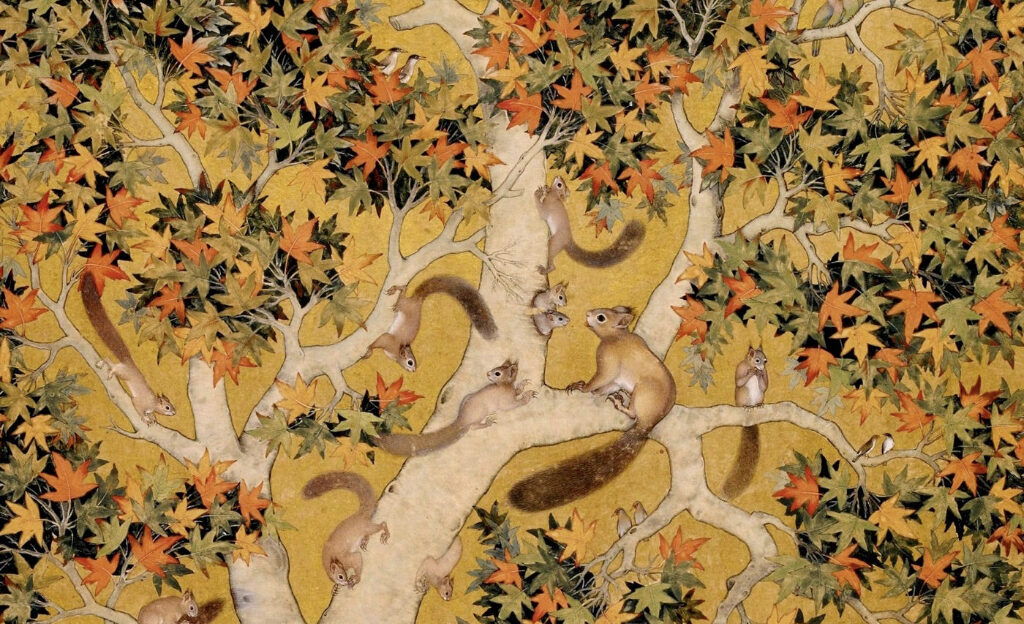
There is a gorgeous painting made for Mughal Emperor Jahangir (circa 1605) of red squirrels, the diminutive, tufty-eared fellows sumptuously depicted amongst the leaves of their arboreal home. It’s difficult not to see a certain amount of anthropomorphism imbuing some of the work here and wonder how much it tells about the documenter as well as the documented. An Arabic diagram of the good points of the horse (circa 1225), for instance, gives the horse what can only be described as a fierce and determined look. Is it picking out attributes and an attitude that the artist admires in the animal, perhaps even identifies with?
The first commercially published recording of an animal plays here: 1910’s recording of a captive nightingale, which captures the dizzying complexity of the song. A heartbreaking addition is the 1983 recording of the Hawaiian Kauaʻi ʻōʻō bird, who lost his mate in a hurricane and trills for her return. The bird was declared extinct in 2000, which makes you wonder, for all the scrupulously and joyously detailed documentation on show here, as a species, do we actually understand and respect the diverse fauna with whom we share the planet?
This is a lovely exhibition full of treasures.
Jessica Wall
Animals: Art, Science and Sound is at the British Library from 21st April until 28th August 2023. For further information visit the exhibition’s website here.











Facebook
Twitter
Instagram
YouTube
RSS