
Cable Street at Marylebone Theatre
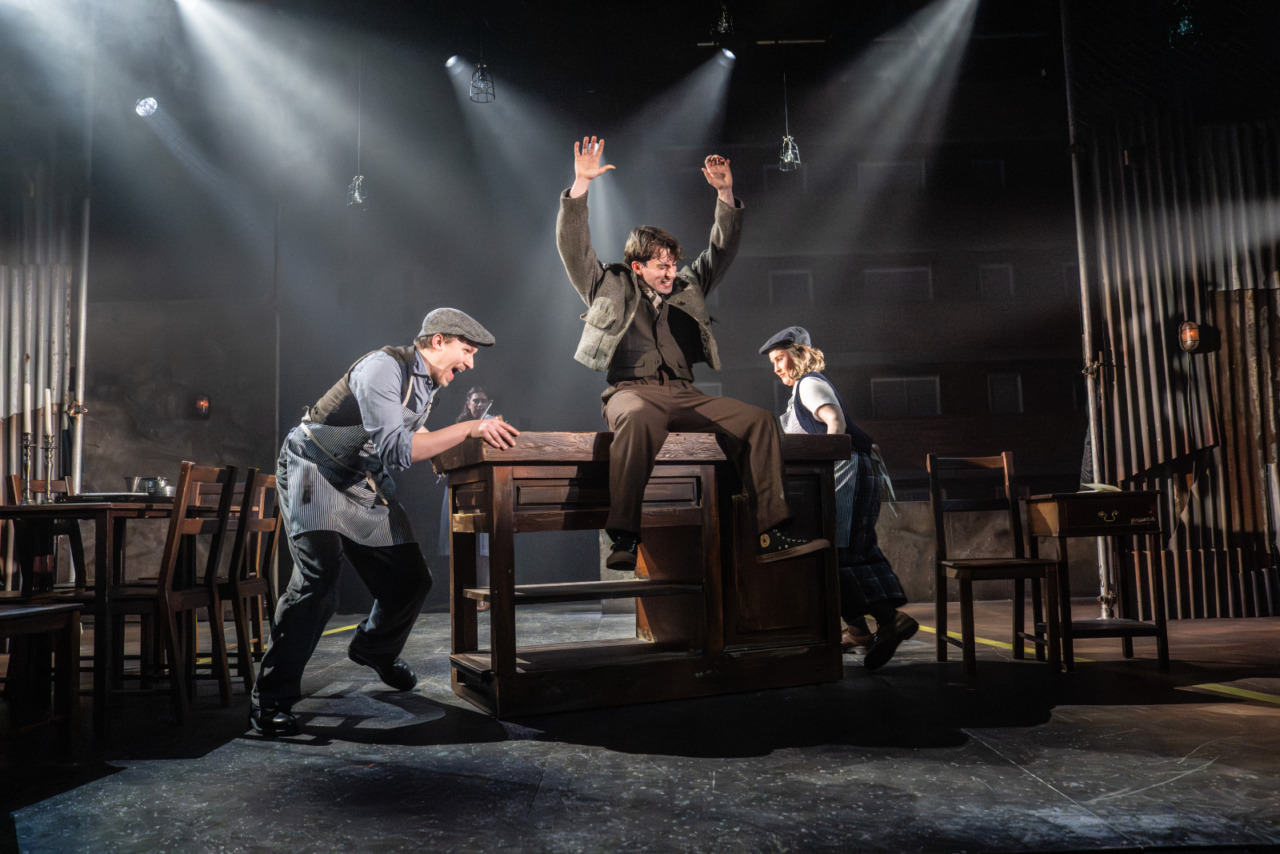

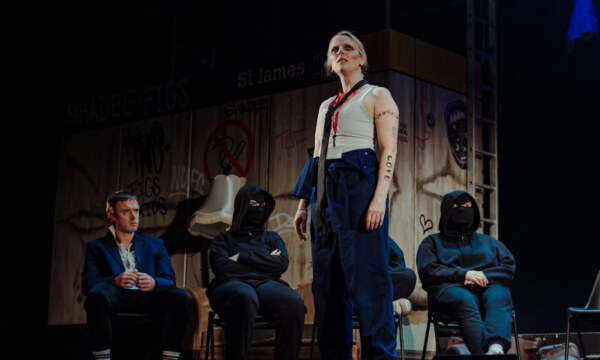
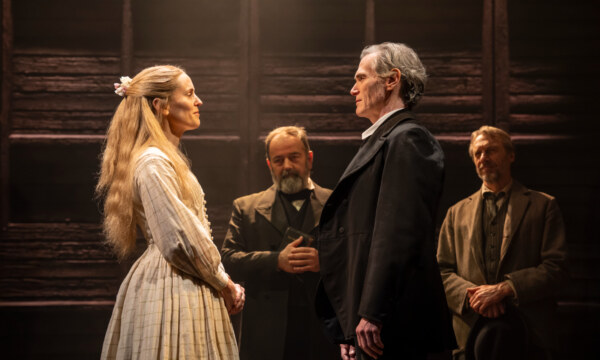
Come the end of a plaintive ballad contemplating the gulf between complacency and resistance, a soft-spoken Jewish patriarch (Jez Unwin, who up to this point has already played three roles throughout the night) turns his back to the crowd, and is promptly wrapped in the fascist uniform of the British Union of Fascists (BUF), rounding back on the crowd with a bragging ode to Oswald Mosley’s vision for London’s East End. It’s a strikingly casual display of the immense confidence that animates Tim Gilvin, Alex Kanefsky and director Adam Lenson’s musical, a show equally deferential to its influences as it is determined to carve its own path.
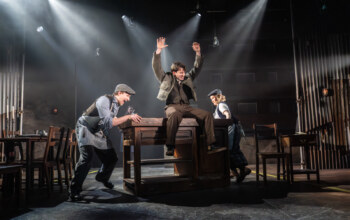
Centred on the 1936 rise of the BUF in the East End, and the rallying of the Communist Party of Great Britain, the Independent Labour Party and the Jewish People’s Council to combat them, Cable Street converses fluidly with its own obvious, bleak contemporary resonance without smugly triple underlining it. Instead, a mood of playfulness leads the way, with Gilvin and Kanefsky keeping a steady eye on whatever musical expectations their audience may have tracked in with them. Early on, an (admittedly rousing) barroom rendition of Rocky Road to Dublin is met with a firm refutation from Irish Catholic aspiring writer Mairead (Lizzy-Rose Esin-Kelly), cutting the old-timey jubilation short with an exhortation to her community to find a new song to sing. As if hearing her call, the show responds in kind. The BUF’s goons launch into an un-self-conscious song and dance routine set to shamelessly corny electronica, while Sammy (Isaac Gryn) – a former boxer attempting to conceal his Jewish identity in the search for work – vents his frustrations in staccato hip-hop asides. Indeed, the area where the music is mustiest is, purposefully, whenever the cartoonishly exaggerated Greek Chorus of newspaper salespeople takes to the stage, delivering the news of the week to the plinkity plonk of saloon piano. All the songs are terrifically sung, and thanks to Lenson’s fluid staging (allowing multiple cast members to seamlessly shift roles) and Gilvin’s driving, inventive score, a small handful of lyrical clunkers (“My stomach does a somersault, cause this is my fault”) are barely permitted to register.
For all its musical adventurousness, Cable Street still well understands the potential of pop-rock power ballads – and of subverting them. When troubled youth Ron (Barney Wilkinson) – a neighbour of Sammy and Mairead facing his own employment troubles – reaches the peak of his own “I Want” solo of alienation and disaffection, the moment brilliantly unsettles the press night crowd. Geared up to applaud come the close of every song, in this moment, the crowd finds it cannot, and in their brief but potent hus,h the show both scales its highest peak and takes position for its hardest fall.
In seeking the same community and sense of purpose as soon-to-be-lovebirds Sammy and Mairead, Ron finds himself in thrall to the very fascists his neighbours take a stand against, his eagerness to be welcomed into the club clashing with his objections to their violent bigotry, and winning. It’s inevitable that he and Sammy are headed for a collision, but the means through which we get there – and the conflict’s resolution – risk triteness. Grappling with the poverty, prospects and frustrated masculinity that can send a seemingly sympathetic figure into the arms of fascism is bold territory for a musical, but Gilvin and Kanefsky step back from making something too confrontational of it, opting for too easy neatness in its place. It is here that one wishes the show were more able to replicate the boldness of its music in its storytelling. Nonetheless, this remains propulsive, exciting, and ambitious musical theatre, both warmly specific in its fond affection for the communities at its centre (Unwin brings rumpled warmth to a present-day storyline centred on a weary but loving tour guide’s walk through the East End’s history) and broadly appealing. At this point, the production feels in strong shape for its imminent Off-Broadway transfer, and possibly beyond.
Ultimately, if this stirring musical arrives at some narrative clumsiness in its homestretch, it remains terrifically performed and staged, and entirely gripping throughout. It’s enough to instil hope in the potential of the British theatre scene to still produce lasting original musicals, and to fill the Marylebone Theatre’s modestly sized auditorium with genuine epic scale.
Thomas Messner
Photos:
Cable Street is at Marylebone Theatre until 28th February 2026. For further information or to book, visit the theatre’s website here.
















Facebook
Twitter
Instagram
YouTube
RSS