
Gabès Film Festival offers Tunisian perspective beyond the headlines

 29 May 2026
Last month, the eighth edition of the Gabès Film Festival transformed southeastern Tunisia into a hub for cinema and artistic expression, presenting an expansive selection of screenings alongside installations and immersive experiences that demonstrated the institution’s continued growth and ambition.
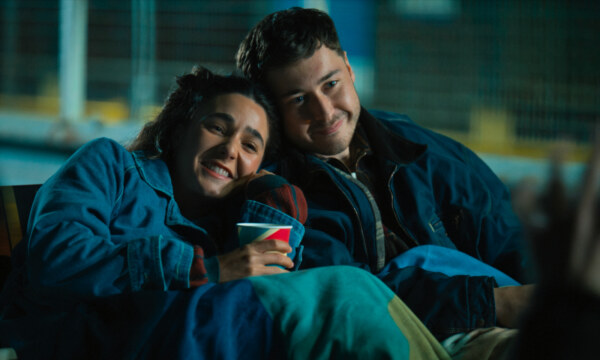
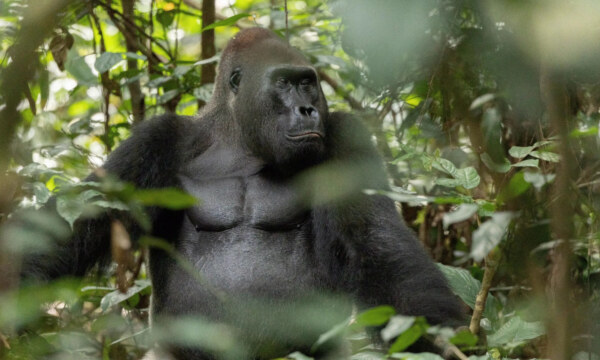
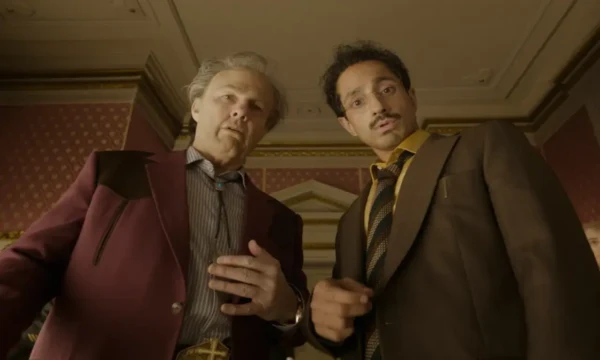
The programme placed a strong focus on acclaimed director Óliver Laxe, whose work was prominently featured throughout. Several works by the Spanish-French filmmaker were screened, including Sirât, Mimosas and You All Are Captains. Laxe discussed his personal connection to the festival and what drew him to participate:
“Because of my relation with Al Maghreb, you know I was living ten years in Morocco, so I was really curious to know Tunis. You know, my film, obviously it’s really related to the local culture, with Islam and Sufism, so I was really inspired. And it’s part of my practice so I’m curious to know also how my films are read here, and I’m always happy to support the local scene.”
He went on to speak about the vital role gatherings like this play in bringing filmmakers closer to local audiences, while nurturing new talent. Laxe also reflected on how his oeuvre delves into themes of life, death and the search for meaning, hoping viewers come away with a feeling of transcendence and lingering mystery.

Tunisian actress and cinéaste Afef Ben Mahmoud talked about her role as director of the festival. She described its unique identity, which reaches beyond cinema to embrace video art, XR and live performance, while highlighting how its programming is deeply shaped by the environmental and social issues affecting the city of Gabès.
“We cannot also be here in Gabès without thinking of all that’s happening in Gabès, what people are going through with the environmental situation,” she stressed. “And, for me, it’s extremely important to have this festival, to have these people around.”
She went on to consider the changing landscape for women in the industry, arguing that greater access to education and bodily autonomy has allowed female perspectives to reach a wider audience.
“Because of evolution, because of freedom, because of education also. Today we can see that women – they get married later and later, and they have children later and later, and they can choose for themselves.”
At the heart of the event is a commitment to fostering the arts, especially a dialogue between cinema and audience through the contemporary and local community. Much of this was shaped by artistic director Nadia Kaabi-Linke, whose curatorial approach has helped establish Gabès as a distinctive, culturally inclusive occasion. She and her husband, Timo, explored the evolution of film and its vital role in bringing audiences to connect.

Along Gabès’s corniche, festival-goers could also encounter industrial shipping containers transformed into intimate spaces that housed an exhibition of visual art, curated by Nadia and entitled El Kazma. She explained, “We were invited as artists – this is the idea of El Kazma […]. A visual artist who goes into the shoes of the curator, and curates video on just video art exhibitions. When we were approached it was very quick for us to think of a tribute for two amazing artists who have passed away recently – Jean Dupis and Olga Adorno – who are emblematic artists, especially of the 70s and 80s.”
Timo expanded on including not just film but also art video in the offering, exploring how the two juxtapose yet complement each other.
“From the technical side, of course it’s a challenge to make an art video section within a film festival. [It] has to feature film as a narrative medium and art videos are usually not copying or stepping into this narrative code – they function in a different way.”
Gabès Cinema Fen has played an important role in introducing international visitors to the social, cultural and artistic changes taking place in the country. Discovering work that explores contemporary issues, identity and environmental challenges, foreign journalists, critics and attendees are offered a perspective that goes beyond the headlines often associated with the region. Through its carefully curated programme including not only film but visual installations and experiences, the festival truly fosters a better understanding of the realities, aspirations and creativity of modern Tunisia, while simultaneously highlighting how visual media can reflect and shape a rapidly evolving society.
Olivia Barker
Gabès Film Festival was on from 26th April until 2nd May 2026. For further information, visit the festival’s website here.









Facebook
Twitter
Instagram
YouTube
RSS