
The rubber revolution: how a humble material became luxury watchmaking’s favourite upgrade
 17 June 2026
Once dismissed as poolside kit, the rubber strap has become one of fine watchmaking’s most transformative upgrades – and from Rolex to Cartier, a specialist industry has grown up to meet the demand.
For most of the last century, rubber sat at the bottom of the watch world’s social order. It was what came bolted to a dive watch, or the stopgap bought when a leather band finally cracked. Anyone with a serious timepiece kept it on metal, or reached for polished alligator when the occasion demanded. Rubber was practical and faintly apologetic. It was never the point.
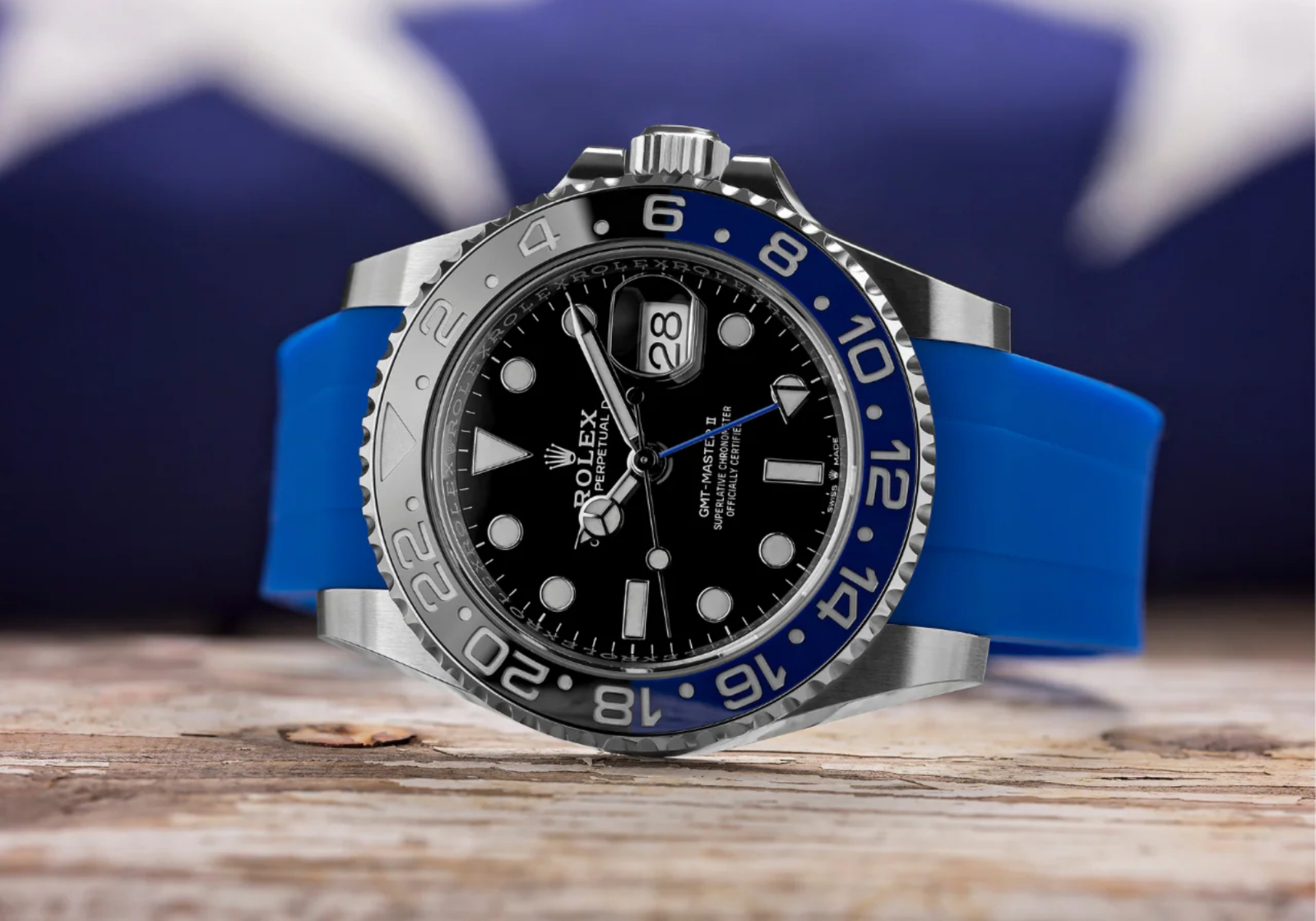
That hierarchy has quietly fallen apart. Spend an afternoon at any watch gathering now and the wrists tell a different story. A Daytona rides on supple black rubber rather than its Oyster bracelet. A Submariner is dressed for summer in something lighter and cooler. A Santos de Cartier turns up in a shade borrowed from a racing livery. Far from cheapening these watches, the right rubber strap has come to signal a certain confidence – proof that the owner wears the watch on their own terms rather than the way it left the boutique.
Several currents carried the material upmarket. Comfort is the obvious one: metal bracelets are handsome but unforgiving in heat, and a well-made rubber band is lighter, cooler and impervious to a sweaty commute or an afternoon in the sea. There is the matter of protection, too. Owners increasingly prefer to spare a costly factory bracelet the scratches of daily wear, keeping it boxed and pristine while a strap takes the punishment. And there is fashion’s oldest engine, the simple appetite for change – a way to give one watch several personalities without buying several watches.
What really moved rubber from afterthought to aspiration, though, was a leap in the material itself. The straps now turning up on five-figure watches are a world away from the gummy silicone of a decade ago. They are made from FKM, a fluoroelastomer first engineered for the aerospace and motoring industries, where rubber has to survive heat, oil and chemical attack without breaking down. Denser and more substantial than ordinary silicone, FKM carries a reassuring heft on the wrist and shrugs off the sun, sweat and sunscreen that leave cheaper straps brittle and sticky. The gap shows over time: a quality FKM strap, reasonably cared for, holds its colour and shape for years, where a silicone equivalent can begin tearing or fading within months. For a material once consigned to the bargain bin, it is a striking promotion.
That shift has been good for a small but fast-growing breed of specialist. Chief among them is Helvetus, an aftermarket house that has built a following of more than 40,000 customers by treating the strap not as a generic accessory but as a component engineered for one watch in particular. Rather than a drawer of universal bands, its catalogue is organised obsessively by reference, with FKM rubber, sailcloth, leather and exotic skins cut for individual models and backed, in the case of rubber, by a lifetime warranty.
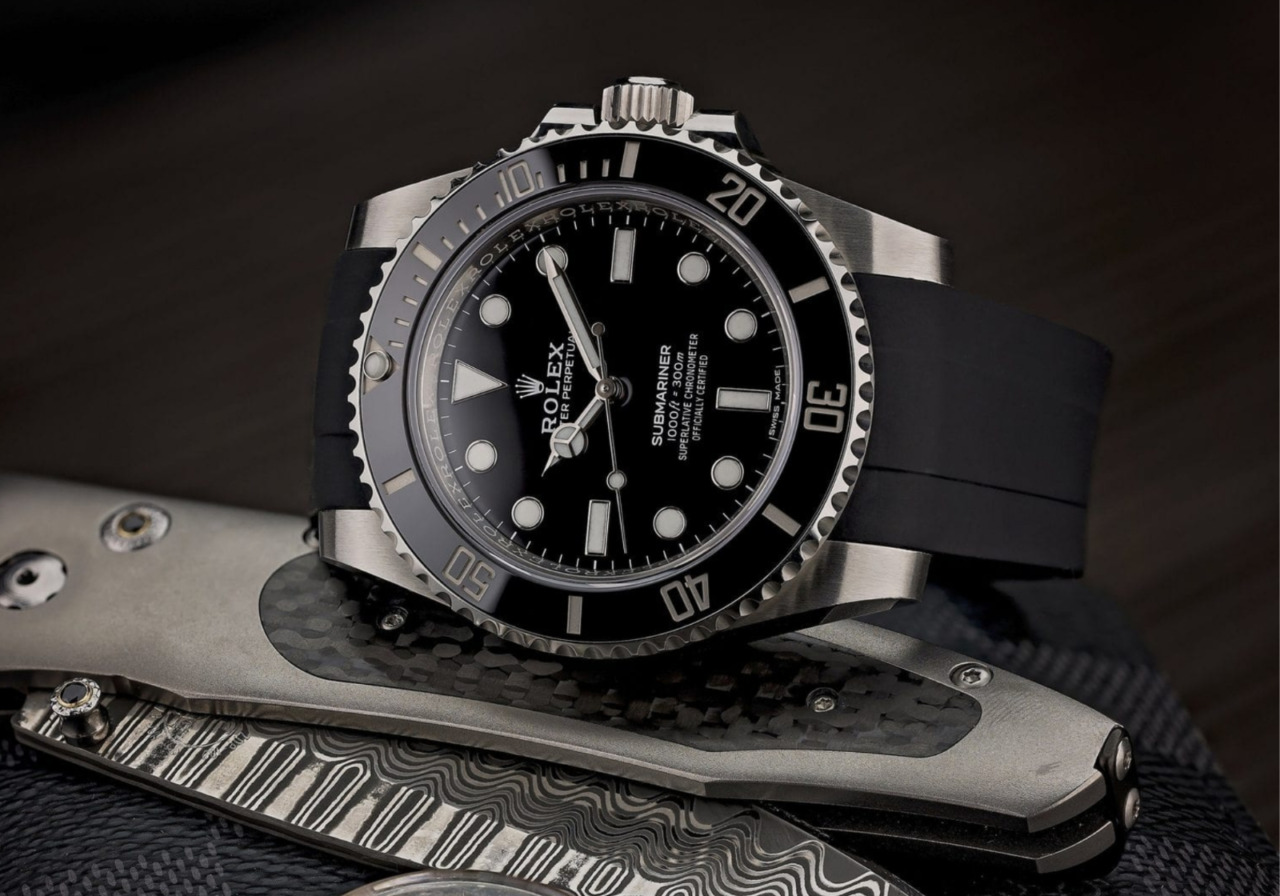
The fixation on fit is the part newcomers tend to underestimate. A strap that is merely close in width still leaves an unsightly gap where it meets the case, and on an integrated-bracelet design the effect is worse still. The appeal of rubber straps built for Rolex is precisely that they curve into the lugs of a Submariner or Daytona as though the factory had made them, with no daylight and no quarrel with the watch’s lines. The same logic governs the harder silhouettes elsewhere in the range – the squared-off lugs of Cartier’s Santos and Tank, say, which defeat most universal bands but come alive on something shaped to their geometry.
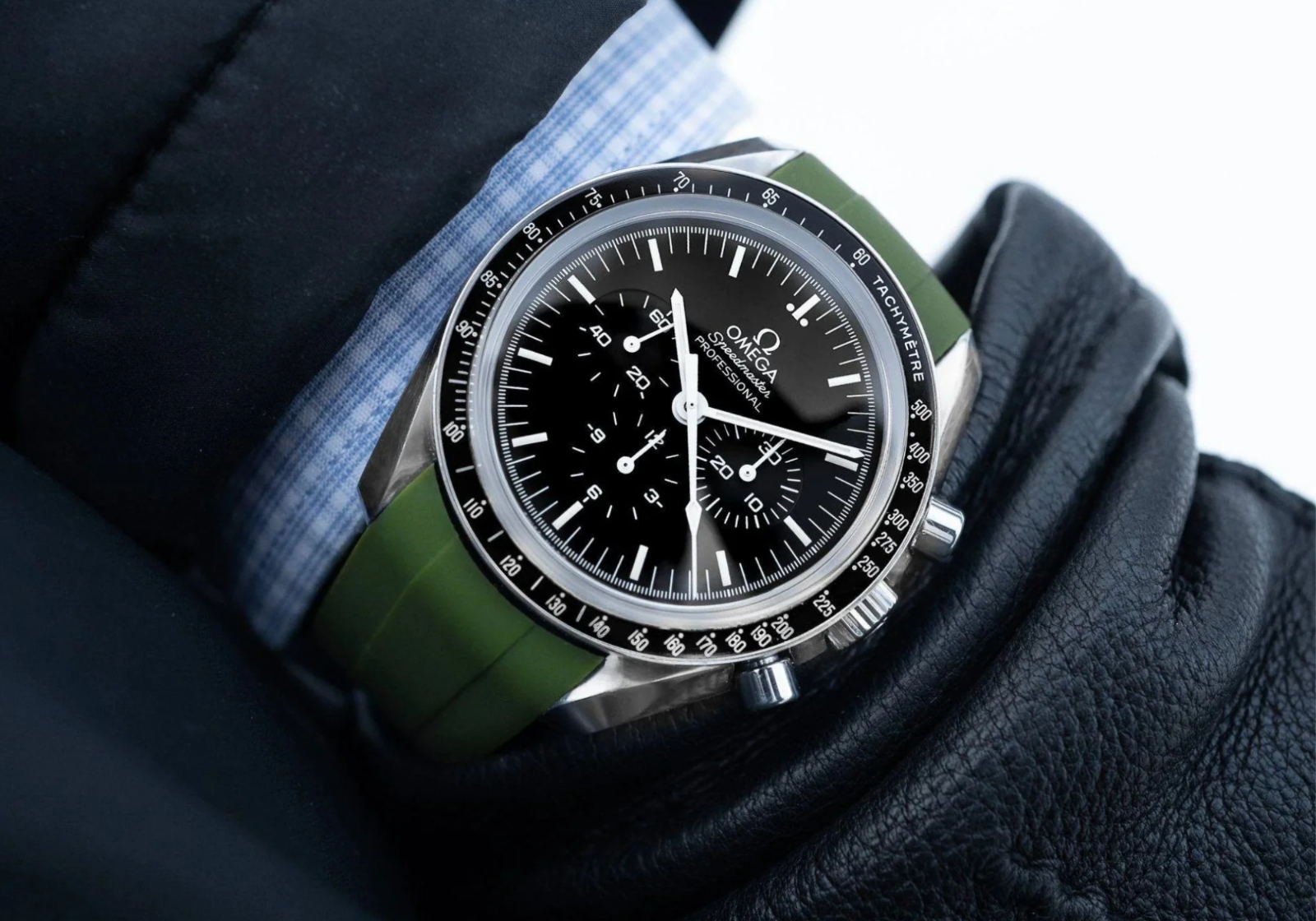
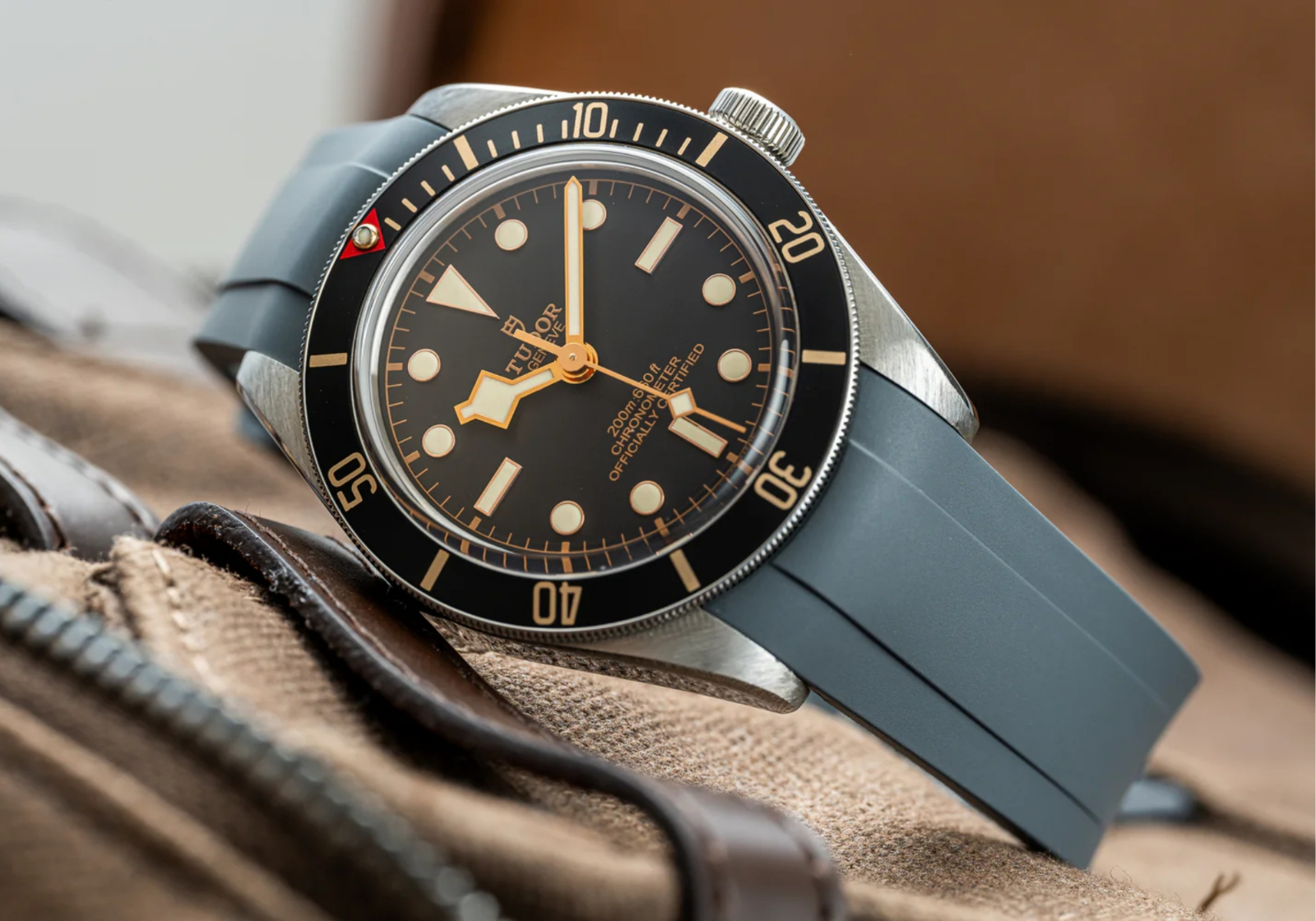
The roll-call of watches now being treated this way reads like a tour of the modern grail list. Tudor’s Black Bay, long a playground for experimentation, takes warmly to rubber. So does the Omega Seamaster, whose diving lineage makes a high-performance strap feel less like a costume than a homecoming. Panerai’s slab-sided cases, designed around the strap from the very start, were arguably waiting for this moment all along, while IWC’s pilots and divers slot neatly into the same trend. In each instance the upgrade is reversible, modest against the price of the watch, and quietly addictive – few owners stop at a single strap.
None of this means the metal bracelet or the dress strap is finished. A Datejust on its jubilee remains a thing of beauty, and there are rooms no rubber strap belongs in. But the old assumption that a luxury watch must wear one approved uniform has gone for good. The modern collector treats a timepiece more like a wardrobe than a fixed object, rotating straps with the season, the outfit or the mood, and thinking little of paying a meaningful sum for a band held to the same standard as the watch it serves.
It is a small revolution, conducted one strap at a time and largely invisible to anyone not watching wrists. Yet it has rewired an entire corner of the industry, turned a once-disposable component into an object of real craft, and handed owners a quiet luxury of their own: the freedom to keep a watch they love feeling perpetually, personally new.
The editorial unit




















Facebook
Twitter
Instagram
YouTube
RSS