
Curfew
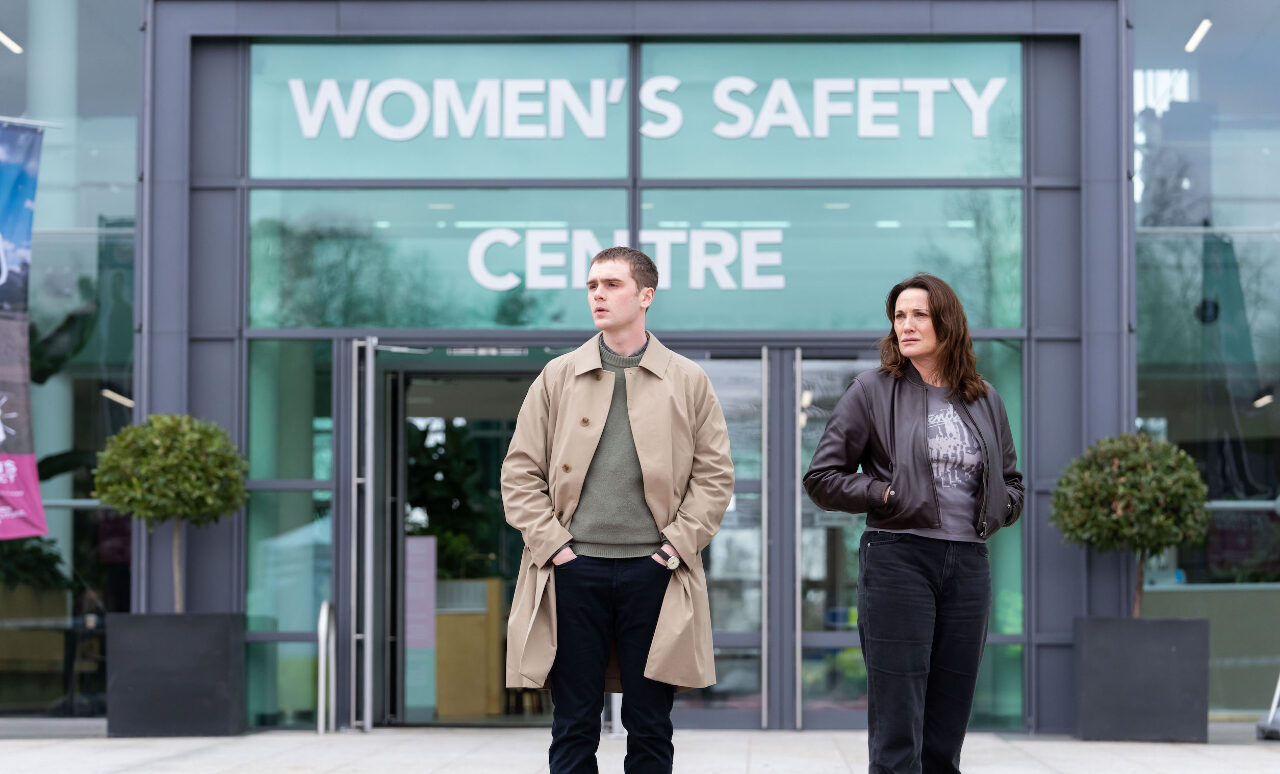

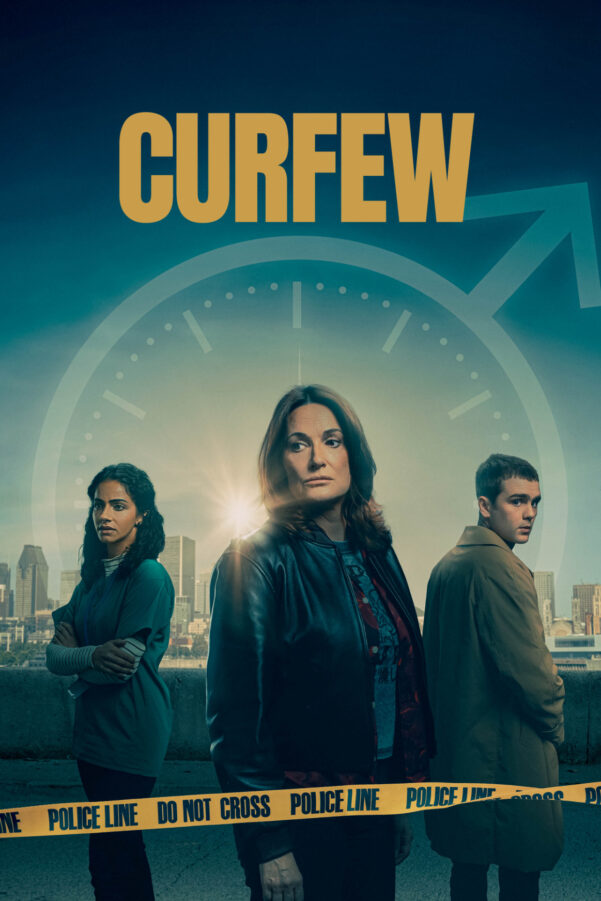
With a bold vision of a gender-reversed society, Paramount+’s Curfew, based on Jayne Cowie’s crime thriller After Dark, imagines a future where every male in the United Kingdom over the age of 10 is fitted with an electronic tag and placed under curfew at night as part of the Women’s Safety Act. The opening scene – featuring a tipsy young woman provocatively teasing men trapped in their apartments after a night out with her friends – immediately feels like a misfire. The supposed visual parallels of the men to Amsterdam’s window prostitution are diminished by her flaunting herself while the men observe in their loungewear. Even as the one man who dares to break curfew is swiftly arrested by the police, the dynamic fails to challenge the male gaze. Instead, it reinforces the dangerous idea that young women are somehow “asking for it” as she was quite literally goading men to come outside with her sexuality. The men’s inability to engage with her only heightens such undertones, especially in an age where social media amplifies such one-sided and parasocial relationships.
Set three years into the gendered legislation rather than the 16 years as presented in the source material, the stakes shift dramatically in Curfew’s television adaptation. While this change leaves room for more possibilities, the time constraint is instead used to question whether the women can manage authority effectively, thereby taking away from the exploration of the original work’s dystopian themes.
Perhaps as a result of the condensed timeline, Curfew’s worldbuilding is ambitious but lacking in nuance. Immediately, the decision to name the Women’s Safety Centre where Sarah (Mandip Gill) works anything other than simply the Safety Centre is an indictment of the supposedly primary role of women in a society where men have extremely restricted rights. A memorable moment occurs when Detective Pamela Green (Sarah Parish) changes her top in the men’s bathroom in the police station with the explanation that it is less crowded than the women’s bathroom. Like the opening scene, this scene clearly aims for a role reversal, highlighting the scarcity of male law enforcement officers in this reimagined society. However, it ultimately undermines the complexity of women’s experiences – rather than subverting the status quo, it merely echoes it, missing a crucial opportunity for deeper exploration by opting for a clichéd scenario.
Curfew presents an intriguing premise, but the execution of its first season leaves much to be desired. The showrunners’ willingness to provoke is evident and the cast delivers an excellent performance, but oversimplified narratives detract from its untapped potential. As it stands, the first instalment raises more questions than it is prepared to address and struggles to find its voice amid the noise of contemporary gender politics.
Christina Yang
Curfew is released on 10th October 2024.
Watch the trailer for Curfew here:














Facebook
Twitter
Instagram
YouTube
RSS