
My Hero Academia season eight
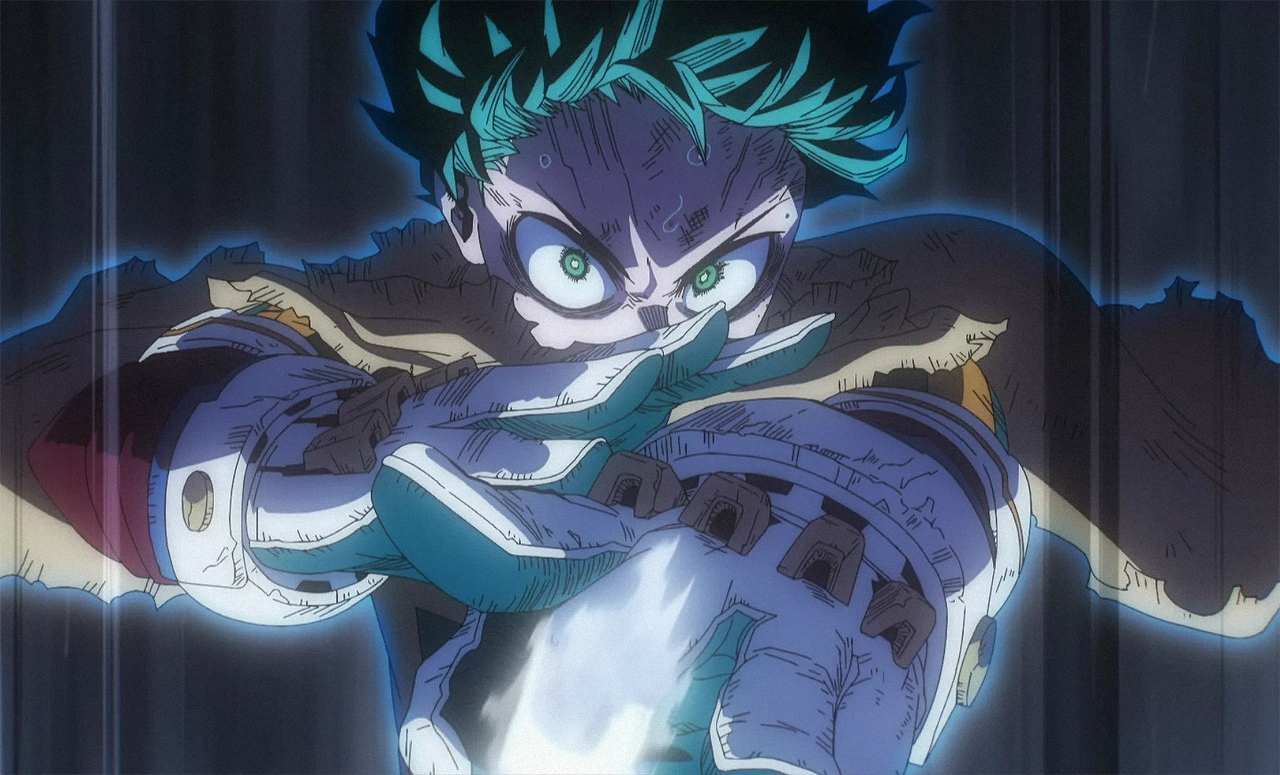


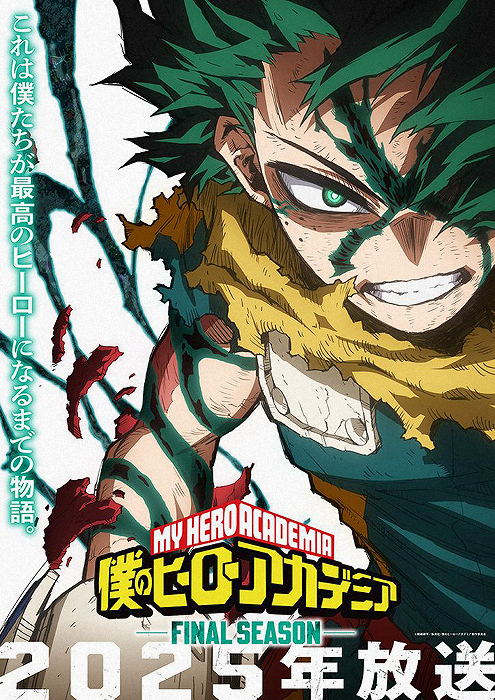
The curtain finally closes on a much-beloved anime with the release of its eighth season. My Hero Academia – initially a story of a powerless boy trying to make it as a hero in a world that actively discriminates against him – reaches its climax as Izuku Midoriya clashes one final time with Tomura Shigaraki. Intertwined within their lethal face-off is a parallel story of two boys with dreams of becoming heroes: one raised with love and support, the other shaped by tragedy, anger and hate.
The fight sequences are breathtaking – bright, sharp and drenched in neon colour. This visual spectacle is paired with an astounding soundtrack that perfectly captures the mood of each scene and the nuances of its characters’ motivations: from the sinister tones underscoring All for One’s insatiable need for control and volatile obsession with his brother, to the electrifying, heroic anthem that floods the speakers as Katsuki Bakugo rises to save All Might. The epic combination of vibrant visuals, a wholly immersive score and strong performances from the English voice cast delivers a cinematic experience like no other.
The season’s true highlight, however, lies in how it intricately weaves its narrative threads into the action, creating something both cathartic and meaningful. This is especially evident in the All Might, All for One and Bakugo sequences. The symbolism, alongside the use of flashbacks and memorabilia, charts Bakugo’s longstanding reverence for his idol and traces the trajectory of his character development. Their three-way confrontation proves far more compelling than the central battle between Midoriya and Shigaraki. This is a shame, as the protagonist-antagonist dynamic carries a wealth of history and lore. Instead, the writing undermines their conflict by forcefully inserting All for One into the fight and unveiling one final, redundant plot twist.
The closing episodes provoke a similarly polarising response. On one hand, there is much to admire in the handling of the Todoroki family’s resolution. There is no easy forgiveness, and each sibling defines their own path forward after the damage inflicted by Enji Todoroki’s abuse. An unsettling sense of incompleteness lingers – a choice that resonates strongly with reality. On the other hand, the pacing feels like a sprint to the finish line, sharply contrasting with the season’s earlier, more meticulous build. While the full-circle moments are appreciable, this breathless rush leaves an unsatisfying tang to My Hero Academia’s conclusion.
Still, the heightened emotions of the opening episodes linger as a resonant echo, elevating the season as a whole and serving as a sharp reminder of the anime’s enduring commitment to redemption. It is this ongoing exploration of heroism and moral responsibility that cements My Hero Academia as an inspirational masterpiece – even if its epilogue ultimately falls short.
Mae Trumata
My Hero Academia season eight is released on 4th October 2025.
Watch the trailer for My Hero Academia season eight here:













Facebook
Twitter
Instagram
YouTube
RSS