
“It’s an unusual space for a biopic, and that was interesting to me”: Grant Gee on Everybody Digs Bill Evans at Berlin Film Festival 2026
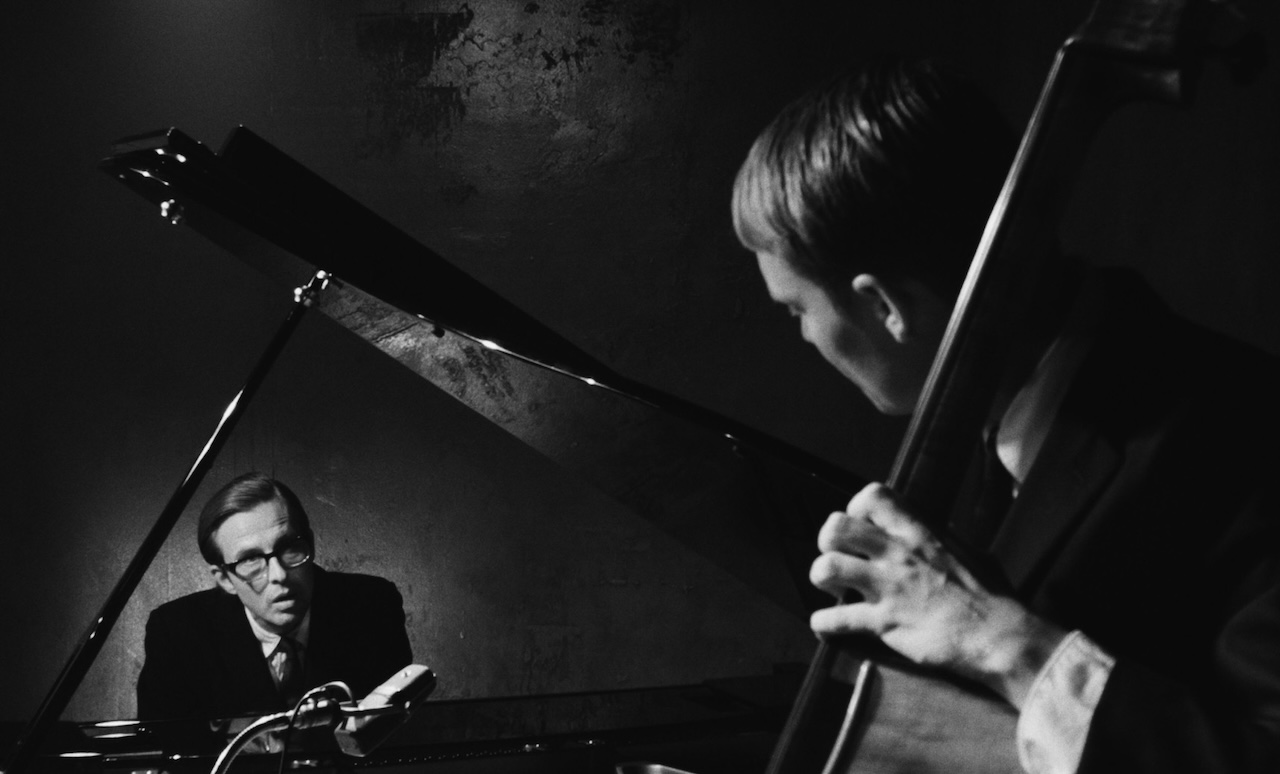



Despite its genre classification, Everybody Digs Bill Evans could almost be described as an anti-biopic. Instead of being given insight into the origins of the legendary jazz pianist’s passion for music, or the progression of his career, the audience meets the protagonist in a period where bereavement keeps him from playing. The film focuses on Bill’s relationship to his brother, his parents and his partner Ellaine, who, in their own ways, try to help him out of his self-destructive spiral. The feature premiered at the Berlinale before heading home to Ireland, where it was shot. Notably absent from the screening at the Dublin International Film Festival was director Grant Gee, who had to head back to Berlin to collect his Silver Bear for Best Director. The Upcoming spoke to the music aficionado’s first drama (as he refers to it), how his background in documentary shaped his work with actors and the recurring dualities that inform the film’s narrative and style.
Bill Evans is very introverted – he practically suppresses any outward emotion – yet the structure of the movie is driven by his feelings. How did you approach this tension?
Yes, he is, and it’s one of the basic dynamics we’ve got: he’s a band leader who obviously wants to get his work out into the world and perform it to the world, but he’s an introvert.
He’s a conservative, kind of, as a character. He is also a total bohemian. He’s very disciplined, he’s also a sort of delinquent, in a way. So there are some very basic polarities, which make for an interesting character dynamic.
The movie’s emotionality, I guess, just comes out of wanting to convey what I feel when I listen to the music that he makes. To take that feeling and put it into a narrative world, or to take something of that feeling and put it into a narrative world. So the story has the feel of an emotional song.
From what perspective did you tackle this film: that of a long-time fan, or as someone discovering his life story through his music?
First of all, I got interested in him because of a photograph. I didn’t know who he was. Something about the look on his face, his demeanour, was totally interesting to me. Who’s that? What’s the music? What sound comes out of that musician?
Then I listened to the music, I really fell for it, got more and more interested in the music, then started reading his general biography. Again, the basic polarity. This music is extremely disciplined and full of grace and beauty. The life is chaotic and… tragic. A lot of catastrophes around him. How can that sound work with that life? It’s just these spaces, which are interesting to explore. Like I say, a conservative bohemian. How does that work?
The film is an adaptation of a novel. It’s quite different from the novel, because the novel is quite rigorous in its form. It takes the same period, these kinds of three to six months, after Bill played at Village Vanguard, when he stopped playing largely. And the novel is from his father’s perspective, that’s one section, from his mother’s perspective, that’s another section, and from his brother’s perspective.
I thought that the basic thing of a time period, when a great musician is not playing, and that musician’s experience refracted through his immediate family’s experience of what he’s going through was unusual. It’s an unusual space for a biopic, and that was interesting to me.
Your background is in music documentaries. Did you always know Bill Evans was going to be a fictional film, rather than a documentary?
Yes. It was always gonna be a drama feature. Janine, one of the producers of this film – I’ve done two kinds of strange arts documentaries with her, and she’s wanted us to do a drama for a while. I’ve suggested various stories that were a “maybe”, and then, when I read Intermission, Owen’s novel, I sent it to Janine and said, “I think this could work!”
And she agreed. I’ve tried to get other features off the ground before, and it’s never worked, and she was smart enough to go, “Look, even though you haven’t done music jobs in a long time, you’ve still got the profile of someone who does music film, so I can put you with this and make it an interesting package.”
She had to work really bloody hard to make it, to get any money out of the interesting package, but eventually she and the other producers managed to do that. But yeah, it was always gonna be a drama.
Something that felt surprising in this film was the respective roles his family and girlfriend played in Evans’s recovery – or lack thereof. How much of it were you able to research and verify?
We know very little about Ellaine Schultz, who was Bill’s girlfriend. There’s one, maybe two photographs of her that are in circulation. They were drug buddies, for sure.
The story, which I found really interesting – it’s nothing to do with the film – but it’s a journalist who interviewed Bill right before he died, and they drove around in Bill’s car. And the journalist wrote, “I kept trying to ask him what it was like being in jazz heaven in 1961. You know, in the middle of New York, the great days. And he said, he really wasn’t interested in talking about that. What he was interested in talking about was all the scrapes he’d got into when he was out scoring; the adventures he’d had of being a New York junkie at that time, how exciting it was. He still had a fake police badge, which he used to flash around back then. In case someone gave him hassle, he could just whip it out of his back.”
And it sounded like he had a total romance with being a kind of conservative, straight guy, outlaw. I think in the film, he and Ellaine love each other to bits and have – it’s almost like a Bonnie and Clyde sort of thing. They have an outlaw romance, and they’re very sweet, and they’re very tender.
But at that time, certainly, for anyone Bohemian, coming from a family who – they love him – but that mother and father, they’re straight as hell. You know, they move from Plainfield, New Jersey, to Ormond Beach, Florida, and that life… His dad, in the film, says, “I’ve been spending all my life squeezing myself into a life that is so small.”
And whatever Bill’s doing, he’s not doing that. So I think, the adventure that he went on with Ellaine – who, some people refer to as his wife; as far as we can tell, they were never officially married, but they lived together for 12 years. I think that was living, what those two did, not the opposite.
How did you end up casting Anders Danielsen Lie as Bill Evans?
It was Janine Marmot, who suggested that I watch Anders’s films. We knew, she knew, that this film could get financed if we had the right lead. So she suggested I watch Anders’s films; I hadn’t seen any of them before. So I watched the Oslo trilogy. Oslo, August 31st, was the one where I thought, “Oh, geez, he’s got that sort of super intelligent intensity about him, and looks perfect. Not only that, but he’s a great pianist.”
I was totally sold, as soon as I saw that movie, I thought, “That’s our guy! We want him!”
He agreed to read the script, and as actors do, he agreed to do a Zoom. I was really nervous about this, and I prepared an entire pitch to Anders. And I think all I managed to say was, “Hello, nice to meet you,” before he then said: “I just have to tell you this before we go anywhere. I’ve been listening to Bill Evans since I was a kid. I like him so much that I transcribe his solos, so I can understand who he is. And I really want to play this.”
Sold!
Yeah, no it really was. I hadn’t said anything. I mean, that’s never gonna happen to me again. I don’t think it’s happened to many directors. But anyway, it was unbelievable.
And then after that, you know, we talked a lot on Zoom. I met him, I went over to Oslo a couple of times, and we talked and talked and talked. Generally, just about Bill, we didn’t even rehearse very much. We talked a lot.
Technically, this is your first feature. How did your documentary directing inform the way you work with actors?
I was a bit worried about my technical skills as a director of actors. I knew I couldn’t rely on them very much. I know I’ve got a lot of other skills, but I knew that that one was lacking, so I tried to compensate by doing a lot of psychological and backstory prep. So I wrote biographies of each of the characters that were partly fictional, partly emotional, partly psychological, etc, for everyone, and gave them to the actors, and then we talked about those. So we really started developing the roles quite a long time before we started shooting. But I’m so inexperienced, I didn’t even realise how little time for rehearsal there ever is on a movie. So we managed, I think, maybe one hour with everyone before we shot, before the first day, but that was it.
But yeah, we’ve done a lot of talking, and I think the actors seem to really like it. Maybe it is a way to direct. You think of directing as telling the actors what to do, but in fact, if you just talk to the actors about what they might do, and let them suggest how they think they’d like to do it, you get as good results.
The score really subverts the expectations of anyone going in expecting to hear Bill Evans and jazz. How did you and Roger Goula approach the composition?
Roger did fantastic work! I’m so ignorant about that musical structure and technique that I don’t even know quite what he did. I can’t describe it. I know our starting point was: “Okay, the film is about a period of a musical legend’s life when they’re not playing music. Therefore, we can’t fill this film with music. So what score, what composition can you put in there, which is kind of, in quotes, ‘not music’?”
Then there’s an interesting historical parallel, because at the same time that Bill was playing around 42nd Street in New York, John Cage, etc were playing at Lincoln Center, just up the road. So that sort of New York school of avant-garde composition was a parallel. So we started thinking about Cage stuff, sort of wood block sounds, prepared piano – are we ever gonna hear a piano? We could use prepared piano, maybe? Strange Cage-ian percussion, maybe?
There’s some of that still there, but that was the basic start. How do we have a composed soundtrack that certainly is not melodic, but in the end, there are some melodic parts.
So what Roger did with that, and the direction he took it, was his own. It was brilliant!
While the film is set in New York and Florida, you shot in Ireland. What was that like?
It was blissful, actually. It was really good. We shot a couple of days in Dublin. For one reason or another, Anders’s beard had to come off. It was his real beard. The 1979 beard had to be trimmed off because he had another job. So we had to shoot the 1979 scenes first, and then we had a break of a couple of months after those two days.
For lots of reasons to do with how the financing was raised – if we went here and spent the money there, we could get a bit of tax break, I don’t know, the producers could clarify this – we went to a place in the west called Skibbereen. It is a very small town, which weirdly has a film studio just outside it. And so we all just went down and lived in Skibbereen for a month.
Alan [Maher, producer] did the most astonishing job finding little slices of location that would work. You know, if you just frame that bit there, that would be 1961.
The most marvellous thing, in my opinion, was Harry, Bill’s brother’s, apartment, which is a really beautiful New York brownstone. This high-ceiling apartment is a conversion of a room in a 19th-century convent in an Irish village. A Victorian mansion, which had a room in it, that Ellen [Kirk, production designer] said, “Okay, those windows are quite good for New York, if I put a wall here and put a corridor here.”
And she had no money. I mean, it’s terrible, like a stupid budget. But she made a New York apartment out of it. It was amazing!
It was really, really lovely. The West of Ireland is just so beautiful. We were all in this small town, so we bumped into each other. It was very relaxed, and everyone could get to work in no more than half an hour. It was brilliant!
Speaking about the visuals, did you have any particular references for the 60s look you were going for?
Yeah, a lot of references. Because the development of this idea happened over a long, long period, I had a lot of time. Even if I wasn’t working on it full-time, I kept my eyes open. A lot of references from photographers and movies. I think the movies that we started off talking about were John Cassavetes’s Faces… I imagined that film was going to be a bit more gritty and handheld originally. So that was a reference that didn’t quite go anywhere. Billy Wilder films like The Apartment, or The Fortune Cookie were important.
For the 70s stuff, the first thought I had was, like, 70s cop shows that you used to see on TV, like Kojak, that were very kind of lurid, very technicolor, just something that would feel like a slightly lurid splash of colour from the future in the middle of this quite austere world. Those were the basic thoughts.
When did you first think to set these deaths in Bill’s future in colour?
So one of the basic thoughts about this film was that we’ve got this extremely disciplined, beautiful, graceful music, and this totally chaotic, catastrophic events in his personal life.
What connects them, and this, I still don’t know… I read a line the other day in a novel that talked about shadows from the future. It’s something like that. I mean, it’s not like he was fated to die – I mean, everyone’s fated to die. But those catastrophes weren’t fated to happen. They are not a direct result of anything that happened in that period. But there is a relationship, even if it is only an aesthetic one, somehow.
Anyway, I read this idea of shadows from the future; that somehow, what happens to your nearest and dearest, your loved ones, in the future can somehow inform life in the present.
Well, it’s got to be mystical. I don’t know why. I don’t know what the mechanism is, but it just feels like that. And aesthetically, because like I say, I knew we were going to be in quite an austere monochrome cool world, I just thought these moments from the future should be like eruptions or splashes and be kind of lurid, oversaturated, like a kind of slightly trashy magazine or something.
You said it’s not a strict adaptation of the novel Intermission, but I’m still curious about the name change, since the film takes place after the release of the album Everybody Digs Bill Evans.
It’s just a good title. The working title for the film was Intermission. But there’s another movie, at least one other movie called Intermission, which is not to rule it out, but it makes it more… I mean, it’s not got Bill Evans in the title, and producers really like naming the star of the biopic, and so, again, it was Janine who suggested that we call it Everybody Digs Bill Evans.
I think it works beautifully, because it does that family thing: it’s everyone who’s digged Bill, everyone’s concern about him. It sort of flips around the meaning of the title, and you can read it as the concerns of his loved ones. It’s a kind of riff on that. And it’s got the word “digs” in it, and if it brings the word “dig”, and “digs” back into common circulation, that’d be excellent.
Selina Sondermann
Everybody Digs Bill Evans does not have a release date yet.
Read more reviews from our Berlin Film Festival coverage here.
For further information about the event, visit the Berlin Film Festival website here.














Facebook
Twitter
Instagram
YouTube
RSS