
Catarina and the Beauty of Killing Fascists at the National Theatre
 22 September 2026
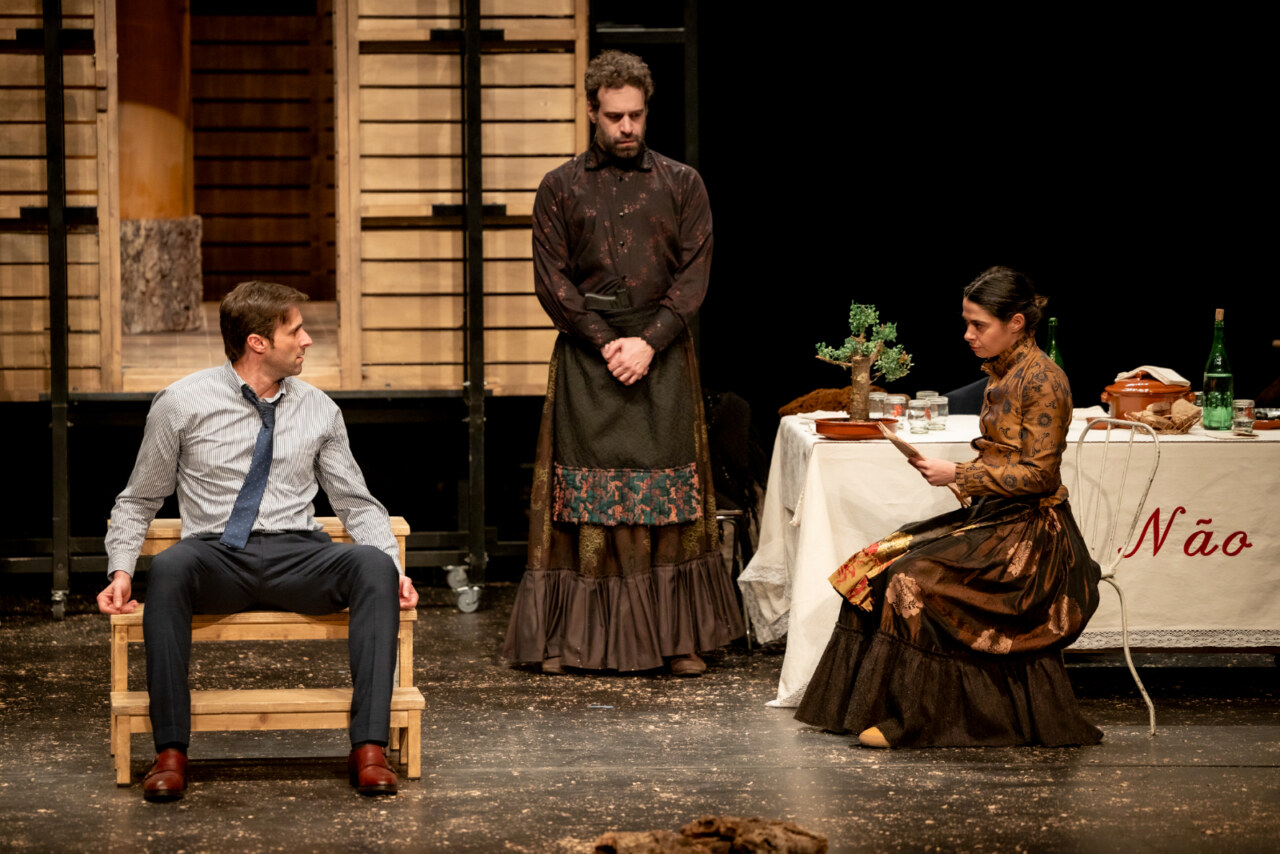
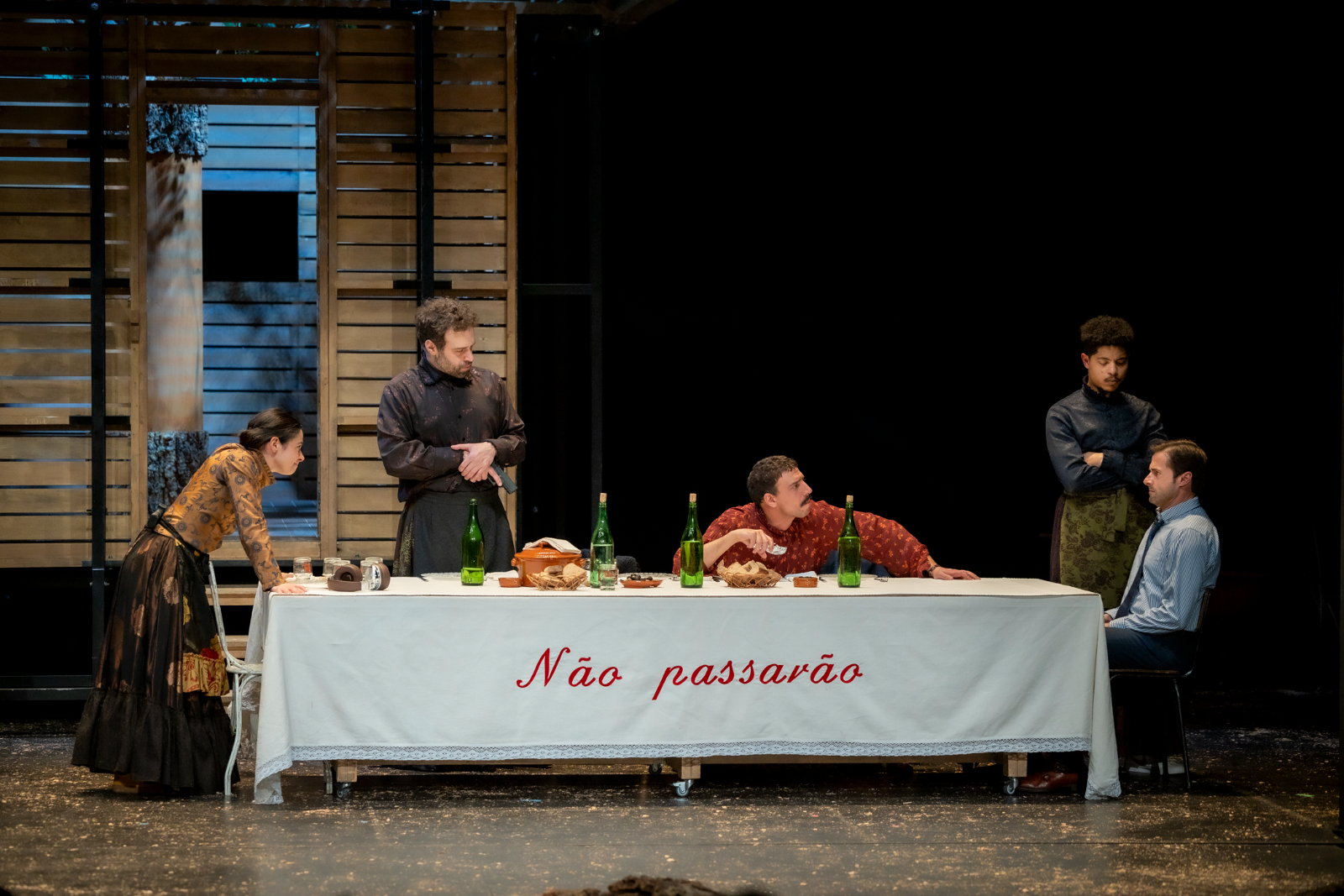
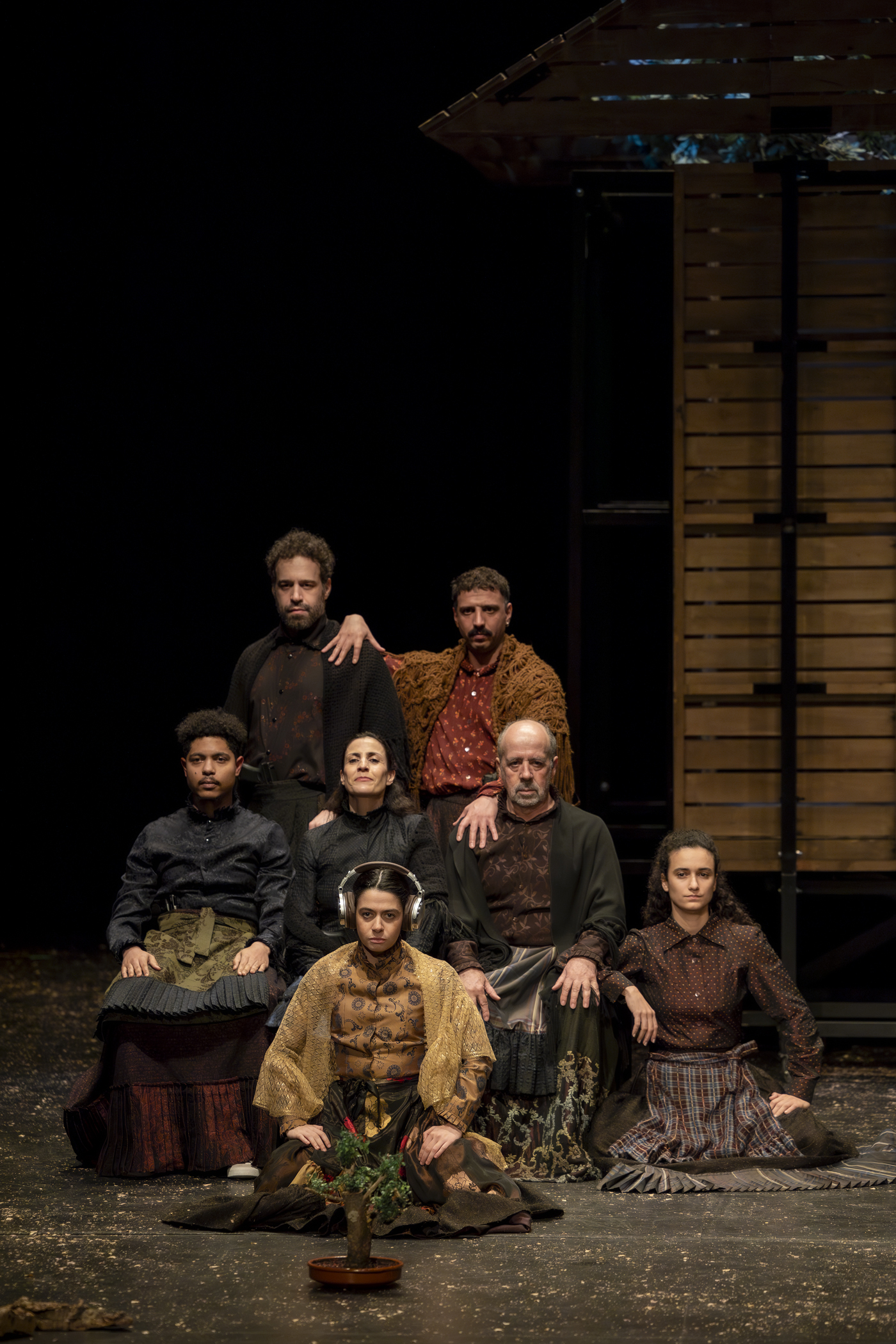
Catarina and the Beauty of Killing Fascists at the National Theatre opens upon a seemingly unremarkable scene: a family, gathered at their home in the countryside, prepares to eat. They chat and bicker about veganism, music, swallows and family recipes. It appears to be a day like any other, a banal vision of familiar familial dynamics. Yet beneath this lurks a definitive darkness, a persistent sense of something unsettling within the atmosphere.
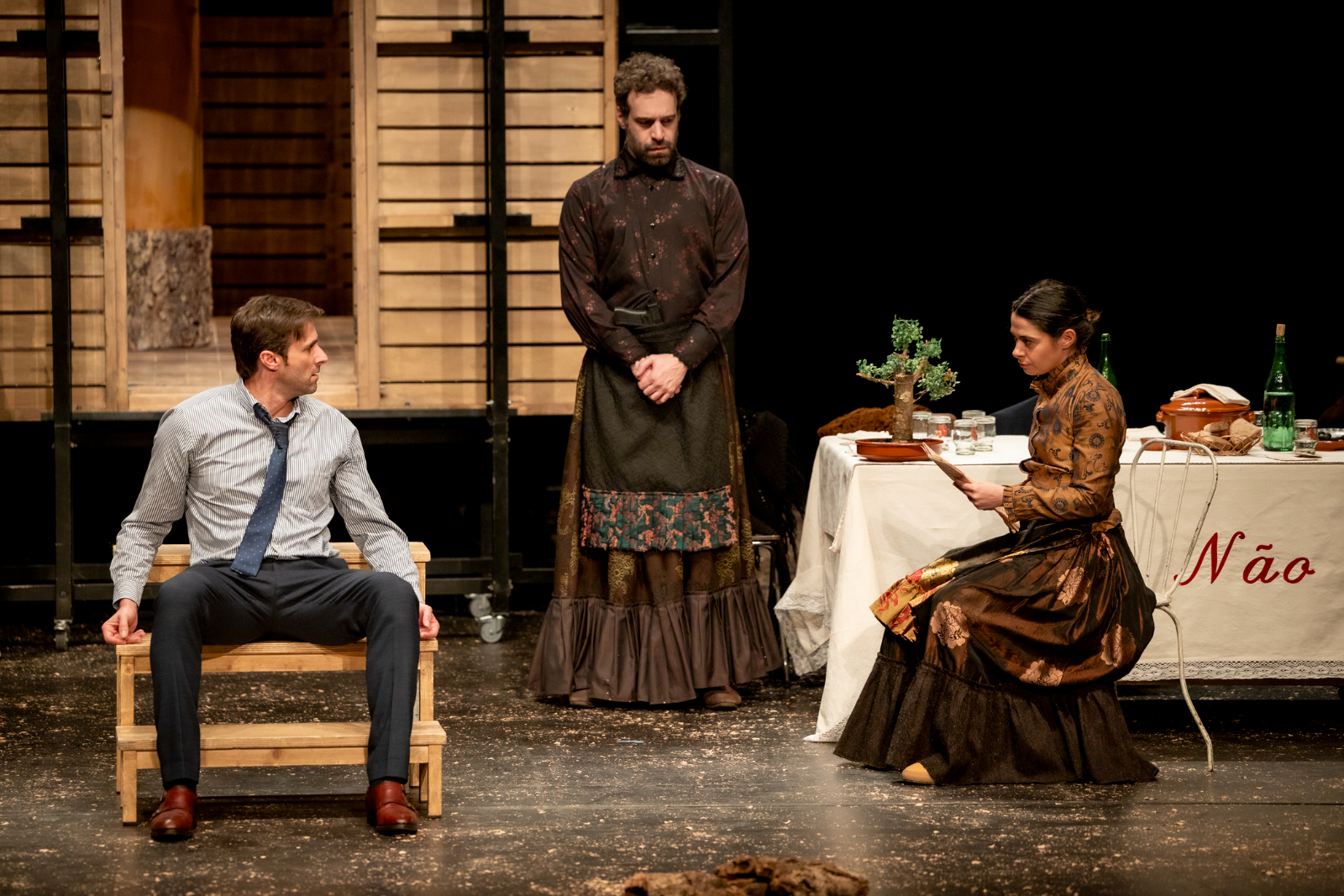
The first indicator of the strangeness of the scene we are watching is the costumes (designed by José António Tenente). Despite the play being set in the near future, all of the family members wear old-fashioned clothing at odds with the time period they inhabit. Everyone, regardless of age or gender, is dressed in long skirts and shawls reminiscent of historic peasant dress in Portugal. The result is an almost cult-like appearance and an off-putting effect, which is magnified by the intensity of the cast’s performances as they flit from lightly humorous exchanges to deadly serious and dangerously impassioned dialogues.
The second hint to the family’s peculiarity? Everyone is named Catarina. They distinguish between “Catarinas” only by referring to their specific relationship to one another. Performed in its original Portuguese, English surtitles are projected above the stage for the London audience, referring from time to time to “Uncle Catarina”, “Daughter Catarina”, “Brother” and “Sister Catarina”. The single-naming plays to comedic effect at times, until the sombre reasoning behind it is revealed.
When the final Catarina (Beatriz Maia) arrives on-stage, the disquieting truth about the family and the day is revealed. If not guessed already from the title of the play, the family is gathered for the annual tradition of killing a fascist. Catarina, who has just turned 26, will finally have her turn to follow in the footsteps of her grandmother, who killed her own husband after witnessing his inaction in the killing of the real-life figure Catarina Eufémia, a harvest worker who was shot dead by the National Guard of dictator António de Oliveira Salazar in 1954. Only, when the moment to kill comes, Catarina can’t quite seem to pull the trigger.
The premise of the play, transforming politically motivated murder into a familial rite of passage, feels highly original. Rodrigues’ decision to take a real historic event as the starting point grounds the play’s themes firmly in reality, yet the oddness of the atmosphere – between the cult-like costumes and the multitude of Catarinas – is reminiscent of the magical realism tradition. It is a perfect blend of the familiar and unfamiliar, close enough to our world to prompt serious thought, but far enough away in its strange unreality to still resemble a fiction, until the very end.
At this point, the infamous half-hour speech by the fascist (Romeu Costa) – which has in other countries garnered walk-outs and stage stormings – pulls the audience back into the real world. It is unsurprising that this speech has prompted such visceral responses from audiences, so rife is it with words and sentiments frequently quoted by right-wing governments and politicians around the world today, making it difficult at this point to separate art from reality. The other-worldliness of the ambiance collapses, and the audience is forced to confront the state of things in the real world. With a run-time of nearly two and a half hours and no intermission, one is forced to sit with the weight of what is being witnessed without respite, perhaps echoing the interminability of life under fascism.
By transforming the vague moral quandary of how best to fight against the oppressive and unjust political leadership of the far-right into a concrete decision to kill or let live, Catarina and the Beauty of Killing Fascists confronts questions of political engagement and tactics of resistance head-on. While the family of Catarinas represents the path of violent action, Maia’s Catarina espouses the path of pacifism, questioning how far is too far when it comes to justice and the betterment of the world. Can the act of murder ever be justified? And if one kills a fascist, is one any better than the fascists? These are questions audience members are forced to confront and questions that will stay with them long after the fascist’s closing speech comes to an end.
Madison Sotos
Photos: Carlos Fernandes
Catarina and the Beauty of Killing Fascists is at the National Theatre from 19th until 26th September 2026. For further information or to book, visit the theatre’s website here.



















Facebook
Twitter
Instagram
YouTube
RSS