Andrew Lloyd Webber’s Starlight Express: Live on Stage
The film succeeds in translating the spectacle of Starlight Express to cinema
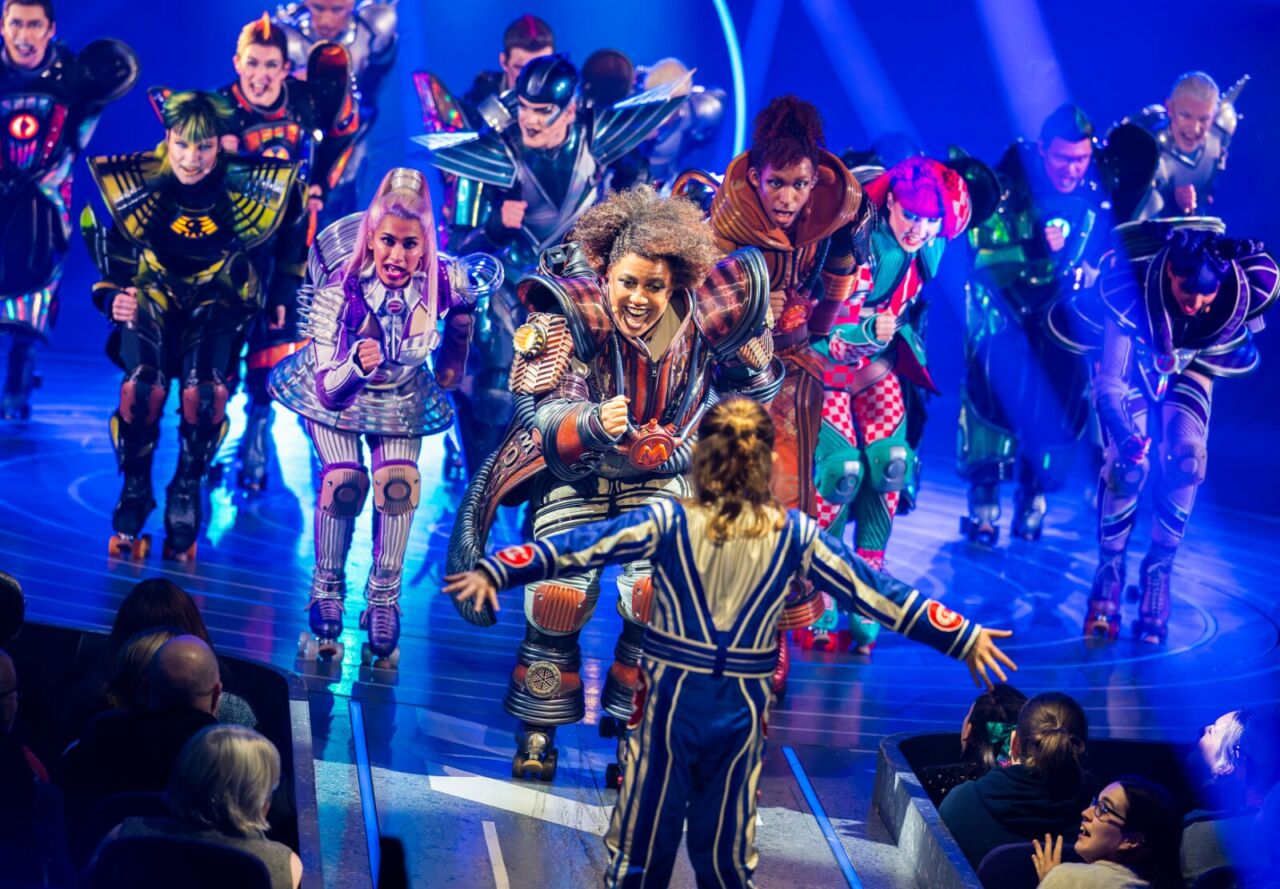
Originally opening in 1984 and running for 17 years, Andrew Lloyd Webber’s Starlight Express was revamped in 2024, bringing its story of a child’s toy train set coming to life in a dream to a new generation and eventually to the big screen. Capturing the London revival at the specially designed Starlight Auditorium in Troubadour Wembley Park Theatre, Brett Sullivan directs the screen version, translating the theatrical production into a big-screen experience. The filmed production features a cast of around 40 performers, with much of the action taking place on roller skates. The film succeeds in translating its spectacle to cinema, but the musical itself is less consistently engaging, with an occasionally repetitive structure and an underdeveloped emotional storyline.
Described as a “Cinderella story”, the musical follows Rusty, a steam engine with little hope of winning the race against his more modern competitors, from diesel to electric. That is until he finds renewed confidence through the legend of the Starlight Express.
The film opens with a brief behind-the-scenes look at how the production was made, with interviews revealing the technical demands of learning to skate from scratch and the adjustments required when filming a live stage production, where there is “no room for error”. Immediately seeing the audience’s silhouettes and hearing their applause as the musical begins helps recreate the atmosphere of a live performance, alongside Jade Marvin’s and Sophie Naglik’s piercingly powerful vocals as Momma McCoy and Pearl. From the outset, the combination of wide shots, close-ups and rapid edits captures the scale and immersive quality of the set, ensuring the two-dimensional nature of the screen does not detract from the extravagance of the staging, with its multiple platforms extending across the auditorium. The camera guides the viewer’s attention towards details that a theatre audience might miss, including subtle facial expressions from characters who are not necessarily at the centre of the action, such as Greaseball’s snarky ones.
From the exquisite metallic costumes, which distinguish the characters and their respective identities, to the character-specific lighting, including yellow for Greaseball and green for Hydra, the visual and technical production is impressive throughout. Electra’s introduction as an electric train is accompanied by icy futuristic lighting and neon electronic visuals. Smoke emerging from Rusty’s backpack adds another imaginative detail to the staging. The hanging planets, the blanketed stage and starry-night imagery during Starlight Express create another visually striking moment. The revival also introduced the new song Hydrogen, written by Andrew Lloyd Webber and original lyricist Richard Stilgoe, whose catchy beat and occasional rap-like delivery give it a more contemporary sound. The film concludes with a high-energy musical sequence combining snippets of songs from the production, providing a satisfying finale.
The cast performances are also strong, with Olivia Ringrose standing out as the charismatic yet villainous Greaseball, and Jaydon Vijn impresses with his magnetic vocals, technically demanding backward skating and ballet-like pirouettes. They also work convincingly together during group sequences, with performers bouncing off one another to maintain the energy. However, Pearl’s romantic dilemma between Rusty and Electra feels unconvincing and undeveloped, particularly when she sings Make Up My Heart despite having established little meaningful connection with either character.
The musical struggles with pacing, particularly in the first act, with some numbers feeling drawn-out and repetitive, most notably the oil tank sequence. The first act takes time to establish the story, relying heavily on character-introduction songs before reaching the production’s highlight: the race sequences, which only arrive towards its conclusion. Through POV footage, instant replays and a live scoreboard displaying the competitors’ positions, the races become particularly immersive and easier to follow. Side-by-side footage of Greaseball and Electra further builds tension, making the action feel more immediate. However, the plot feels cheesy and stereotypical at times, with Rusty’s emotional journey failing to establish a convincing connection with the audience. The significance of the Starlight Express itself, despite being central to the musical, also feels insufficiently developed.
Credit is due to the film’s technical achievements in translating the spectacle of the stage production into an engaging cinematic experience. However, its repetitive pacing, uneven first act and clichéd storyline prevent it from being consistently so.
Jennifer Hensey
Andrew Lloyd Webber’s Starlight Express: Live on Stage is released nationwide on 26th November 2026.
Watch the trailer for Andrew Lloyd Webber’s Starlight Express: Live on Stage here:
- 1
- 2
- 3
George Michael: The Faith Tour
Antonia Georgiou
- 4
La Roux – Old Flames
Mark Worgan
- 5


How to Rob a Bank
Antonia Georgiou
Burger & Beyond launches Christmas menu in London and Brighton
Food & Travel Desk
Fjord
Selina Sondermann



Nick Ward – Year of the Snake
Dionysia Afolabi
Hunting Alice Bell
Antonia Georgiou
(Un)Shakespearean Nightmares at The Playground Theatre
Thomas Messner
Tove Lo at Brixton Academy
Jennifer Hensey
Nero at Southwark Playhouse
Thomas Messner