
Renaissance to Goya: Prints and Drawings Made in Spain at the British Museum
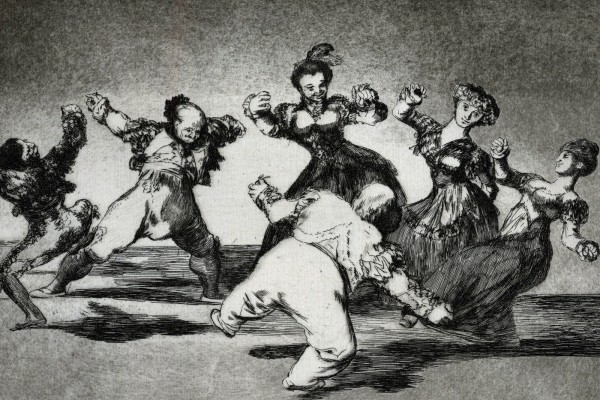


Now into its last few days, Renaissance to Goya: Prints and Drawings Made in Spain is the British Museum’s first exhibition dedicated exclusively to art from Spain, covering three centuries from the 1500s to the life and works of Francisco de Goya (1746-1828). The exhibition includes many pieces from the museum’s vast collection, some of which have never before been on display. It offers the rare opportunity to watch a culture evolve and react, from Spain’s golden age (a time of new development and progress in the arts) to the Napoleonic invasion (1808-14) and the famine of Madrid that followed.
As is likely to be expected, the themes central to the majority of earlier pieces are religion and architecture; however, there are a couple of surprising anomalies. Surrounded by portraits and other human images, stands a lone aardvark – The True Portrait of a She Ant-Bear – an anonymous reproduction of an earlier painting attributed to Goya. Another unusual addition, which drew the interest of many viewers, is a sheet of uncut playing cards from 1587, printed by using woodcut and hand coloured stencils.
The latter part of the display sees a change in mood and themes, co-inciding with a time of upheaval in Spain and the works of Goya, an artist famed for his depiction of dark subject matter.
The exhibition features prints from three of Goya’s best-known series – Los Caprichos (1797-98) The Disasters of War (1812-15) and Los Proverbios (1816-24). There is something compelling in the grim nature of his prints, which range from the advertently macabre to the subtle and sinister. They bring to the viewer a feeling of wariness – a fear that they should not be studied too closely for threat of the dark secrets they might reveal, which is perhaps what makes them all the more enthralling. They almost have the effect of watching a horror film and wanting to look away, yet being drawn to watch.
Another artist worth noting is Antonio Carnicero (1748-1814) whose pieces A Picador on Horseback Stabbing a Bull and A Picador Leaving the Ring (1789) stand out with their vibrant colours in an exhibition otherwise dominated by a palette of monochrome and sepia.
Melanie Weaver
Renaissance to Goya: Prints and Drawings Made in Spain is at the British Museum until 6th January 2013. For further information or to book visit the museum’s website here.









Facebook
Twitter
Instagram
YouTube
RSS