
Jean-Etienne Liotard at the Royal Academy of Arts
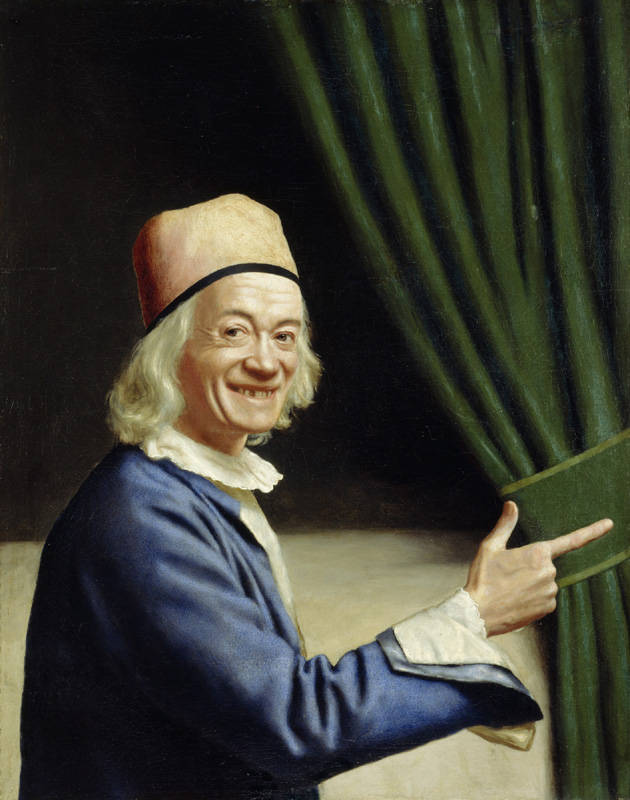

A wander through the Jean-Etienne Liotard exhibition at the Royal Academy of Arts is liable to be a revelatory experience. This is not only because of the Swiss portraitist’s absence from UK exhibitions –only recently have technological advances facilitated the safe international transportation of pastels, his medium of choice– but also because the degree of detail on display is higher than one might expect to find in works from the Enlightenment era.
While there are plenty of spectacular grand-scale portraits here (with the enormous Richard Pococke from 1738 an imposing highlight), Liotard’s expert eye for the finer specifics of clothing and furnishings extend beyond them, translating especially well into his miniature works and particularly into his trompe-l’œil pictures. These intricately photorealistic paintings of smaller drawings and bas-reliefs (such as Trompe-l’Oeil with Bas-Reliefs and Two Drawings from 1771) were designed to trick the eye into believing that it is seeing the real objects in question. The trick continues to work to this day.
Perhaps Liotard’s greatest and most lasting contribution to the evolution of art comes via the playful sense of humour that is resplendently apparent throughout the exhibition, but especially in his portraiture. Bucking the prevailing trend for rigid poses and austere, neutral facial expressions, Liotard arranged his subjects less formally. In doing so he honed an almost supernatural ability to capture not just their physicality, but a specific moment in their lives in which their essential, vital mortality is candidly laid bare. From Julie de Thellusson-Ployard (1760), caught coyly adjusting her collar, through to Self-portrait Laughing (c1770), which could legitimately (if clumsily) be termed a “banter selfie” by today’s standards, the intrinsic levity within so much of this work is utterly disarming. To the modern observer, Liotard’s ability engenders a profound identification with the ghosts of the past, on a level that transcends even high art, to speak to the fundamentals of what it is to be a human.
Stuart Boyland
Jean-Etienne Liotard is open from 24th October 2015 – 31st January 2016 for further information
visit here.
Twitter accounts: @RoyalAcademy







Facebook
Twitter
Instagram
YouTube
RSS