
Beyond Caravaggio at the National Gallery
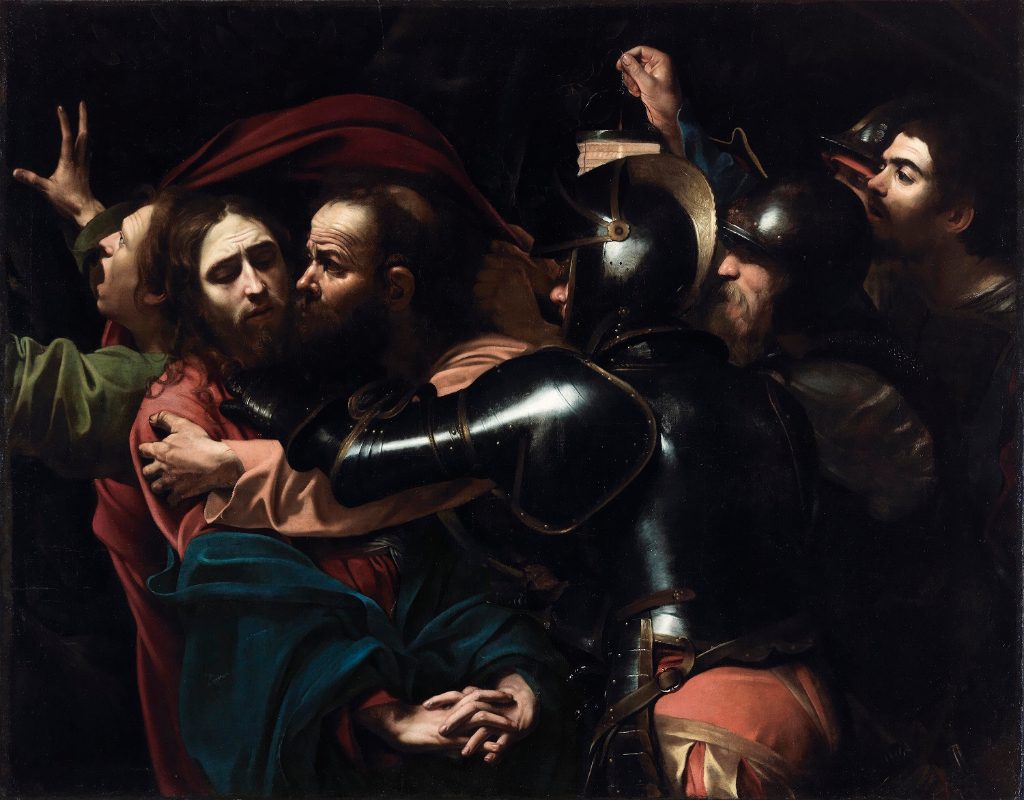


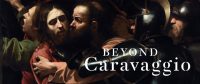
Gallery-goers would be forgiven for thinking that the new exhibition Beyond Caravaggio at the National Gallery is a show about the great master himself. Its focus, however, is actually on Caravaggio’s influence on art and his many followers working in a “Caravaggesque” style. Only six out of the 49 paintings in the exhibition are actually by Caravaggio. But, before you write the exhibition off, you should know that those six paintings are completely mind-blowing.
The exhibition’s main academic message seems to be fairly clear and is quickly grasped: Caravaggio was a revolutionary painter who utilised chiaroscuro techniques and real-life likenesses to powerful effect. His unique style was then adopted (to greater and lesser degrees of success) by a whole roster of artists in several countries, both during his lifetime and afterwards. It’s interesting to see how Caravaggio’s radical ideas were taken up and disseminated, but the main impression the exhibition gives is that none of these lesser-known artists can hold a light to the man himself.
Caravaggio’s paintings shine with emotion, intimacy and drama. In a room full of imitations, it is the genuine Caravaggio works that draw the eye immediately, exuding that undefinable “something” of great art that captures the imagination.
In many of his works, it’s the details that stand out. In The Taking of Christ (1602), Judas’s dirty thumbnail grasping Christ’s sleeve contrasts powerfully with Jesus’s own modestly clasped, neat hands. In The Supper at Emmaus (1601), Christ’s disciple stretches his arms out in an extraordinary painterly example of perspective and foreshortening; he almost seems to be reaching out of the painting to pull the viewer into the scene.
The final room holds the exhibition’s greatest treasure, a large depiction of St John the Baptist in the wilderness. Rather than presenting the saint as an emaciated old man, Caravaggio painted a muscular half-nude youth sitting in the dramatic light which so many of his followers tried to imitate. The skin is painted with wide brush-strokes that are clearly visible, and the subject’s dark, haunted eyes avoid the viewer’s gaze.
There are some less-than-fascinating works on show in Beyond Caravaggio and visitors expecting room upon room of paintings by the famous artist will probably be a little disappointed. Overall, however, the few stunning works by Caravaggio win out, making this exhibition one not to be missed.
Anna Souter
Beyond Caravaggio is at the National Gallery from 12th October 2016 until 15th January 2017, for further information visit here.













Facebook
Twitter
Instagram
YouTube
RSS