
The Mad Hatter’s Tea Party at the White Bear Theatre

 28 August 2024
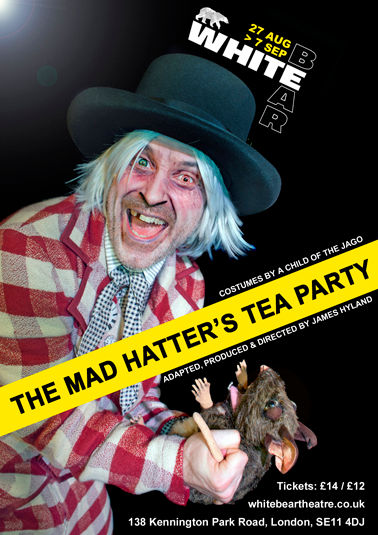
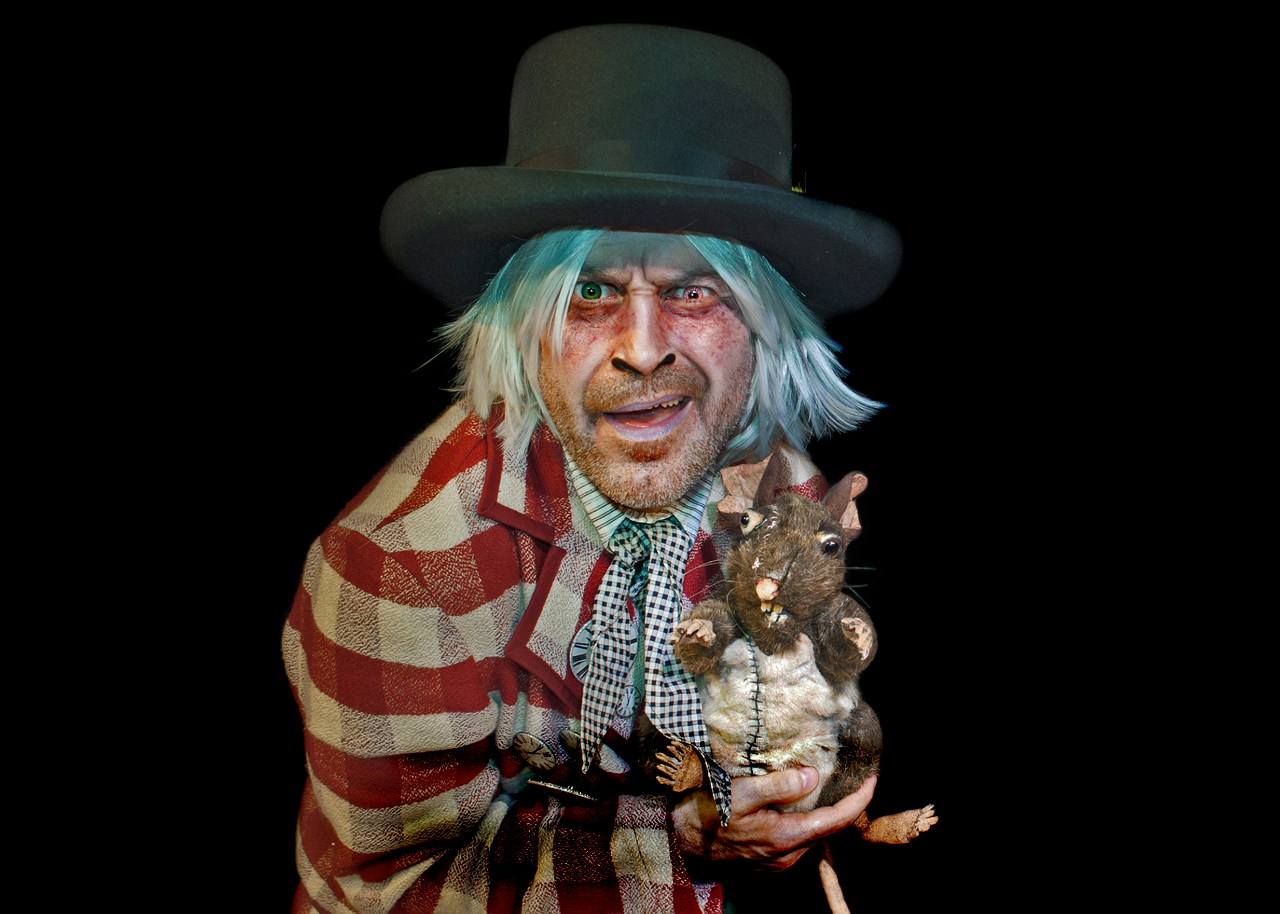
The Mad Hatter’s Tea Party, directed by James Hyland at the White Bear Theatre, is a theatrical journey into the depths of absurdity, where the boundaries between fiction and reality blur into chaotic eccentricity. This adaptation of Lewis Carroll’s ironically timeless classic by Brother Wolf doesn’t just take you down the rabbit hole – it plunges you into the very heart of madness itself.
The production is a riotous celebration of Carroll’s surreal world, where logic is upended and the familiar becomes strange and unsettling. As the Hatter and the Hare engage in their perpetual debate, the play explores themes of sanity, grief and the fragile line that separates reality from fantasy.
James Hyland’s Hatter is “much of a muchness”, an excessive, loud and eccentric caricature – a parody of his former self as the clock repeatedly repeats its ricochet on the hour. It is unclear whether his madness stems from his grief, mulling over the idea that “it is far better to embrace the madness than live in a world where the dead don’t dance”. Or whether it stems from loneliness, adopting a puppet of a dormouse as a friend, desperate not to let the March Hare (Joshua Jewkes) leave his 6 o’clock loop.
The Hatter ties the Hare in linguistic loops, trapping him in a wonderland, which he ultimately rejects but can’t seem to leave. In this way, the Hatter’s gravitational orbit of madness draws in surrounding victims, including the audience, sucked into a whirlpool of consistent inconsistencies.
A Child of the Jago’s fashion pieces are inspired by “characters, archetypes, criminals and rebels of society. The battles they fought, the rules they broke, the things they stole”. You can see this act of defiance most obviously throughout their costumes developed for the play. An eclectic mix of mismatched colours and prints decorate the Hatter, an ardent breaker of the rules of reality. His checkered shirt and matching bottoms are reminiscent of Sir John Tenniel’s 1865 wood engraving “The Mad Tea Party”, which became the cartoon most readily associated with Carroll’s original work. Yet, its collar, over-the-top cravat and soft pyjama-like material add an element of vulnerability to this man who is clearly out of touch with himself and worldly happenings.
Jewkes, in a role slightly more driven by reality and practicality as Hare, is suited and booted in an earthy brown waistcoat and boots; a testament to the Victorian era fashion, which surrounded Carroll as well as the company’s bespoke tailored and contemporary clothing. However, the large (dor)mousey brown ears, which sit atop his head, remind the audience that he’s just as sane as the Hatter himself.
As the curtain falls on The Mad Hatter’s Tea Party, it becomes clear that this production is more than just a retelling of a beloved story – it’s an immersive experience that leaves its mark on the psyche. Hyland’s adaptation is a character study in the fine art of losing one’s mind, exploring madness, loneliness and the refusal to conform to reality, offering a poignant commentary on the human condition, suggesting that perhaps there is a method to the Hatter’s madness after all.
Madness might indeed be the only sane response to an insane world. Be warned, you may just leave the theatre more unhinged than when you arrived.
Olivia Gardener
Photos:
The Mad Hatter’s Tea Party is at the White Bear Theatre from 27th August until 7th September 2024. For further information or to book visit the theatre’s website here.







Facebook
Twitter
Instagram
YouTube
RSS