
Israel Palestine on Swedish Television 1958-1989
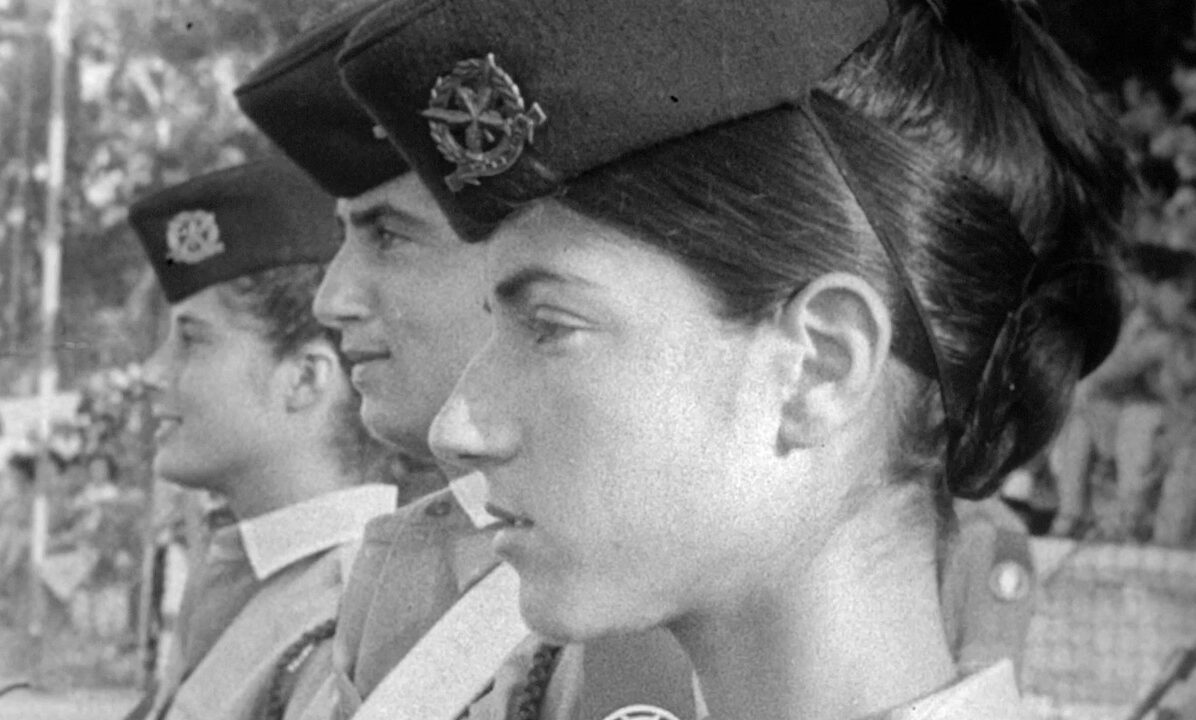


With its refreshingly straightforward title and integration of three and a half hours of archival material from Swedish public broadcaster Sveriges Television (SVT), Israel Palestine on Swedish TV 1958-1989 is a veritable treasure trove of past documentaries, newsreels, interviews and snapshots of one of the world’s longest conflicts, capturing everything from the mundane to the monumental. Collected during SVT’s decades-long monopoly on public-service broadcasting in the country, the footage that underpins Göran Olsson’s documentary had a profound impact on public opinion on international affairs, despite the network’s purported non-partisan stance, challenging journalism’s role in shaping historical narratives.
Despite its lengthy runtime, absence plays a crucial role in the film’s composition, which adopts a more traditional documentary style emphasising showing rather than telling. With an unapologetic focus on visual storytelling over narration, Olsson’s direction encourages viewers to interpret and reflect on the subject matter on their own terms. The minimal commentary allows the raw, unfiltered frames to speak for themselves, placing trust in both the power of visual evidence to convey the complexity of events and the audience’s capacity to digest the matter without being hand-fed by experts, historians, or Olsson himself. The deliberate lack of overt narration allows audiences to experience firsthand the media’s portrayal of the Israeli-Palestinian conflict across decades and to draw insights from each report and recording.
In a rare act of commentary, Olsson clarifies that archives do not provide the full story, stating, “Archive material doesn’t necessarily tell us what really happened, but it says a lot about how it was told.” The marked omission of certain facets also proves to be as impactful as the most poignant and painful clips, as these highlight significant gaps in history writing. The Swedish media’s failure to name Palestine or its people directly until the Arab-Israeli War of 1967 was as revealing as Palestinian Liberation Organization chairman Yasser Arafat’s sombre contemplation on why the Swedish public did not extend the same level of support to the Palestinians as they did to the Vietnamese, who were liberating themselves from American forces.
Olsson’s unmediated, uneditorialised approach sharply contrasts with the selective nature of history writing, encouraging viewers to reflect on both what is shown and what is left out, not only within the 30-year span but in the broader narrative of the conflict and beyond.
Christina Yang
Read more reviews from our Venice Film Festival coverage here.
For further information about the event visit the Venice Film Festival website here.






















Facebook
Twitter
Instagram
YouTube
RSS