
The statue of peace: A maritime tribute in Copenhagen
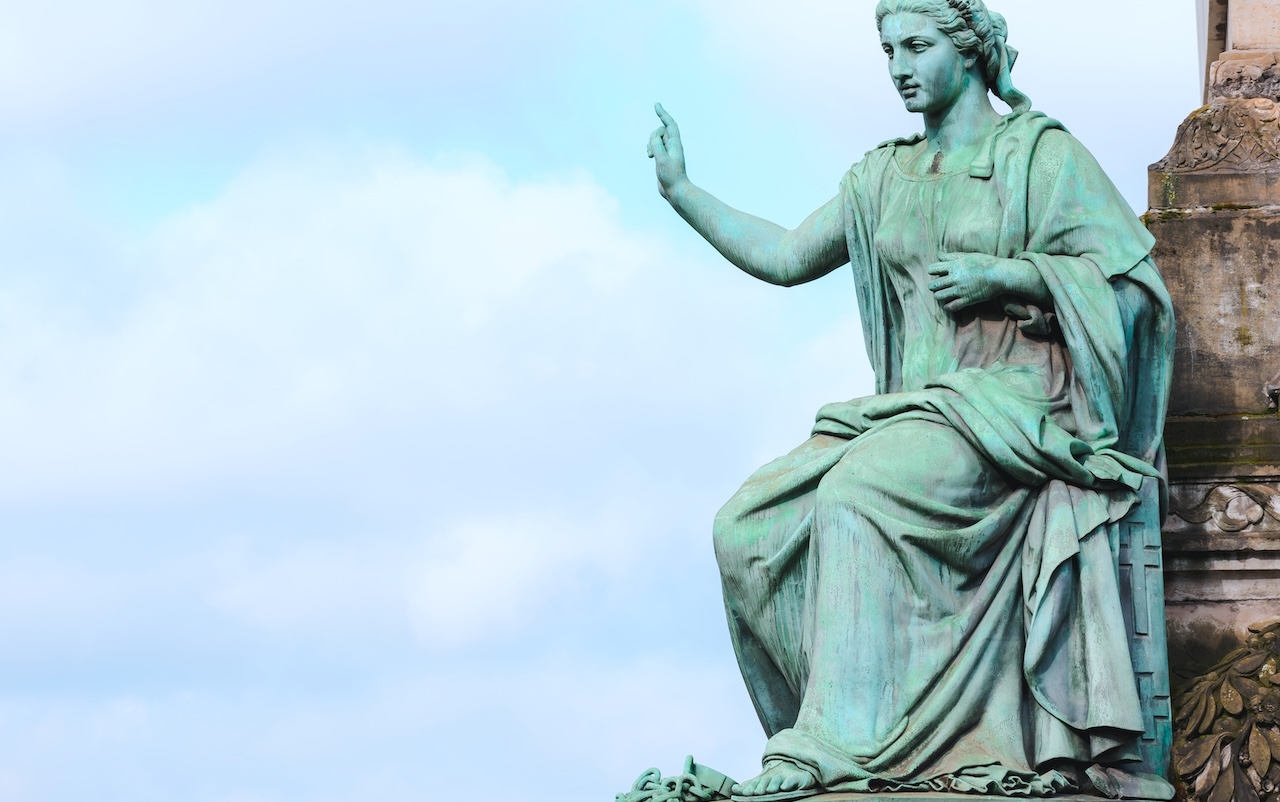

The Statue of Peace, often referred to as the Maritime Monument, stands as a solemn testament to Denmark’s maritime history and its enduring commitment to peace and reconciliation. Located in Copenhagen’s picturesque harbour, this monumental sculpture is more than just an artistic creation; it serves as an evocative symbol of Denmark’s legacy as a naval power and its aspirations for a future of harmony, amidst the turbulent tides of history.
Although a distinctly Danish monument, it shares broader European values of reconciliation that are evident in works across the continent, including Italy. In fact, much like Italy’s own iconic monuments – such as those commemorating the aftermath of war and national unity – the Statue of Peace embodies a vision of hope that transcends national borders.
The origins and context of the statue
The Maritime Monument, also known as the Statue of Peace, was conceived in the aftermath of Denmark’s experience with war and conflict, a theme shared by many European nations, including Italy, which saw its own transformative history through the two World Wars.
Erected in 1918, the monument reflects Denmark’s desire to honour its maritime legacy while simultaneously embracing a new era of peace. The creation of the statue was an effort to capture the collective desire for a peaceful future, echoing a sentiment that Italy, with its artistic traditions rooted in both Roman grandeur and Renaissance ideals, also shared in its post-war reconstruction period.
In this sense, the statue operates as a historical marker – much like Italy’s numerous monuments to peace, which not only recall the devastation of war but also celebrate the spirit of recovery and reconciliation. The Statue of Peace, designed by the Danish sculptor Svend Rathsack, thus stands as a tribute to Denmark’s naval history while symbolizing the same aspirations for peace that artists in Italy were capturing in their own monuments during the early 20th century.
Iconography and symbolism of the statue of peace
The Statue of Peace features an allegorical female figure, embodying peace as both protector and symbol of serenity, much like the personifications of peace seen in Italian Renaissance art. Italy, with its rich tradition of allegorical figures in sculptures by artists such as Michelangelo and Bernini, influenced the way this monumental figure was conceived. Draped in flowing garments that suggest movement, the female form stands atop anchors, symbolising Denmark’s deep ties to the sea and its naval heritage.
While the design draws on classical motifs familiar in Italian art – where allegorical figures often conveyed both abstract ideals and national narratives – there is a clear Danish adaptation. The serene, yet commanding presence of the figure not only reflects peace but also evokes the strength needed to sustain it. This duality in the statue is reminiscent of Italy’s own treatment of peace in art, where sculptures often blend grace with power, as seen in works like Bernini’s The Ecstasy of Saint Teresa.
Blicher’s use of classical forms – albeit with a modern sensibility – also links the statue to a broader European artistic tradition. Like Italian artists who, over centuries, have navigated between the classical and the contemporary, the Statue of Peace finds its own balance between the historical weight of Denmark’s naval past and its aspirations for a more peaceful future.
Denmark’s maritime legacy in art
Denmark’s maritime legacy, from the Golden Age of Danish exploration to its role in naval history, stands as a central theme in the Statue of Peace. The sea, once a domain of conquest and conflict, here becomes a metaphor for Denmark’s shift toward a pacifist, diplomatic future.
This evolution echoes that of Italy, whose transition from a fascist regime to a republic in the mid-20th century also entailed a reimagining of its role in the world. Italy, with its own maritime history, particularly its naval power during the Roman Empire and the Renaissance, shares a historical understanding of the sea as a place of both great power and potential peace.
In fact, Italy’s national monuments – such as the Altare della Patria in Rome – are also imbued with symbolic references to war, peace, and national unity. These Italian monuments, while rooted in Italy’s classical past, draw heavily from the nation’s early modern history.
Similarly, Denmark’s Statue of Peace draws from a classical vocabulary of sculpture, while updating it to reflect the new realities of the 20th century. Denmark’s maritime identity is honoured, but the country is also firmly rooted in the modern desire for international peace, a theme Italy, too, grappled with as it sought to redefine its national and cultural identity post-WWII.
The statue’s role in Copenhagen’s urban landscape
Located along Copenhagen’s bustling waterfront, the Statue of Peace engages with both the natural environment and the city’s dynamic architectural fabric. As ships pass by and the sea winds gently stir the harbour, the monument stands as a silent yet powerful reminder of the delicate balance between conflict and peace.
Like Italy’s monuments, which often serve as focal points in their cities, the Statue of Peace encourages both residents and visitors to reflect on the broader themes of unity and peace that have shaped not only Denmark but the entire European continent.
The statue’s placement in Copenhagen, where it stands in quiet contrast to the hustle of modern life, invites contemplation – much like Italy’s own serene piazzas, where works of art are not merely visual markers but active participants in the social and political life of the city.
The legacy and modern relevance
Over the years, the Statue of Peace has evolved into an iconic piece of public art in Denmark. Much like Italy’s monuments that continue to define the cultural landscape of cities like Rome and Florence, this statue remains an enduring symbol of Denmark’s values: maritime strength, a commitment to peace, and the ongoing dialogue between its past and future. In the 21st century, with global politics in flux, the Statue of Peace continues to resonate as a reminder of the necessity of peace in an interconnected world.
The legacy of this monument can also be understood through the lens of art history. Works like the Statue of Peace transcend their geographical origins, connecting with broader European narratives of war, peace, and national identity. As in Italy, where monuments to peace often incorporate both classical forms and modern ideals, Denmark’s monument invites us to reflect on how art can help heal the scars of history and look toward a more harmonious future.
Just as Italy, through its art and monuments, continually seeks to reconcile the weight of its past with the hope for peace, Denmark’s Statue of Peace remains a living symbol of the belief that peace, like art, is an ever-evolving process. Both countries – each with its own artistic traditions – demonstrate through their public sculptures that peace is not a passive ideal but an active, ongoing effort, etched into the very fabric of their histories.
The editorial unit






















Facebook
Twitter
Instagram
YouTube
RSS