
“We don’t make eye candy, we make eye protein”: Guillermo del Toro on Frankenstein


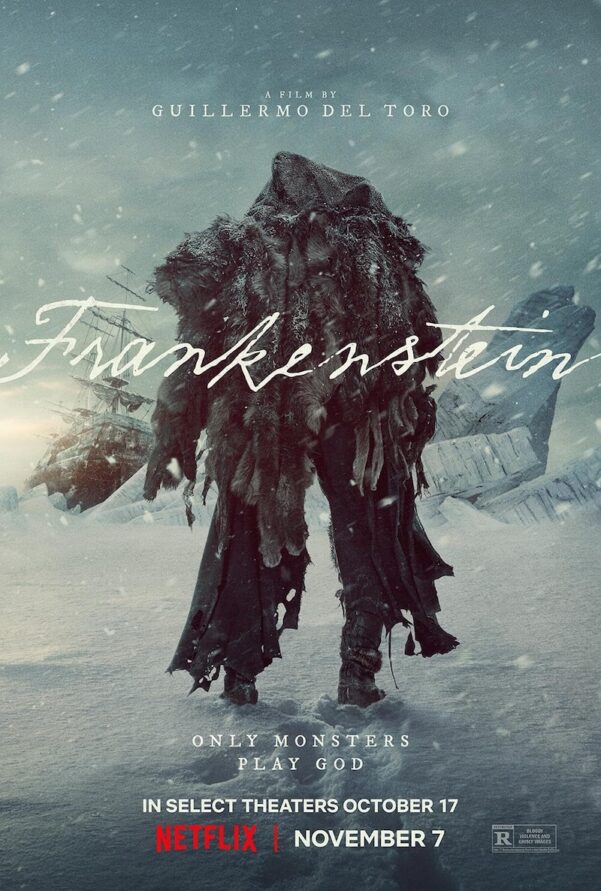
As the days draw shorter, awards season settles in, bringing with it a run of special screenings across London, designed to keep this year’s contenders fresh in the viewer’s minds. Amid ongoing debate surrounding Netflix’s potential bid for Warner Bros and what this could mean for the future of cinema, the streaming giant appears to place its hope for this year’s accolades in one carefully curated basket: Guillermo del Toro’s Frankenstein. Less than two months after the film premiered at the London Film Festival, director Guillermo del Toro and star Jacob Elordi return to the city to give an extended intro at the BFI IMAX, followed up with a visit to the National Library the next day.
We were invited to a third screening of the Mary Shelley adaptation, primarily aimed at BAFTA and Golden Globe voters, for which Del Toro and Elordi were joined by a whole panel of colleagues: production designer Tamara Deverell, director of Photography Dan Laustsen, costume designer Kate Hawley, and prosthetics designer and creator Mike Hill.
The Mexican cult director starts the discussion with an impassioned speech for humanity in films as well as the process of filmmaking, a clear dig at the never-ending discussions of the role of artificial intelligence in modern creation. Further, del Toro challenged the long-held image of the director as a dictator, rather he likens the job to “hostage negotiation with reality”.
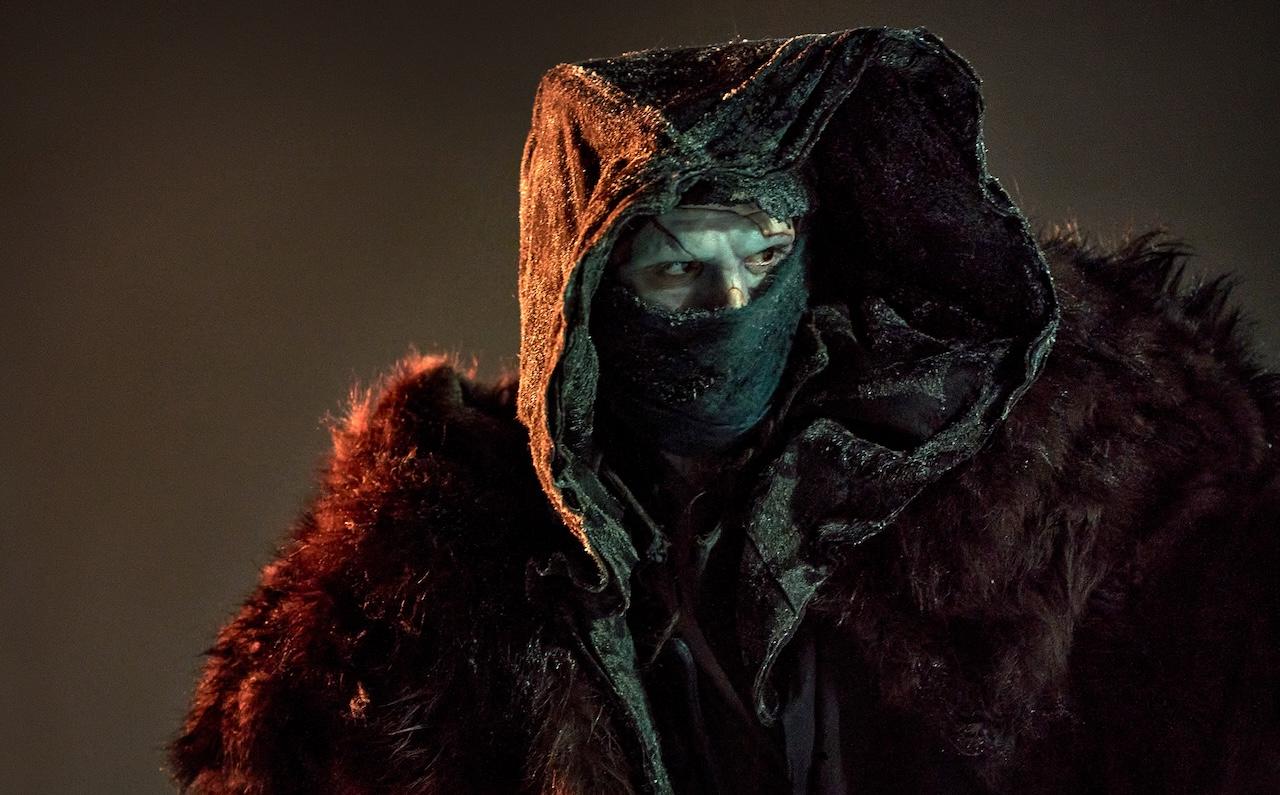
The analogy speaks to the necessity of adaptability, something the entire production was forced to confront when the actor, who had initially been cast as the creature [Andrew Garfield], left the project nine weeks before shooting. The departure required a complete redesign and refitting of the prosthetics for Elordi, who stepped into the role. As the transformation into the creature famously required the Australian actor to spend ten hours in the make-up chair each day, he is asked about any rituals this might have inspired or mental preparation during the process.
“I used to say I just thought,” Elordi laughs, “but then Netflix put a video online and I was playing video games. Thanks Netflix!”
Upon further probing, he reveals he played Red Dead Redemption 2, because of its length.
Since one of the defining aspects of the creature is its composite nature, the concept of being built from different parts was reflected in the prosthetics design, Mike Hill shares, which was made up of 42 separate pieces.
Del Toro and Tamara Deverell tell us that this was also mirrored in the production design for the ship, for instance, which was also “sewn together” from various sources, painstakingly retrieved.
Throughout the Q&A, del Toro praises the Heads of Department and how everyone worked in service to the narrative. “We don’t make eye candy,” he says, “we make eye protein.”
He stresses the importance of everything being haptic and physical on set.
“Everything is real. When you see Jacob pushing the ship, it is Jacob pushing the ship,” he gushes.
Perhaps aware that this description might make him sound like he had to develop superhuman strength, Elordi clarifies, “Well, we had hydraulics!”
Kate Hawley discusses the colour schemes for the costumes, which reflect motifs of the story for each character. Red was always used to represent anything to do with Victor’s mother. Another example she gives of these consistent ties is Elisabeth’s bonnet, which was fashioned to echo Victor’s mother’s coffin.
With the subject of Mia Goth’s dual roles broached, Mike Hill divulges that he considers it the biggest compliment to him that some audiences do not recognise the actress as Victor’s mother, because it means his design is so convincing. Hill crafted eyebrow and nose prosthetics for Goth to create a physical resemblance between her and Oscar Isaac.
When asked whether he found his way into the character via the physical, Elordi ponders and finally says he started with the emotional core: “He is incredibly relatable, because he is everyone. He is us as a baby, pre-consciousness. He is us through consciousness. He is us with the burden of living. Just before you fall asleep, those nights when you are like, ‘Why? Why am I here?’”
Elordi shares that when the opportunity came around, he was at a stage where he was looking for change, and it came down to, “finding out how honest I could be with myself and really evaluate my life and try to put it into the creature.”
After the emotional way in, he looked at physical, vocal and little technical things, but the actor points to del Toro’s script, which had three parts that highlighted the creature’s development, and his job was to “map this development and be focused on each little section”.
Selina Sondermann
Frankenstein is released on Netflix on 17th October 2025.
Watch the trailer for Frankenstein here:











Facebook
Twitter
Instagram
YouTube
RSS