
Las Meninas, reconsidered for a new generation
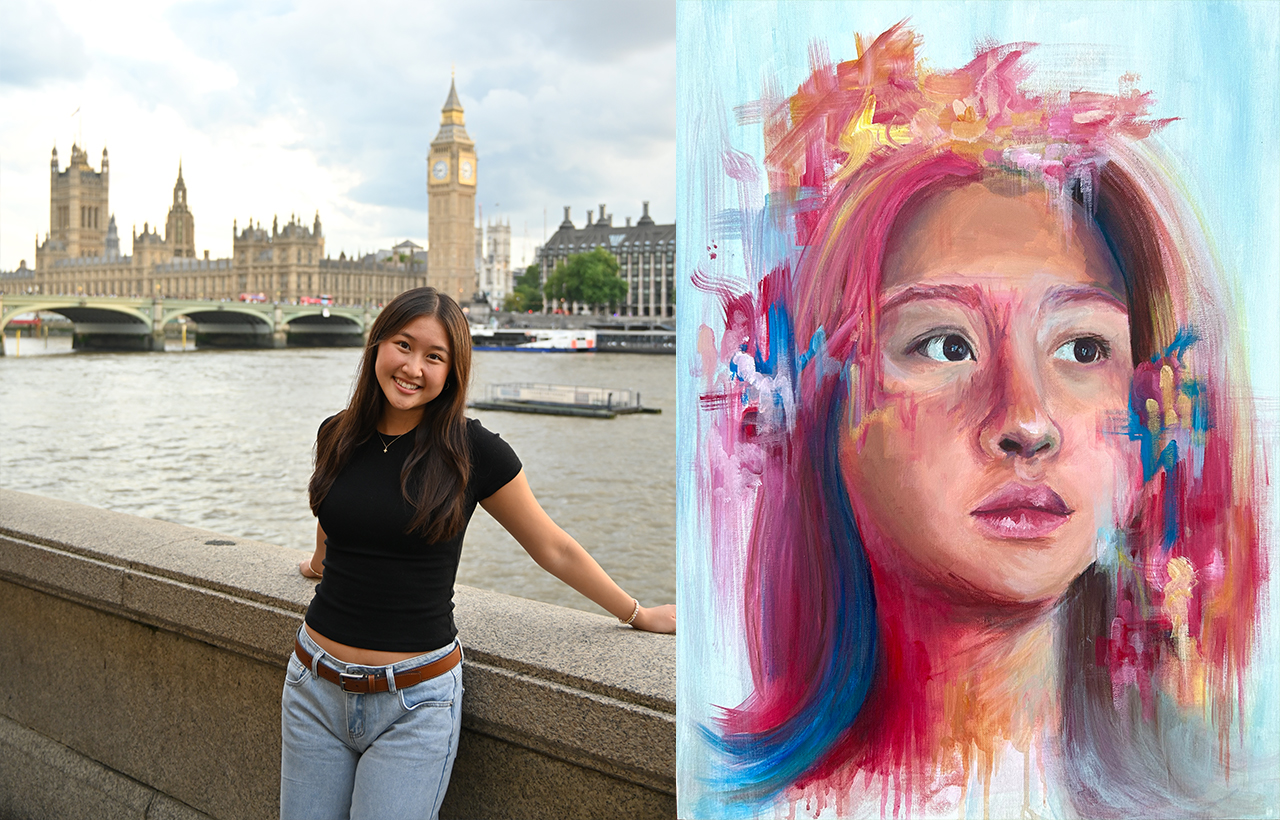


Based on research and analysis by Jacqueline Hu
At first glance, Diego Velázquez’s Las Meninas (1656) looks like a glimpse of everyday court life in seventeenth-century Spain. A princess, attendants, a dog, a visiting court official. Nothing dramatic. Yet for centuries, the painting has unsettled viewers because it refuses to tell you who matters most. Instead, it asks a far more contemporary question: who gets to be seen, and how does visibility create status?
That question is also central to the work of Jacqueline Hu, a USC student and founder of Arthentic Joy, a nonprofit dedicated to advocating for mental health through art accessibility. Her study of Las Meninas begins with traditional art historical analysis, but she approaches the work with an eye trained on representation, dignity, and the subtle politics of being looked at.
A painting that refuses to choose a single centre
What sets Las Meninas apart is how deliberately Velázquez refuses a focal point. Instead, he gives us competing centres:
• the Infanta Margaret Theresa standing in light
• José Nieto Velázquez framed in the open doorway
• the reflected king and queen in the dim back-wall mirror
As art historian Victor Stoichita notes, the viewer is forced to choose where to look because the painting will not do it for them. This intentional decentralisation mirrors a modern struggle: identity is not a singular narrative. It is shaped by multiple lenses, each with its own claim to importance.
In Jacqueline’s reading, this multiplicity reflects how marginalised communities negotiate visibility. You can be present, yet not centred. Seen, yet not fully acknowledged. The painting understands that tension long before we had language for it.
Dignity was distributed across the room
Another part of the painting that resonated with Jacqueline is its quiet redistribution of dignity. Velázquez includes a wide range of social roles: royalty, ladies-in-waiting, dwarves, entertainers, guards, and the painter himself. Instead of reinforcing the rigid hierarchy of the court, he places these figures on nearly the same plane.
Mari Bárbola, a court dwarf often typified in period paintings, stands upright and meets the viewer’s gaze directly. As art historian Jonathan Brown noted, this was an uncommon and respectful portrayal for the seventeenth century.
Jacqueline highlights this moment as an early artistic challenge to the idea that status is predetermined. Velázquez suggests that presence alone can hold authority and that dignity can be extended without hierarchy.
The painter steps into the scene, literally
Velázquez’s painting of himself into the composition was more than a stylistic flourish. In his own time, painters were classified as craftsmen, not intellectuals or courtiers. Inserting himself among royalty was a strategic assertion of status, reinforced by symbols like the key at his waist, a marker of high office in the royal household.
For Jacqueline, this is a moment of creative self-advocacy. Velázquez quietly refuses the boundaries set for him. He steps onto the same plane as those who outranked him and uses art to argue for the legitimacy of his role.
In many ways, it mirrors modern conversations about creative labour, who gets credit, and who gets to define their own worth.
A historical image with present-day relevance
Jacqueline’s interest in Las Meninas grew from her work at the intersection of art and mental health. Art, she argues, is a tool for understanding ourselves, not simply a historical object. In her reading, Las Meninas becomes an image about being seen accurately, fairly, and with intention, something many young people today still fight for.
The painting also feels uncannily contemporary:
• its shifting centres resemble the constant self-curation of modern life
• Its questioning of hierarchy mirrors debates about representation
• Its complex gaze resembles how marginalised identities navigate visibility
Velázquez may have painted a royal household, but Jacqueline’s analysis reveals a universal negotiation that continues centuries later.
Why Las Meninas still pulls us in
Four hundred years after its creation, Las Meninas still feels alive, not because its setting is familiar but because its questions are. It asks how power is signalled, who gets to be central, and how images shape the status of the people within them.
Through Jacqueline’s lens, the painting becomes more than an art historical puzzle. It becomes a reminder that visibility is never neutral. How we see others, and how we allow ourselves to be seen, remains an active, ongoing negotiation.
The editorial unit




















Facebook
Twitter
Instagram
YouTube
RSS