
Dao
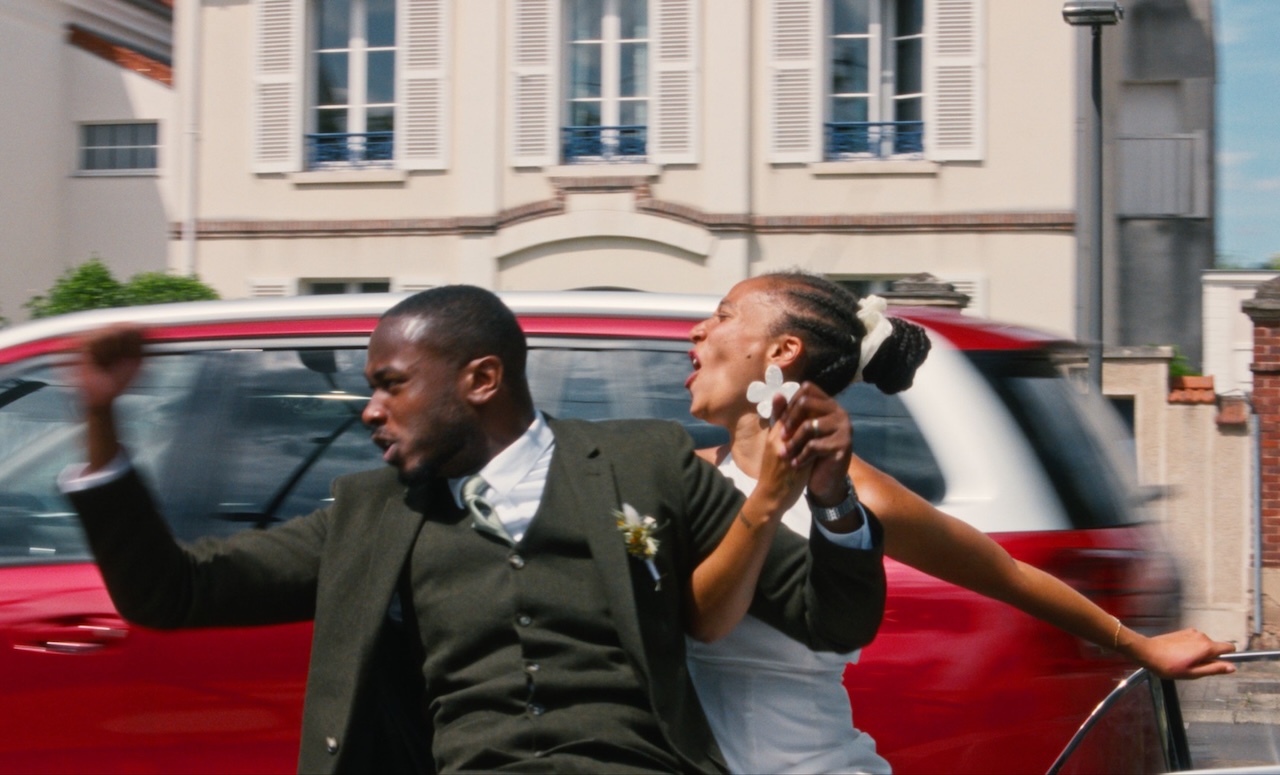


In writing about Dao, Alain Gomis’s highly ambitious sixth feature film, one is tempted to simply rifle through prized moments, as if combing through a diary or, more fittingly, a wedding video. It’s the wedding day of Nour (D’Johe Kouadio) and James (Mike Ettienne), but the occasion grants equal opportunity to seemingly all in attendance to be seen and heard, as only family can see and hear us. Long-held resentments over childhood disciplinary methods are hashed out; former lovers reconnect tentatively over cigarettes; new lovers are introduced to a sceptical family. The occasion is equal parts jubilation and pressure cooker, both entirely about the young newlyweds and scarcely about them at all. There would be more than enough mundane happenstance at this one celebration to fill a lone film, but Gomis’s scope reaches farther.
On equal footing with the big day in Paris is another, more sombre occasion in Guinea-Bissau, where Nour and her mother Gloria (Katy Correa) attend a commemoration ceremony for Gloria’s late father, and in a meta third thread, the same cast in attendance at both occasions is interviewed in rehearsals. The effect is as genuinely dizzying as it is warmly consoling and, ultimately, life-affirming. Dao is an epic panorama of small moments that feel stolen rather than choreographed, as if we happened upon them within a small window of opportunity before they dispersed. Its rhythms are so loosely free-flowing you scarcely realise how weighted with intent it is until you’ve allowed it to sit with you.
More than anything, Gomis approaches his onscreen subjects with overwhelming, empathetic interest, listening to the cast’s own stories at length in the interviews threaded throughout. They muse on the ease with which one, as a Black woman in France, can cease to be recognised as existent altogether; on the importance of self-knowledge. In an especially touching moment, Gomis’s inquiry on how much of a stomach one of his cast members holds for sentimental films inspires a wide-open answer, one more about the love she holds for those close to her than the contents of the question. Still, one senses the distinction between the “real” people in the interviews and the fabricated ones at the two celebrations is negligible for Gomis. Across homelands, generations, fact and fiction, this sprawling family (some of the non-actors comprising the cast hail from Gomis’s own) share their stories and fears, and one is content just to listen, lulled by the film’s gentle drift.
Ultimately, what Gomis has described as a work of “collective fiction” is intimate and epic enough to measure up to the moniker. Though Kouadio and Correa have particular prominence, every face that passes through is granted attention and care, and the movie surrounding them feels as fluid as it does thematically exact. Daunting though its three-hour runtime may appear, the feature’s effect remains soothing and transporting even when tempers flare, and family come to blows. It’s a welcome, unexpected pleasure to permit Gomis’s eloquent film to wash over you.
Thomas Messner
Dao does not have a release date yet.
Read more reviews from our Berlin Film Festival coverage here.
For further information about the event, visit the Berlin Film Festival website here.





















Facebook
Twitter
Instagram
YouTube
RSS