
“The interior spaces in Arabic countries are the territory of women”: Leyla Bouzid on In a Whisper at Berlin Film Festival 2026



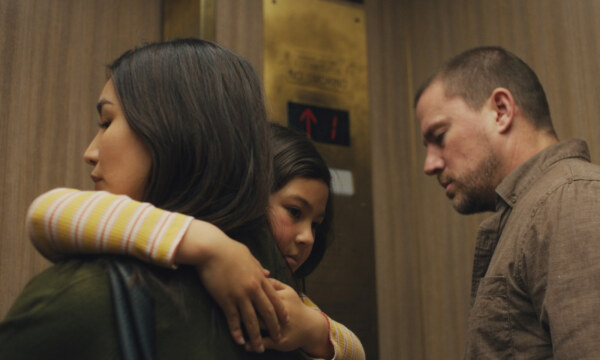
Lilia (Eya Bouteraa) and Alice’s (Marion Barbeau) relationship is put to the test when Lilia travels back to Tunisia for her uncle’s funeral. There, her overbearing family is unaware of the life she leads in France – but as she learns more about the circumstances surrounding her uncle’s passing, those separate worlds begin to clash.
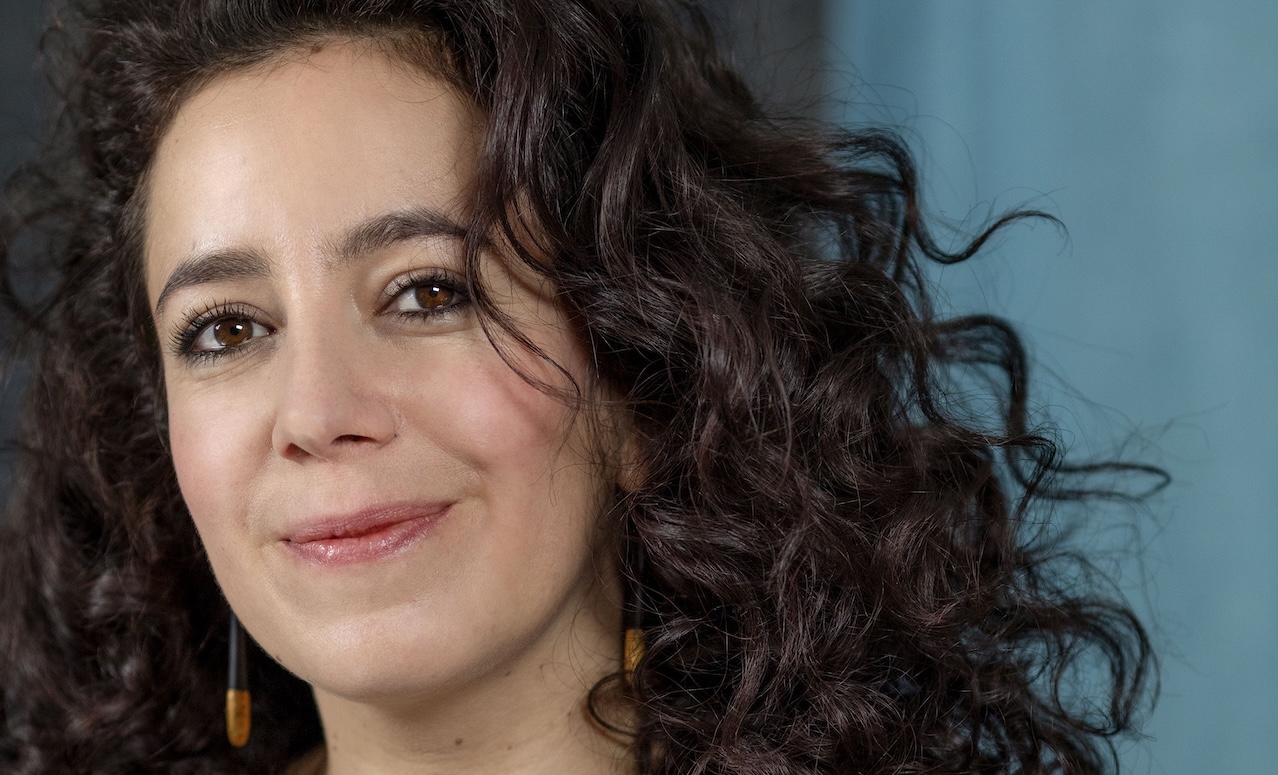
In a Whisper is Leyla Bouzid’s third feature and was screened in Competition at the Berlin Film Festival. We spoke with the Tunisian director about the impact of her family home on this project, the visual style of interweaving images of past and present, as well as the status quo of queer stories in Arab cinema.
At the press conference for the film, you mentioned you were motivated by your family’s house, and it became Lilia’s family home in the film. How much of In a Whisper would you say is inspired by your own family?
The house is the house of my family, and a lot about the character of the grandmother is very inspired by my own grandmother. All the women in this, the female characters, were very much inspired by people I know, and from my family. But the story itself is a fiction: the narrative and what’s happening, it’s all fictional. It’s really the characters that are based on powerful women I know.
So when you were looking to cast all these wonderfully complex characters, were you also looking for a certain familiarity in the actors?
I was looking for an energy. When I talked with the actresses, I was telling them about the character I know very well, without telling them, “You’re gonna play this person!” They also bring who they are, their own energy, but what was very clear was that each of these women had her own colour, you know. They are not the same, but they make up a family. For example, the sisters, they are really very different; they’re both powerful, but they are very different. One is a silent woman who is very intellectual, always inside herself, not expressing too much. The other one is always trying to solve everyone’s problems, is outgoing, like “Let’s make a mojito, let’s have fun!” But in the end, both energies fit very well together and make up a sisterhood. So I was very aware of this kind of relationship, and we were talking a lot about it. Actually, the grandmother is wearing some dresses of my own grandmother, because, yeah, the house remained the same. I made a deal with my family that I’m gonna film in this house before they sell it. So they kept it all like it was, and also the clothes that were there became costumes. I didn’t do this for the others, but for the grandmother, it was really her dresses and her skirts.
The story deals with the patriarchy almost in an abstract way, because we spend so much time within these four walls with all these women. How did you build this dynamic of outside and inside influences?
The film is also about matriarchy. The house is all about women. The interior spaces in Arabic countries are the territory of women. So I wanted to show the way the women deal with things. We can feel that this grandmother has an iron fist, that she’s really the one deciding, but at the same time, she’s also adapting, and she has her own way. And let’s say that the men’s world is outside this house. So I wanted to concentrate on these three generations and the way they influence each other: the way there is transmission and evolution. The inside is more intimate.
Watching this film from a Western perspective, there might be less stigmatisation about homosexuality, but our family lives are much more atomised. Do you think it is impossible to have both: that you can’t have these progressive morals about personal freedom as well as the warm, strong family ties?
Yeah, you see, Lilia has this part of her, which is in France. In this life, she has friends, sure, she’s very much in control, things are simple, let’s say, and she does what she wants. And in Tunisia, she has this family, very big and very strong, and the collective is very important. But at the same time, they don’t know who she is. And at one point, it’s not okay anymore, something is not working anymore, and she can’t really build a future like this. So in the film, I tried to propose a vision where you can be who you are in your private life, and still belong to a family which is strong and holds together. I didn’t want to choose the Western way, like a solution to cut off the family link. Because I wanted to show how transmission is important, how the relationship with the grandmother is important, and her relationship with her mother is important. All these roots are giving her strength. And I wanted to propose a story where it’s not the choice between the two, but that altogether they make a family.
While the film also deals with large-scale issues it cannot resolve, you find a surprisingly optimistic and amicable resolution, which is very different from your previous work.
I wanted this film to go from a death to a birth, and for it to go towards the light. For this story, in this context, I wanted the film to be full of light in the end and to give a little bit of hope. Especially because we say that lesbian films often end very badly. The mother says in the film that her daughter’s relationship is science fiction. So when they come back with the baby, it’s a little bit like that, it’s possible to do it and that we can all make a family, and we don’t need details. It’s just about love, and when a child arrives, it’s also the family that becomes bigger, and it can be possible to see it that way. But I think the viewer can also decide how to see it. Some viewers, they see it as if she’s still lying, and the grandmother either knows or doesn’t know. There is still the untold. There is still some taboo. So it’s not only joyful. You can feel that not everything is resolved.
How did you go about directing this ambiguity about the grandmother’s real grasp on the situation with the actress?
Yes, we talked a lot with Salma Baccar, who played the grandmother and asked ourselves, “Does she know or doesn’t she?” She had her own point of view, which I will not reveal, because we don’t decide this for the viewer. She told me, “For me, it’s like this. So I’m gonna play it like this.” I said “okay!”, and you can interpret the looks she gives her granddaughter in these moments. She looks to her, and there is something ambiguous; we can’t really be 100% sure what is behind her eyes, and that’s what we were in search of and wanted to do, and this is the way I directed it.
Throughout the film, you find these striking images that physically connect the past to the present. I would love to know about your work with the DOP in framing these memories in rearview mirrors, etc.
I wanted to create the feeling of what it feels like when you enter a family house, and that this house never changed since you were little, how the past is coming back, always, because these places remain the same. With the DOP, we really worked on having everything in the same shot, the past and the present, and that we had no cut. Very often, we go through the eyes of Lilia through this past, and we come back, and there is this appearing and disappearing. So it was very precise, working out how to do it. Like, we really needed to be very precise about where the camera was going to be. And it was also fun to do because the children, for example, they had to hide very, very fast without making any move, and sometimes they were laughing and not getting it. So there was someone on the stairs, there was an assistant, who said, “Come, come, come!” And it was like a game. So at the same time, it was very precise work and also very fun, we had to think about each moment, how to also play with the place where it happens.
Obviously, there is a huge disparity in the way homosexual men are treated versus homosexual women in many countries. One might face a prison sentence or worse, while the other is handled with a shrug. Did you want to match this sentiment in the way you handled Daly and Lilia’s respective stories?
Female homosexuality is not really considered in Tunisia, even by the authorities, even by those who criminalise it. They think it doesn’t have importance, and there is no representation. It doesn’t officially exist in any Arab country, and it’s not even considered by the ones that say it’s forbidden. So I wanted to tell this, yes, and to show that with filming the love between Lilia and Alice, to show that they exist, they are here, and it is serious, and there is a child in the end. The child is also a way for me to say, okay, family is the most important thing in Tunisian society, and they have a child. So it’s serious. But that’s what they think, and that’s the way they see it, so I wanted the lawyer to explain it’s not serious for them. Also, to prove male homosexuality, they do an anal test, something that is considered similar to torture, where they check with a doctor; it’s really crazy. And this they can’t do with women. It’s very hard for them also to prove female homosexuality. It’s some kind of misogyny because these people think that they can intervene, like one day they can take the girl and make her marry a man and have a child. But if it’s a gay man, you can try to marry him by force, but it will not work. With a woman, they think they can erase all this.
As a filmmaker who has explored both gender and racial perspectives, what steps do you think are needed to strengthen the “female gaze” in cinema?
I think now there are a lot of first films from female directors, and there is more and more, but I think what we still miss is to have women filmmakers who have a long career, you know, who have made ten, 20 films. A whole filmography. It’s harder to find. There are some, you have Jane Campion, you have Claire Denis, of course. But we miss the hundreds of directors who have made a lot of films. Because it’s a little bit sad to think that these women make a first film, a second film, maybe a third, sometimes it stops even earlier for them. It’s not so easy to have a whole career. But I think we are at a turning point. For example, there is Tunisian director Kaouther Ben Hania. She’s already on her fifth or something. She’s making a film almost every year, and this is very inspiring. We’re always waiting for her next film. And what we miss in the festival lists, in the announcements, there are never enough women named in the headlines of directors. But women have a lot of stories to tell, as well as men, but there are a lot of stories to tell from a woman’s perspective, I think.
Speaking of milestones: is In a Whisper really the first film to explore a lesbian relationship in the Arab world?
Yes! There were films with characters who are Arabic, but set in Europe, like shot in France, for example. But it is the first film set in an Arab country.
Well, first of all, congratulations, but it’s also a bit shocking to hear.
Yeah, but it’s a big taboo, you know? We will try to screen the film, release it in Tunisia, but it’s the only country, obviously, where we will be able to release it at all. I saw a lot of journalists yesterday from Egypt and so on. On a personal level, they really loved the film, but they all said, no, it will not be released. But an Arabic audience will see it, I think, on the internet, and download it. I think those who want to see it will find a way.
Selina Sondermann
Image: Courtesy of Leyla Bouzid
Read more reviews from our Berlin Film Festival 2026 coverage here.
For further information about the event, visit the Berlin Film Festival website here.






Facebook
Twitter
Instagram
YouTube
RSS