
A Man of His Time
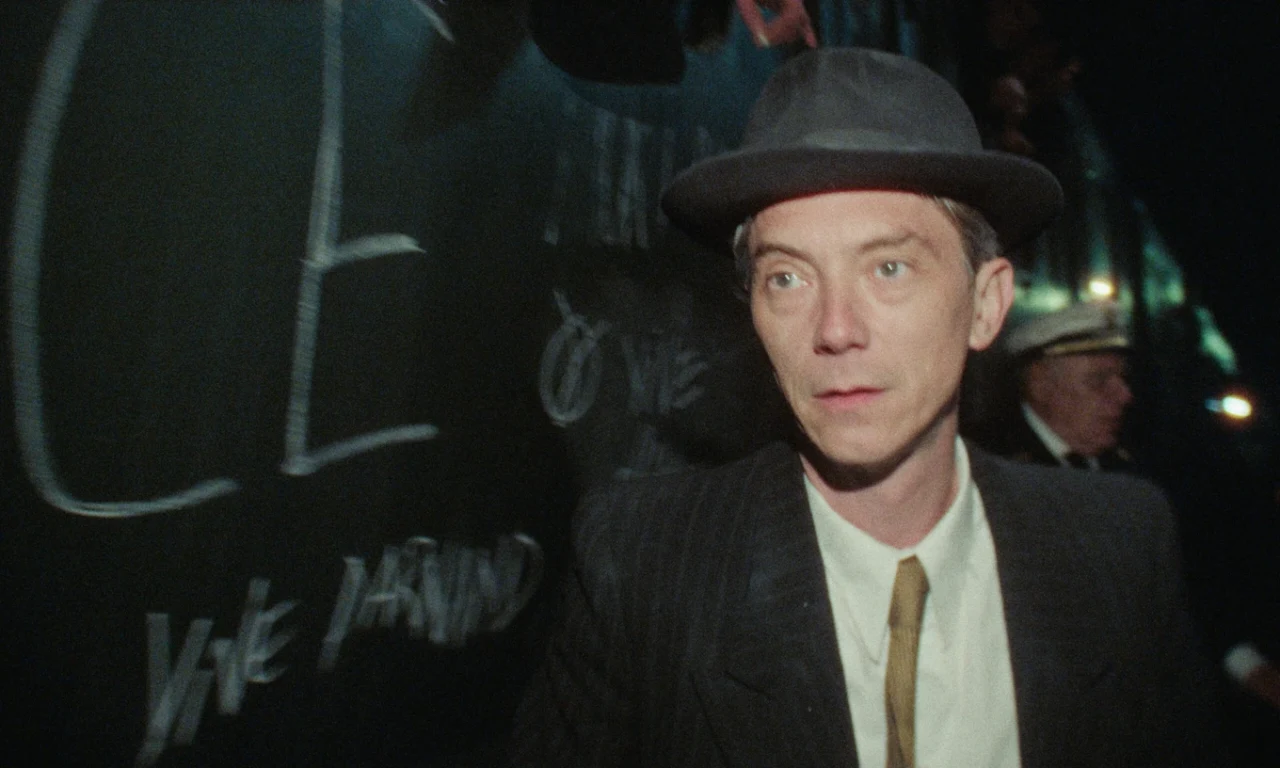


Emmanuelle Marre’s A Man of His Time opens in September 1940 at a drunken gathering of French collaborators, with a woman complaining that her hand is covered in champagne while guests compete to deliver increasingly outrageous remarks. Newly arrived in Vichy, Henri Marre (Swann Arlaud) awkwardly attempts to find his place among them. Broke after a disastrous investment and carrying copies of his self-published manifesto Notre Salut (Our Salvation), he hopes to secure a role within the new administration by presenting himself as a patriot determined to help rebuild France after defeat.
Henri is an unusual protagonist precisely because there is so little exceptional about him. Based on the real great-grandfather of writer-director Marre, and drawn from letters he wrote and received, he never feels like a symbolic stand-in for collaboration or a grand historical figure. Instead, he emerges as an ordinary man navigating extraordinary circumstances, convincing himself that efficiency and service are virtues regardless of who benefits from them. That ordinariness is reinforced through the film’s use of Henri’s correspondence. Letters are read and scattered throughout the narrative, providing insight into both his ambitions and his increasingly strained relationship with his wife, Paulette (Sandrine Blancke), whose support persists even as distance grows between them. These exchanges make A Man of His Time feel remarkably tangible, grounding broader historical concerns in the boring frustrations of everyday life.
The same eye for detail extends to the workings of Vichy itself. Vichy’s administration operates out of a hastily repurposed spa hotel, with secretaries answering telephones and making appointments from desks squeezed into narrow hallways. Meetings with officials take place in an overcrowded balcony bar furnished with white modernist chairs and offering almost no privacy. The setting robs the regime of any sense of authority. Decisions that shape lives and careers emerge from spaces that feel improvised, temporary and somewhat absurd.
Yet even as Henri becomes more entangled in the regime and the film brushes against larger questions of collaboration and occupation, Marre never allows him to become an abstraction. His greatest achievement is making Henri feel neither exceptional nor monstrous, but simply another man of his time.
Christina Yang
Read more reviews from our Cannes Film Festival 2026 coverage here.
For further information about the event, visit the Cannes Film Festival website here.











Facebook
Twitter
Instagram
YouTube
RSS