
The Honey Man at The Albany
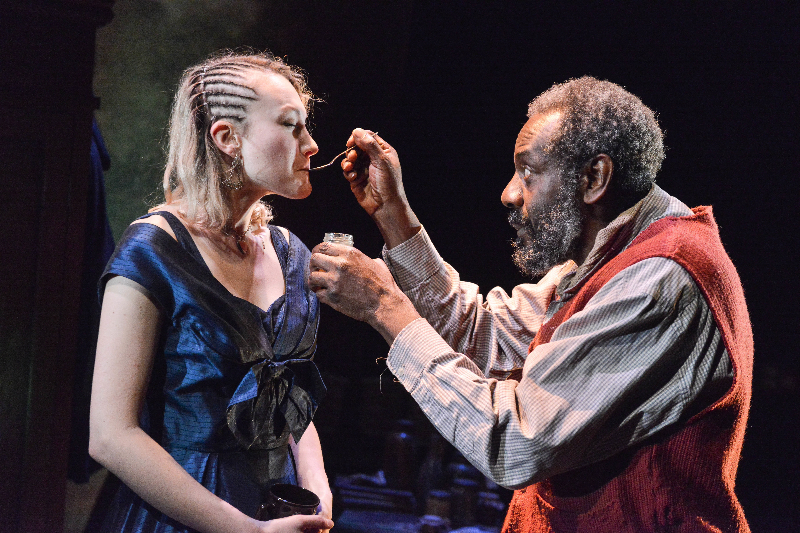


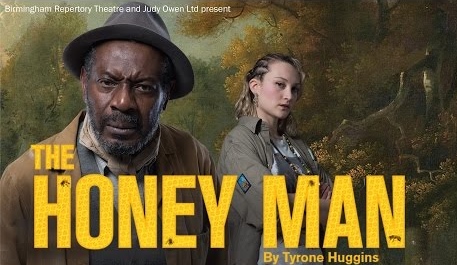
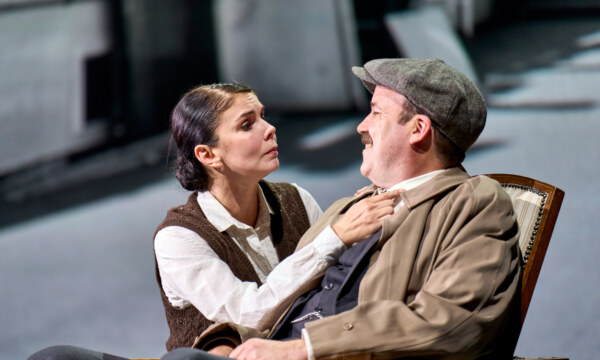
An ageing, solitary West Indian beekeeper finds his peace disrupted when a frustrated, wealthy teenager enters his seemingly abandoned cabin to smoke a furtive spliff. This is the beginning of The Honey Man, a story that deals with ecological concerns, generational conflicts and the omnipresence of technology. Part of a bigger project centred around the digital age, it highlights the importance of physical interaction and an awareness of our collective history.
Honey Man is a recluse who follows the pace of nature, finding himself at odds with the rhythms of modern life. He only reads the Bible and Shakespeare, and he cultivates herbs for healing purposes, denouncing the absurdity of a system that “takes what’s in our backyards and sells it to us in pills”. The differences in social status, background, gender and age between Honey Man and the intruder Misty initially breed antagonism, but having nothing in common eventually obliges them to focus on their shared humanity and comparable feelings of loneliness and alienation.
“Honey Man” is what the protagonist refers to as an “inside name”. He deems his given name redundant, feeling that the way others label you has nothing to do with your real essence. The two characters agree that they are entitled to re-baptise themselves with names that represent how they feel, even if the chosen name is attached to a distant memory, or derived from the Pokemon series.
The rapid advancement of technology in recent history means that the generational divide between old and young has never been so sharply defined; this issue is of great interest to writer Tyrone Huggins, who also plays Honey Man. When the protagonists interact inside the electricity-deprived cabin, they bond through stories, arguments and silences, and what finally consolidates their friendship is a spontaneous dance accompanied by irrepressible laughter. The old cabin becomes the ideal space to allow their peculiarities to emerge and slowly merge, until they find themselves on the same wavelength.
Saving Honey Man’s bee colony becomes their shared goal, which leads to an idyllic example of the younger generation offering its talent for fast action and research, with the older generation keeping the young grounded, inviting them to slow down. This generational exchange is also reflected in the actors’ own career paths as Beatrice Allen, who plays Misty, takes on her first professional role, while Tyrone Huggins offers a full-bodied performance, revealing the richness of his experience.
What the play lacks in narrative, it more than compensates for in the overall quality of the production and the universality of its themes, which will continue to present questions long after viewing.
Mersa Auda
Photo: Robert Day
The Honey Man is on at Albany Theatre from 3rd March until 4th March 2015, for further information or to book visit here.













Facebook
Twitter
Instagram
YouTube
RSS