
“Working with Idris on this film truly showed me the power of collaboration”: Mo Abudu on Dust to Dreams at London Film Festival 2025
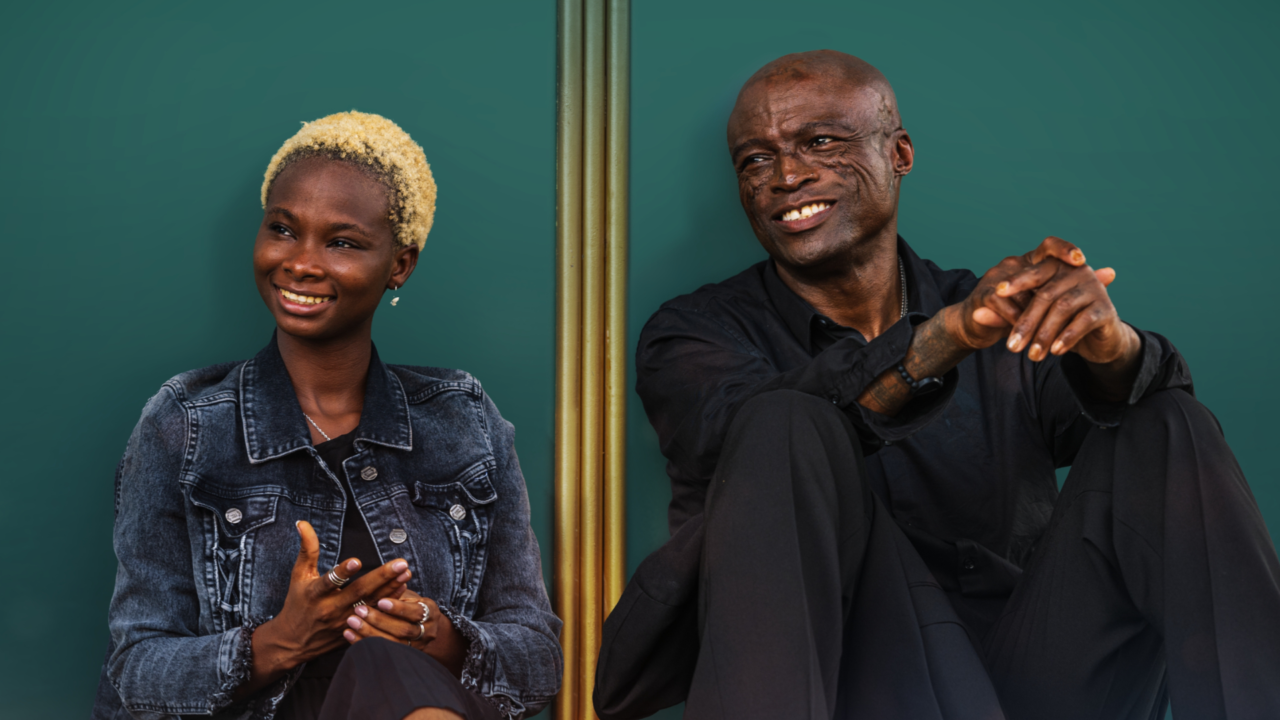

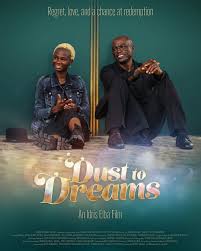
In its 19-minute runtime, Idris Elba’s Dust to Dreams drifts through the haze of Lagos nightlife, where music, memory and inheritance intertwine. Co-written by Elba and Mo Abudu, the short follows Millicent (Nse Ikpe-Etim), a nightclub owner confronting her mortality while deciding the fate of her late father’s once-vibrant venue. Her daughter Bisi (Constance Olatunde), a young musician finding her own voice, is drawn into that legacy just as her estranged father and fellow musician, Johnson (Seal), returns.
Ahead of its premiere at the London Film Festival 2025, Dust to Dreams co-writer and executive producer Mo Abudu spoke to The Upcoming about her creative process, collaborating with Elba, the diasporic themes he brought to the story, and the potential for the short film’s expansion into a full-length feature following its early acclaim.
Hi Mo, it’s so lovely to speak with you today. Would you like to begin by sharing what audiences can expect from Dust to Dreams?
Dust to Dreams is a film about family, legacy, and the conflicts that exist within family. It’s about showing that we, as Africans, share the same desires, aspirations and human traits as people everywhere in the world. With this film, we wanted to convey that humanity – that we love, we hope, and we also face challenges, such as issues of inheritance, health, and what happens when a mother knows she is dying and must tell her only daughter to prepare for life without her. For us, Dust to Dreams is a dream that deals with all the human dynamics that can be found in any community, anywhere in the world. It was important to tell this story in our own way, because African cinema too often focuses on what I call “pity porn” or “poverty porn”. Instead, we wanted a story that was relatable. Everyone can connect to this story – you probably have a mother, a daughter, or even a father you miss or have not seen. The film touches on those key moments in life that we all recognise.
What first sparked the idea for this project?
The very idea for the film came from the fact that we don’t often tell stories like this. Idris Elba and I met a few years ago, and we are both very committed to telling African stories in a way that global audiences haven’t really seen before. When I wrote the script, I sent it to Idris and asked, “What do you think?” He said he liked it and wanted to adapt it. So he worked on the story, sent me a second draft, and I loved what he had done. That’s when we decided it was important for us to be able to tell a story like this one. It takes me back to what I said earlier – it’s a story about family, a story that’s relatable for anyone in any part of the world. And that was very important to us when we chose to tell this story.
Idris Elba has described Dust to Dreams as the most collaborative process in his career – what was that collaboration like for you?
Working with Idris on this film truly showed me the power of collaboration, but it also showed me who Idris is as a person. Now, Idris is a global film star, right? But he came to this project giving it one hundred percent from day one as the director. There was no “diva-ness” about him. I mean, I’ve been in this industry for 20 years. I meet people who are not even as famous as Idris, and they have this “diva-ness” about them, you know. But here he was saying, “Mo, it’s important for us to have meetings.” We must have done at least 20 Zooms with all our talent and all the crew. He wanted to meet everyone who was a head of department, and he wanted to meet all the talent on the project.
In some instances, we met more than one talent before deciding who was going to be the final choice. He gave this project everything. I think sometimes actors who become directors are better directors because they’re actors, and they know how to communicate with their actors, how to bond, and how to collaborate with their cast and crew. Idris brought that collaborative spirit. He would always say, “What do you think? How about this? How about that?” He didn’t come in with, “I know it all, and this is all going to be about how I want to do it.” So it was a very collaborative effort in that regard. And yes, I absolutely back him up when he says it was his most collaborative project. Thank you, Idris, because for us also, it was the most collaborative experience we’ve had with someone like him. Seeing him and seeing Seal – these two strong, powerful Black men working on this short film – they gave it the attention you would normally give a feature film. And for me, that means everything.
As co-writer, what was the one moment or idea you refused to compromise on?
The performance. I think the performance was everything, because it brings everything together at the end. It brings the father and the daughter together. It brought everyone in the house together.
Who or what influenced you most creatively while making this film?
I think I was actually inspired and influenced by the entire costume crew. I really need to share the BTS film – it will come out soon on our streaming platform – because everybody had such an important role to play, and everybody played their roles so well that it had a ripple effect on the next person. If there had been a weak link, it would have affected the next person’s responsibility. So what I enjoyed most about this process, and in making Dust to Dreams, was the collaboration we all had together with one clear vision in mind: to make a film that was beautifully crafted, relatable, and that would earn respect. And I think that’s exactly what we’ve done.
Can you walk us through your writing process?
Oh my God, I’m not really a natural-born writer. I’m more of an executive, as you know. But I love the creative space, and what I’ve found in the last 20 years of being in this space is that I truly believe – with all due respect to writers – that if you have something burning deep in your heart and soul, you must express it. Two years ago, I also made my own two short films that I wrote and directed. You must birth those ideas, because if not, it feels like a burden you’re not letting go of. For me, the ability to write is really the ability to share my thoughts, feelings, and ideas – what’s important to me. And you can hold onto them until you’re ready to share them with the world. I honestly believe that, with all due respect to writers, most of us can write if we really take the time to put pen to paper. We all have experiences we’ve lived, experiences we dream about living, or experiences others have lived that we want to share. So yeah, my process is pretty much looking at life around me. Sometimes it’s my imagination – multiplied by ten – and just putting it all together, making it sound exciting, and making it sound as authentic as it should be. I think authenticity is the most important aspect of writing anything. It’s got to be authentic.
What kind of research did you do for this film?
We are surrounded by research every day. I mean, we breathe it, we see it, we inhale it – it’s around us everywhere we go. I read a substantial number of novels. I read newspapers. I’m online. I attend events all the time. My second film, The Wedding Party (2016), was pretty much based on me going to a wedding, leaving the wedding, and then deciding, after having seen all the drama that played out, that I had to make a film about a wedding. So sometimes you’re faced with these realities, and you develop this inner conviction that you want to birth certain ideas.
The sibling dynamic between the half-sisters is one rarely explored on screen. How did you develop that relationship?
That part of the story was genuinely introduced by Idris. He wanted to bring in that diaspora element and, to a certain extent, the mixed-race element – the sisters were mixed race – and he wanted to explore that. It’s a part of our world that isn’t often depicted on screen. If you notice in the opening of the film, Patience says, “He was our father too. We loved him too.” So they were feeling a little left out of being fully part of the family. And that can happen in any family, even to the best of us.
Milli’s half-sisters from the UK are ready to sell the nightclub, while her daughter wants to preserve the club. What did you want that home-versus-diaspora tension to express?
I think people sometimes come from the diaspora with all kinds of dreams and wishes, without fully understanding the reality on the ground at home. And I think this just gives a slice of that – you need to understand the lay of the land. Milli and Bisi did not want to let go; they wanted to keep this legacy in the family. Ultimately, the sisters came around to understanding that, because the conflict was resolved. But I think it shows that there can be conflict in the family. We can have different views about different things, but ultimately, it’s about how we find a win-win rooted in love that can resolve the conflicts we face. And I think that’s what we see happen in this film.
How did you decide on the nightclub, and on a broader scale, Lagos nightlife, as the setting, and what does it represent for you?
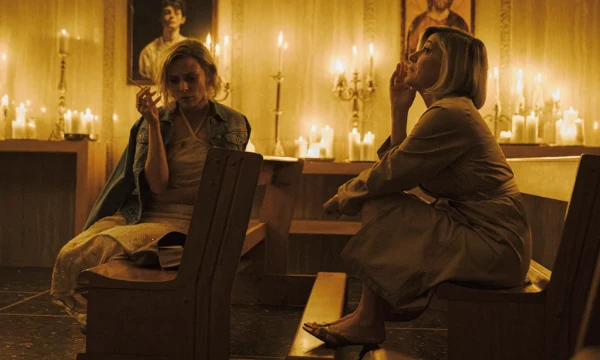
The film is the story of Papa Kay’s nightclub – the one he gifted to his daughter, Milli – and then the two other sisters who also believed they should have inherited it. So the story is set within that nightclub world. We wanted to create the nightclub as a platform where music could shine. It’s a place where up-and-coming artists come on stage and perform. And from watching the film, I’m sure you saw a few artists performing during the story. Bringing all of that together is what shaped the film – it’s about the legacy of the nightclub, the performances inside it, and the gift that Papa Kay gave to Milli. The nightclub also becomes the source of conflict between the sisters: who owns it, what should become of it. And then the film ends with a performance in that same nightclub. So for us, it was really about giving music and life to the story in an environment that suited it.
If you had an extra ten minutes of screen time, which part of the story would you expand?
I would have liked to explore the backstory of Johnson and Milli – how they first met, and what their relationship was like. I would have also loved to see some of the characters’ relationships with Papa Kay, their father, and how he interacted with them. That part is all left to the imagination – it’s the backstory we never saw, but was spoken about. There’s a picture of Papa Kay on the wall, and we hear about him dying, going to England, and never coming back – I think he would have. With another ten minutes, we could have really explored those scenarios.
Did you always envision Dust to Dreams as a short, or could you imagine it as a feature?
I can imagine it as a feature film tomorrow. This is something Idris and I have discussed many times. What we’ve done with this short film is take a slice of life – we literally took a small piece of the film and made it into a short. If we were to do a full-length film, this short would be a part of it. We would still reference some of the incidents and storylines you see here – let’s see where it goes. That’s the thing about films and their journeys they take in life – they sometimes end up in unexpected places, with unexpected support. And who knows, this could become a full-length feature at some point.
The casting is simply fantastic, especially with Constance Olatunde and Seal. What guided those choices?
To begin with, I actually wanted Idris to play the role that Seal ended up playing. Idris initially committed, but at some point during the planning process, he said, “Mo, I think I’ve got the perfect person to play Johnson.” I was shocked, “Oh my God, you’re not going to be in our film anymore?” He said, “No, no, just wait.” And then he told me it was Seal. I said, “Seal? I don’t have access to Seal! How are we going to get him into this film?” Idris just said, “Leave it with me,” and he worked his magic and got Seal to be in our film. It’s the first major acting role Seal has taken on as an actor. One of the reasons he played it so successfully was because music is such a powerful part of the film. As for Constance, Idris also discovered her. She lives and works in Nigeria, and so do I for the better part of my time, yet I hadn’t known about her – which I’m embarrassed to admit. But once I met her through Idris, I realised how incredibly talented she is. This is her first acting role as well. So we brought Seal and Constance – two major performing artists – together, and that made the story feel so authentic, because this is who they are in real life; it’s just who they are. And bringing them into a film space was just incredibly powerful.
How did they contribute to the film’s music?
There’s a song – we’re releasing a single that will probably come out before the end of this year – called Mama. That’s the song you see being performed in the film. It’s going to be released as a single. It was written by Seal, Constance, Idris, and another group called The Cavemen. It’s a real song – an original single.
Were there unique challenges to executive producing a script you also co-wrote?
As executive producer, I must also say a big thank you to Afreximbank – they financed this film for us. But no, it wasn’t challenging for me to executive produce it, because once you believe in the story and in the vision, and once you know all the different parties involved, it becomes easy to commit and take that journey. It was a truly collaborative effort, and I have to say it was one of the happiest sets I’ve ever been on. We’ve also made a BTS film about the making of Dust to Dreams, and everyone should see it, because it really shows how well we all worked together and what a wonderful experience it was for everyone involved.
Finally, what do you hope audiences take away from Dust to Dreams?
I want audiences to take away the relatability of it – the understanding that we can tell stories from our continent that people around the world can appreciate. I’ve done so many interviews today, and everyone who’s watched the film has said they could relate to it – whether through a sister, a mother, or a brother – there was something in it for everybody. And I think that’s what’s most important in film: that even when stories come from different parts of the world, we can still find ourselves in them. That may not always be easy depending on the story, but what makes me happiest is that with Dust to Dreams, people have found it relatable.
Christina Yang
Dust to Dreams does not have a release date yet.
Read more reviews from our London Film Festival coverage here.
For further information about the event visit the London Film Festival website here.
Watch the trailer for Dust to Dreams here:










Facebook
Twitter
Instagram
YouTube
RSS