
Magnolia Pearl’s clothes age well. Their prices do too


 21 January 2026
Mending functioned, for much of modern history, as a form of survival. Clothes were patched because replacement was impossible, because fabric carried memory, because repair was cheaper than discard. Fashion eventually learned to conceal that past. Magnolia Pearl chose not to.
What wear used to mean
Modern apparel trained consumers to fear wear. A scuffed shoe or frayed hem signaled obsolescence. Value, the industry taught, lived only in the new. That logic produced closets that turned over rapidly and landfills that grew accordingly, while the labor embedded in garments disappeared from view.
Magnolia Pearl’s clothing resists that lesson. Its garments arrive already marked – patched, painted, stitched with visible repair. They do not perform innocence. They declare history. In doing so, they revive an older idea: that care and continuity confer worth, and that signs of use can deepen, rather than diminish, value.
When clothing refuses to depreciate

On resale markets, Magnolia Pearl pieces often trade at two to five times their original retail prices. Some garments circulate for hundreds or thousands of dollars. This behavior defies standard fashion economics, where most apparel loses value the moment it leaves the store.
The explanation is structural. Production is constrained by labor, not by seasonal demand targets. Individual pieces can take weeks to complete. There are no collections timed to fashion weeks, no clearance cycles designed to purge inventory. Scarcity emerges from time and handwork, not from marketing choreography.
This pattern coincides with broader shifts. The global secondhand apparel market has expanded faster than traditional retail, driven by consumers seeking durability and meaning over novelty. As resale becomes institutional rather than informal, garments built for longevity behave differently. Magnolia Pearl’s prices reflect that reality.
Repair as record, not disguise
The brand’s insistence on visible mending carries economic consequences. Stitching is not hidden. Patches are not apologies. Wear functions as record. Each garment documents time, ownership, and care.
That visibility reshapes how buyers assess condition. Wear does not negate legitimacy; it confirms it. In a culture trained to conceal labor and damage, Magnolia Pearl treats repair as biography. The garment becomes an object with a past, and that past travels with it into resale.
This sensibility now aligns with regulatory pressure as well. European frameworks aimed at 2030 increasingly prioritize repairability and extended product life. Magnolia Pearl did not retrofit its designs to meet those expectations. It arrived there by instinct, shaped by a worldview that never separated survival from making.
The second life becomes official
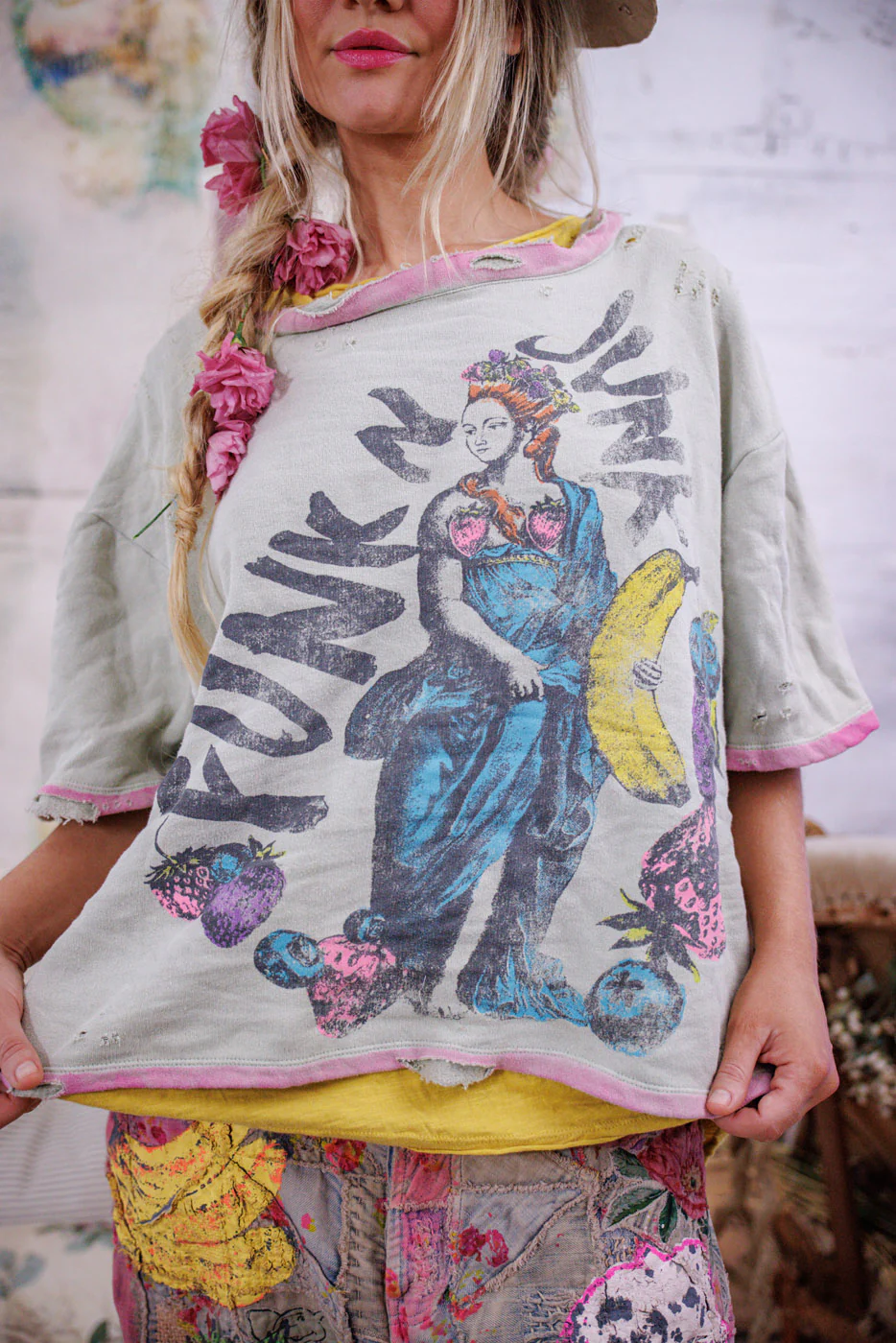
For years, Magnolia Pearl garments circulated informally among collectors, navigating counterfeits and uneven pricing. The launch of the brand’s authenticated resale platform formalized that activity, bringing trust and traceability to a market that had grown without guardrails.
Authentication offers assurance. Centralized resale stabilizes pricing. And a portion of each transaction is routed toward charitable use through the company’s nonprofit foundation. Fees are lower than industry norms, and proceeds support housing, medical care, disaster relief, and arts education.
This structure matters. Many brands benefit from resale while disavowing responsibility for it. Magnolia Pearl acknowledged the second life of its products and built infrastructure around it. Value circulates, and some of it is redistributed.
What the market is saying
Markets are often dismissed as amoral. Yet here, the signal is clear. Clothing that invites care retains worth. Objects treated as disposable behave accordingly. Magnolia Pearl’s garments age well because they were never designed to be replaced. Their prices follow because buyers recognize durability when they see it.
This is not nostalgia disguised as strategy. It is a quiet refusal of a system that taught consumers to forget how things are made. Magnolia Pearl remembers – through thread, time, and visible repair. In the arithmetic of resale, the lesson is unmistakable: value does not vanish when something is worn. Often, it is only then that value becomes legible.
Marcus L Fenwick
Photo: Courtesy of Marcus T Blackwood





















Facebook
Twitter
Instagram
YouTube
RSS