
“Love doesn’t need to last forever to define a life”: Oliver Hermanus on The History of Sound
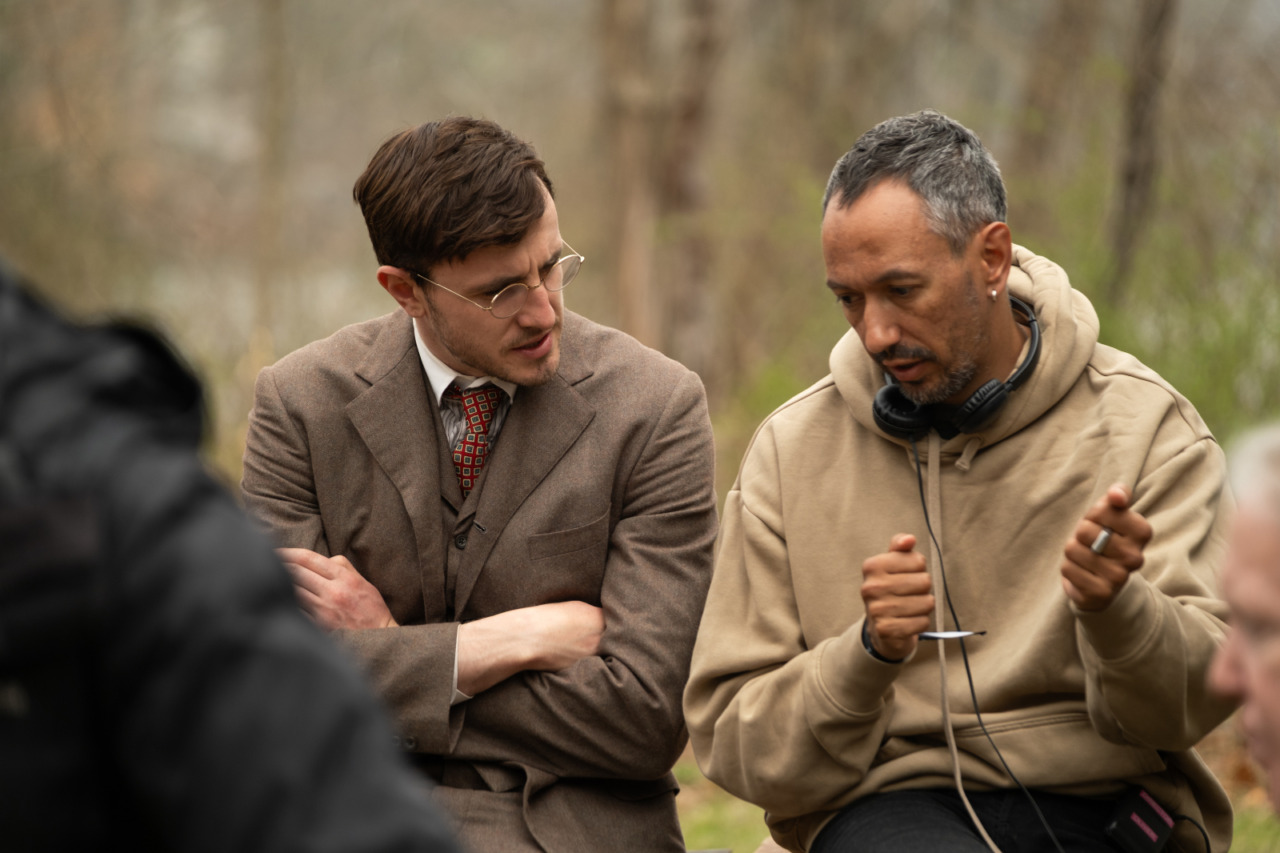


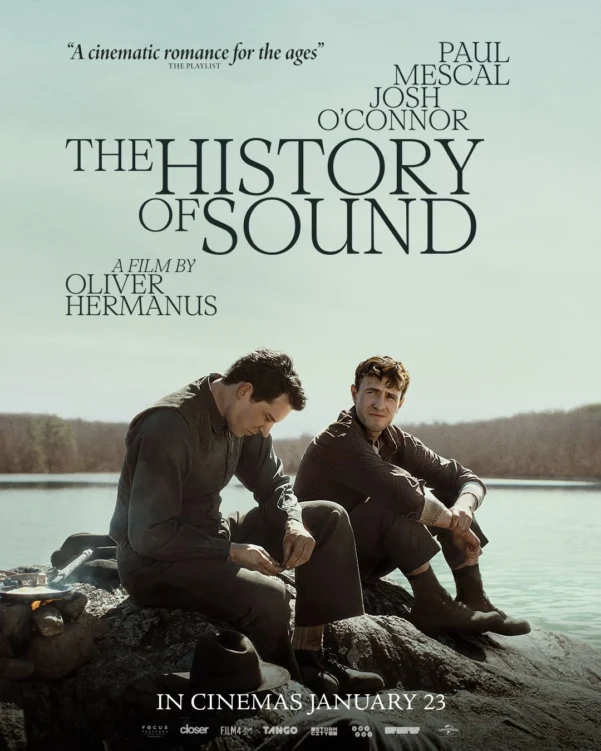
The History of Sound, from South African director Oliver Hermanus (Beauty, Living), based on a short story by Ben Shattuck, follows Lionel and David, two young men who meet at the New England Conservatory of Music in 1917, in the midst of the First World War. After bonding over a mutual love of music and folk songs, they take a trip together across rural Maine to capture recordings of traditional songs from remote communities. Their relationship is brief but intense, and comes to define their lives thereafter.
Beautifully made, the film shows exquisite attention to period and musical detail, immersing the viewer in the nuanced sounds and sensations of its characters. Paul Mescal and Josh O’Connor prove why they are two of their generation’s most in-demand actors, both at the top of their game here, but also achieving something greater than the sum of their parts in the alchemy of their chemistry. It’s a deeply moving and profound, if tragic, story whose notes reverberate long after the credits roll.
In an in-depth chat with Hermanus, we discussed his move away from South African-set stories, and why Shattuck’s poetic source material felt like the perfect contrast to his earlier work. He reflected on casting Mescal and O’Connor before they went stratospheric, leaning into both their shared interiority as actors and their contrasts, as well as the inevitable comparisons to Brokeback Mountain, explaining his desire to invert narratives of repression and tragedy that have long dominated queer cinema. We also talked about the movie’s deliberate restraint, allowing music to become a way of communicating what can’t be said and preserving what would otherwise be lost, and how The History of Sound ultimately suggests that not all love has to be long-lasting to be true.
Oliver, a pleasure to chat to you, and thank you so much for taking the time. An absolutely stunning film. Of course, very tragic and melancholic, but it holds this real beauty that sits with you after watching it. For people who haven’t seen it, how do you introduce it?
The History of Sound is a love story. Its big idea is that if we assume that there are different stages of love in our lives and we have different major loves, the film is a proposition where what if all of those different kinds of loves happen all in one? Your first major love affair becomes your great love affair, and it’s your last love affair – in the sense, they are all the profound loves.
This is what happens to Lionel. He lives a life in the echo of this big love affair, and it becomes the definition of his life. The metaphor of music and the idea of the first time we could ever record music is an echo of that, where before this time, one could never hear sound from the past. You could never hear sound if you weren’t in the room with music or anyone or anything. The idea that love cannot be recorded in that way. We cannot hold on to it. We can only have it in signifiers like the sound of somebody’s voice or the memory of somebody’s voice. That’s the sort of rough History of Sound pitch.
Before Living, and the TV show Mary and George, you’d really focused on South African stories, where you’re from. So what made you want to shift your attention to this place and period, and what was it in Ben’s book that really spoke to you?
I generally try, when I make something, to make something the furthest away from that if I can find a way. My most recent South African film was set in the 80s. It was about the army and toxic masculinity. It was a very heavy film about coming of age and an incredibly violent bit of South African history.
I was promoting that when I read The History of Sound, and it felt like the absolute antidote to that. It was set in America in the early 20th century. It was this poetic and wise idea and concept about love and memory and longing and loss, and just deeply romantic. It felt like the perfect vacation from where my head was at the time.
And then in the middle of that, I decided to make a movie about a man dying of cancer. That was because I wanted to go to England and make a movie in the 50s and work with Kazuo Ishiguro. Every step you take as a filmmaker is taking a hard left or a hard right if you can.
Living was also an adaptation, so how do you find that process? It’s so rich to have that material to work from, but you can’t put everything in a book, even a short story, on screen. Was it quite special to be able to work with the author on the adaptation?
Yes, because it’s like somebody’s built a house, and you’re walking in and they’ve only shown you the front room of this house. Then you go, “What’s in that room, and what’s upstairs, and do you have a kitchen, and could we build it out here?” And they’ve got it all there.
It became this very fruitful and successful relationship because The History of Sound lives inside of Ben. The more we expanded this from short story to film, it was never trying to add things on that did not already exist in Ben’s universe for these two characters and their lives and where they would go.
I could ask Ben anything about Lionel throughout the process of making this film. What does he like to eat at this time of day? There was a period of the film where they separate, and then suddenly we’re in Italy. For the purposes of Paul Mescal being the actor, Paul asked, “What did I do in those years between?” And I said, “This is a perfect Ben question.” He wrote a perfect three-year outline of all the things Lionel did. It was incredibly precise.
Often when you’re reading or watching a gay love story, whether it’s contemporary or period-set, it feels from the outset like it’s all about repression and desire that’s not permissible. But here, despite it being set in a period where those things would apply, you put front and centre the chemistry and the love between them, and the rest comes later. Was that already there in the book, and was that very intentional for you?
It definitely was. It’s in the book. The way they meet, the immediate chemistry, they sleep together the night that they meet. It skips all those steps of eyes meeting across a room and fear and panic and uncertainty and not knowing. That’s its own kind of thing. I’ve just seen Heated Rivalry and there’s a lot of that in the beginning, where there’s questioning of access and permission and checking. I didn’t want any of that.
I liked the idea that it was fearless. There was no problem with it. And the other difference is that when you’re making a period piece of work, you always have the choice of how much to contextualise the period.
The thing I did before The History of Sound was Mary and George, which is set in the 17th century. Everyone is having sex with everyone. It’s incredibly over-sexualised. The sexuality of every character is queer in some sense. But the show did not feel the need to root itself in anything realistic to the 17th century.
Whereas with The History of Sound, you wanted to sense time and place in a more specific way, but I still wanted to extract this idea that their love could not be spoken, with that blanket over it.
I don’t know if this is a comparison that’s been driving you mad – when it came out in Cannes, I heard Paul Mescal called it a lazy comparison – but one of the key differences with Brokeback Mountain is that the backbone of that story is their relationship being forbidden.
I think it also tells you the difference of trying to make these kinds of films 20 years apart. In 2004, the way of bringing queer stories into the mainstream was to tell stories about violence against queer people, the suffering of queer people, in order to love each other. That movie is very tragic – one of them is brutally murdered.
20 years later, I didn’t want to make a film where a queer audience would walk away thinking their opportunity to be in love will always be slanted by danger or violence or not being accepted and fearfulness and secrecy. Society has moved on. Cinema has moved on. Pieces of work can be about different aspects of these kinds of stories.
Paul Mescal and Josh O’Connor are two of the most in-demand and impressive actors of their generation, and that’s very much on display here. And it’s not just them individually, it’s the chemistry they share and the dynamic between them that really is where the magic of this film is. What was it like getting them on board? Was this before both of them had gone stratospheric?
Pretty much. At the time we all met, Josh was the famous one. He had just done The Crown. Paul, I met about a week after Normal People came out during lockdown because he was meant to be in Living.
Things evolved. Their careers exponentially exploded. That happened outside of them. The world was changing how people perceived them, and they were becoming increasingly more famous. But they themselves, even now as people and actors, are still the same silly kids who like to play pranks and run around and act. Their love of the material was not affected by the outside world’s reaction to them. If they find a role they want to play, they’ll do whatever it takes.
Sound, or a lack thereof, is very crucial in this film. There’s so much unsaid, and then there are these moments of music, which you really allow the audience to sit with. How important was that to you? I can’t imagine the painstaking research that must have gone into recreating the performances of these folk songs, but they also emerge as a means of connection and communication where words aren’t possible.
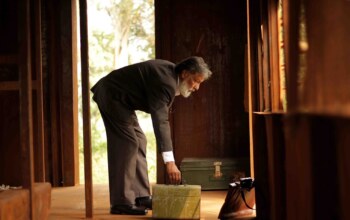
100 years ago, the way people entertained themselves and absorbed narrative and heard stories was through sitting and listening to people singing and narrativising through song. That was an act of pastime. It’s what Lionel’s dad does on the porch at the beginning of the film, taking a moment from his hard day to play the fiddle and sing.
It was important that the film allow the audience to experience this. There are scenes where Lionel is sitting and listening to other people sing, and that becomes the thing he says he likes the most. He loves to just listen to people sing. Then there are other moments where he’s trying to avoid listening, and it’s too much for him or he’s overwhelmed by sound and by sound becoming memory, and his relationship with sound triggering too many things in him.
There’s a sequence where his mother has died, and he comes home and cleans the house. The house has been left in a mess, and he cleans it. I dirtied the house up and shot Paul cleaning that house for about 30 minutes, continuously cleaning. I wanted that to be another kind of penance that Lionel does, where he does these acts of constantly cleaning up in different scenes of the film, because it’s how he apologises or repents in some way.
It’s a slow movie. It’s an intentionally slow movie.
And of the musical moments, did you have a favourite?
Obviously, when you shoot a movie, and the actors are constantly singing songs, you get this thing on set where everyone starts singing the same song over and over because it’s stuck in their head. On this movie, the crew and pretty much everyone could not stop singing the Cuckoo song. The two actors would often sing it in the middle of the day, and you’d find people walking past singing it too. It’s amazing how music does that. People just have it in their heads like an earworm. That was definitely the centrepiece of the production of this film.
In terms of the takeaways, all that’s left of their relationship are these cylinders, this music. There’s nothing else that remains. It seems to ask: what do we leave behind? What do we have in terms of preserving those moments of love in our lives? And maybe it’s okay for love to be fleeting; it doesn’t have to be something that lasts forever?
It’s the idea that love is intangible. It’s not physical. You can’t touch it. You have a sense of it, and different people have different senses of it. A lot of people spend time wondering if they’ve ever experienced love or if they’re in love in the moment and don’t know if it’s infatuation, lust, or fear. Nobody can really show it to you and say, “This is what love is.”
And the fact that our bodies and minds can have such a strong emotional reaction to recorded sound, whether it’s the song from your childhood or the voice of a parent who’s died, something that triggers such deep emotion. Recording sound became a guiding light or some kind of indication of what love might be.
Listen to the interview here:
Sarah Bradbury
The History of Sound is released nationwide on 23rd January 2026.
Watch the trailer for The History of Sound here:









Facebook
Twitter
Instagram
YouTube
RSS