
Ramses and the Pharaohs’ Gold at Neon at Battersea Power Station
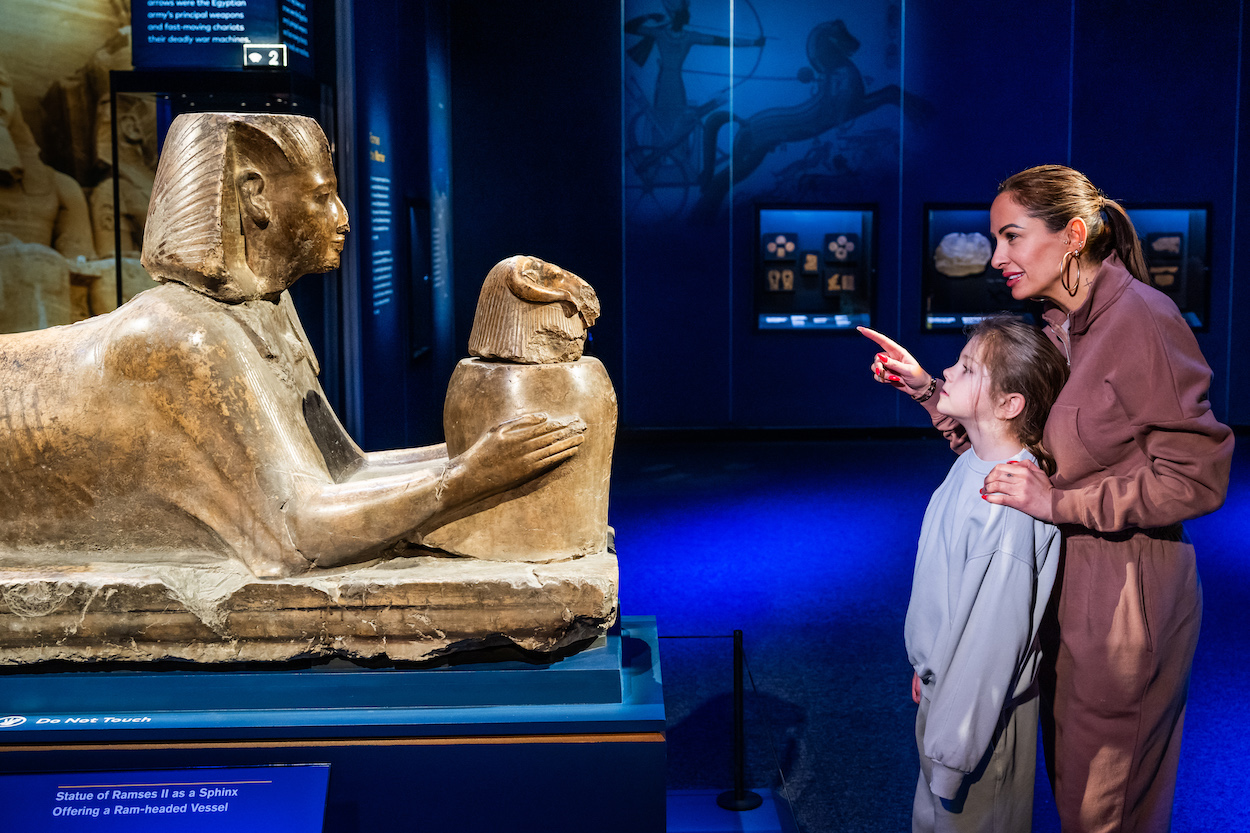


Ramses II wanted to leave a lasting mark on history – one that was monumental and worthy of praise, outshining anything that came before and anything that followed. And indeed, history remembers him as one of the greatest pharaohs of ancient Egypt. To document his endeavours, an exhibition at the newly built NEON space next to Battersea Power Station offers visitors the chance to explore 180 artefacts on loan directly from the Egyptian Museum.
The collection is undoubtedly special for the significance of the items and the timeline they cover. The curators have done an excellent job in shaping a route bringing together both the key historical pillars and the themes that made that era so fascinating. As we walk through, we come to understand how young Ramses was when he ascended to the throne, the geopolitics surrounding and leading up to the famous Battle of Kadesh, and the very first peace treaty in 1258 BCE.
Next to the cases with statues of Ramses II kneeling or depicted as a sphinx, there are displays featuring, among the other items, the golden earring of Queen Tausret, a silver and gold dish showing swimmers (dating to the Third Intermediate Kingdom, that is, the 11th-8th centuries BC), and splendidly decorated faience tiles representing the Kingdom’s captives. The surrounding customs and costumes at court and the palaces of power – frequented by the royal family and their advisors, such as the Vizier Paser, whose block statue is on display – allow for a full immersion in the ways of life and outlooks of the pharaohs and their close subjects. The statues of Queen Tuya illustrate the practice of reusing marble sculptures and, as we learn later on, even sarcophagi (like the one of Merenptah) and pendants: not so much (or not only) out of a desire to erase what had been done, but due to a shortage of materials caused by wars or other catastrophes.
Some of the videos lean too much into an epic tone, when the ventures, the historical facts and the visual reconstructions hardly need those extra accents. There is certainly plenty to explore and navigate; however, the risk is that the smaller cases are too often overcrowded with visitors, especially during weekend slots.
A model and accompanying clips explain the architectural brilliance and the relocation efforts required in modern times of both the Great Temple of Ramesses II and the Small Temple of Hathor and Nefertari. The pharaoh’s devotion to his wife Nefertari – a narrative that is echoed throughout quite a few objects connected to Ramses – is strikingly showcased in the majestic tomb built for her in the Valley of the Queens.
The most sought-after highlight is kept until the very end, the whole journey carefully and comprehensively providing the context needed to fully appreciate the remarkable state of preservation of Ramses II’s carved cedar coffin (complete with hieroglyphic inscriptions detailing its passage from the tomb to the secret hiding place where it stayed for centuries). Before reaching the room dedicated to the pharaoh’s final resting place, the second half of the exhibition presents precious artefacts from the years preceding and immediately following his reign, comprising animal mummies used for votive offerings and drawings on stone – pyramid design drafts and the games of workers in the villages around the pyramid-building sites. An insightful and awe-inspiring exploration of a civilisation of gold and a monumental legacy.
Cristiana Ferrauti
Photo: Courtesy of Neon
Ramses and the Pharaohs’ Gold is on from 28th February until 31st May 2026. For further information or to book, visit the exhibition’s website here.











Facebook
Twitter
Instagram
YouTube
RSS