
Karma
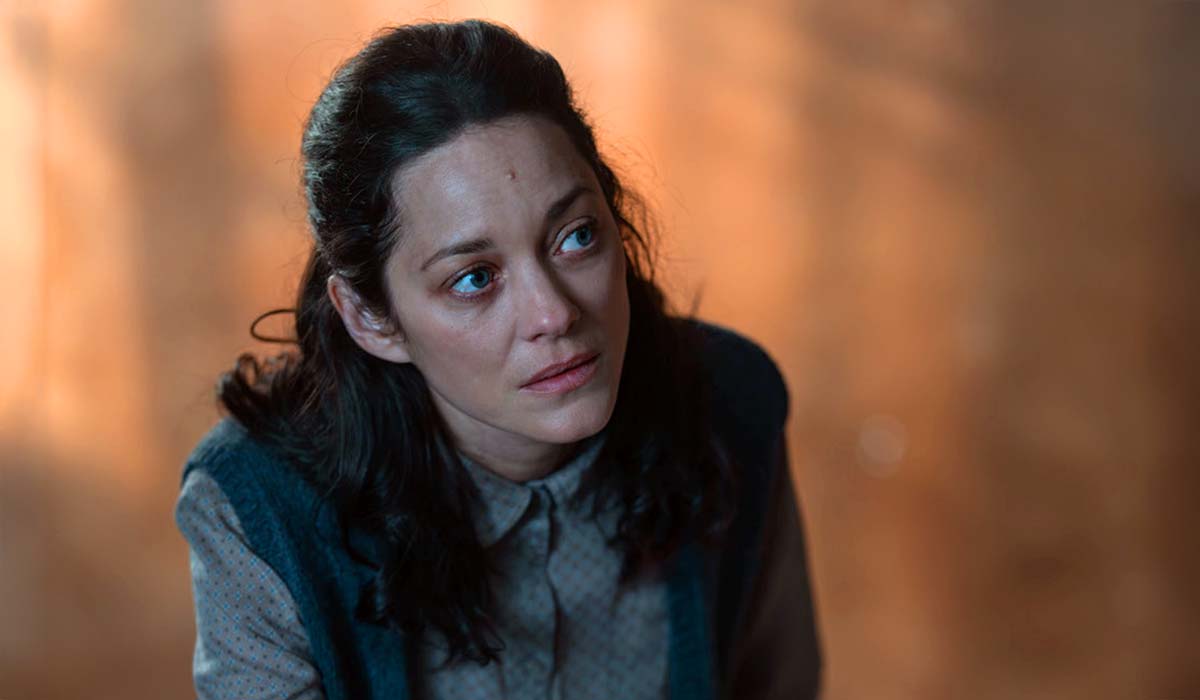

Guillaume Canet’s Karma opens in a windy seaside town in northern Spain, where the disappearance of a young boy pulls a couple back toward people and places they have been trying to outrun. Jeanne (Marion Cotillard) was supervising her godson when he vanished, but she disappears before the investigation properly begins, leaving Daniel (Leonardo Sbaraglia) – whose criminal record in Argentina makes him an immediate suspect – to retrace her movements before the authorities close in. Karma initially presents itself as a mystery, but it quickly becomes clear that the film is far more interested in Jeanne’s past inside a secluded religious commune than in the disappearance itself.
Daniel, despite Sbaraglia’s solid performance, never fully emerges as more than a narrative device. His backstory feels underdeveloped beside Jeanne’s, and the feature largely uses him as an audience surrogate, piecing together fragments of her past and guiding viewers toward the cult she escaped decades earlier. That imbalance leaves the investigation oddly weightless; the emotional gravity of the movie rests almost entirely within the commune’s stone walls.
These scenes, helmed by Denis Ménochet’s domineering Marc, are where Karma both comes alive and begins to falter. The commune is surprisingly school-like. Shrill bells dictate the rhythm of daily life, chores are assigned on charts pinned to the walls, dormitories packed with bunk beds stretch along long, narrow corridors, and Marc presides from an office arranged like a headmaster’s study. Yet the film rarely explores this idea beyond its surface. Instead, Canet leans heavily on familiar imagery associated with Christian communes: flogging rituals, dungeon-like punishment rooms, starvation as penance, women in braids and pinafores, and endless sermons delivered beneath oppressive choral music. Although one member insists the commune borrows from multiple faiths, the imagery repeatedly defaults to the familiar iconography of fire-and-brimstone sects and apocalyptic cults. After a while, the piece begins to feel less unsettling than repetitive.
Canet becomes so preoccupied with displaying the cult’s brutality that the film loses any real sense of tension. Several scenes linger for shock value long after their point has been made, particularly an exploitative flogging sequence involving Jeanne. Cotillard and Ménochet deliver committed performances, but the script grants them little complexity beyond victim and tyrant. For a film centred on trauma and manipulation, Karma ultimately mistakes displays of cruelty for genuine horror, relying on punishment and suffering where deeper psychological unease should be.
Christina Yang
Read more reviews from our Cannes Film Festival 2026 coverage here.
For further information about the event, visit the Cannes Film Festival website here.


















Facebook
Twitter
Instagram
YouTube
RSS