
The Meltdown
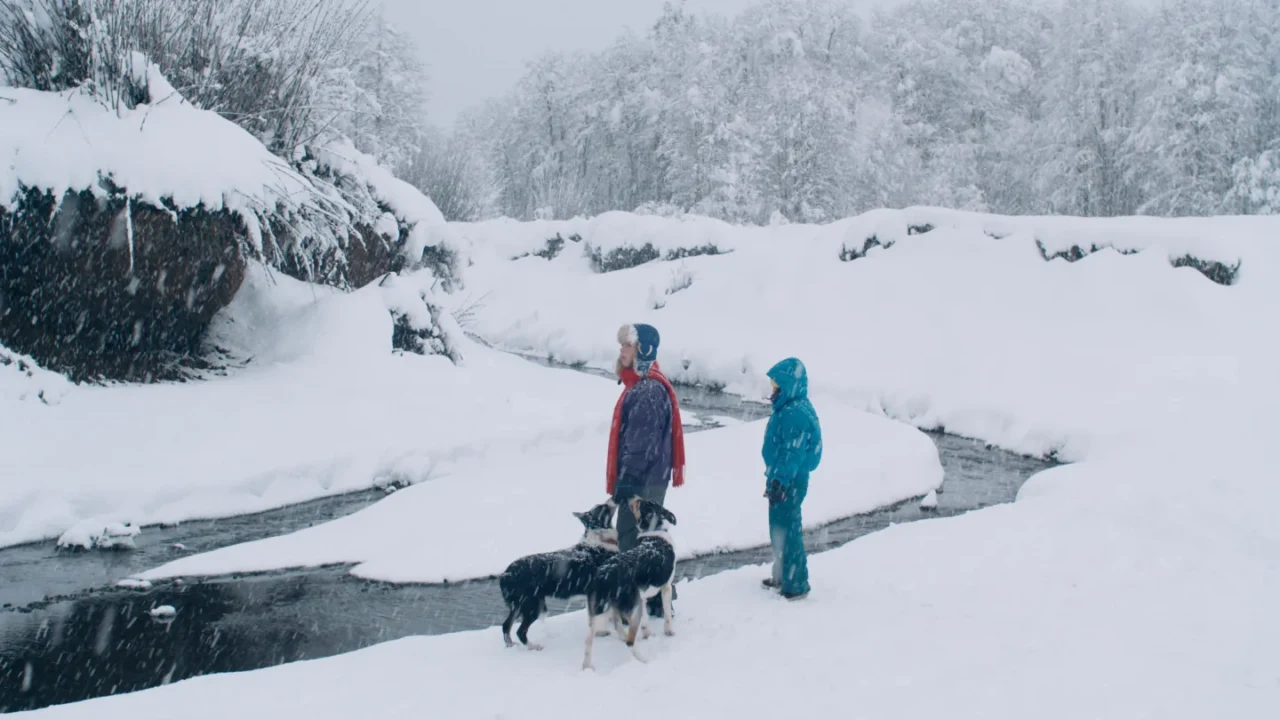

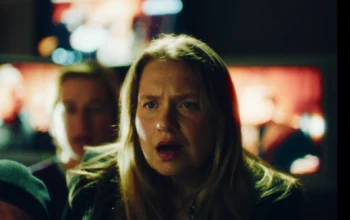
Manuela Martelli’s The Meltdown is set in Chile in 1992, at a remote luxury ski hotel in the Andes, where nine-year-old Inés (Maya O’Rourke) has spent most of her life with her grandparents and teenage cousins while her parents pursue glamorous careers abroad. The adults around her are doting but distracted, leaving Inés largely to herself as she roams corridors, explores the mountains and quietly inserts herself into the lives of hotel guests. During ski season, she becomes attached to Hanna (Maia Rae Domagala), a 14-year-old German skier training relentlessly under her coach, Alexander (Jakub Gierszal). But when Hanna vanishes without a trace, the atmosphere shifts as her mother Lina (Saskia Rosendahl) arrives searching for answers, roaming the mountains alongside Inés, volunteers and military helicopters, while inside the hotel everyone seems consumed by their own worries.
For all its atmosphere and ambiguity, the film’s real strength lies in Inés. She is precocious, observant and clever in a way that immediately recalls Matilda Wormwood, while the sheer freedom she’s granted – stealing guests’ room keys so she can slip unnoticed into their private spaces – evokes Eloise at the Plaza Hotel by way of an art-house mystery. It is an extremely difficult balance to pull off, but O’Rourke never overplays the character’s intelligence or eccentricity. Her performance is quiet but not shy, perceptive without seeming implausibly hawk-eyed or hypervigilant, giving the movie a stylised yet wholly believable child protagonist.
Techa (Paulina Urrutia), Inés’ grandmother and the family matriarch overseeing the resort business, could easily have become cartoonishly villainous. She strategically frightens her granddaughter into silence over what she may have witnessed the morning Hanna disappeared, then seamlessly pivots to discussing plans for new ski lifts over tea while military helicopters and search volunteers continue scouring the mountains outside. But Urrutia plays her with warm smiles that reach the eyes, open body language, and such composure and grace that Techa becomes far more unsettling than any overtly sinister caricature could have been.
Martelli’s screenplay constantly moves between Spanish, English and German, with none of the main characters able to speak all three languages fluently, and Inés repeatedly pushed into the role of translator. These language barriers are not simply there for realism, but to quietly expose assumptions about nationality and power. Beautifully shot and filled with unexpectedly elegant visual transitions – especially a stunning match cut from spilled milk and shattered glass into a snowstorm – The Meltdown works simultaneously as a mystery, a sharply observed period piece and an unusually assured piece of international co-production filmmaking. Martelli leaves certain questions unresolved, but the feature’s uneasy mood proves far more compelling than any neat solution could.
Christina Yang
Read more reviews from our Cannes Film Festival 2026 coverage here.
For further information about the event, visit the Cannes Film Festival website here.













Facebook
Twitter
Instagram
YouTube
RSS