
Forsaken
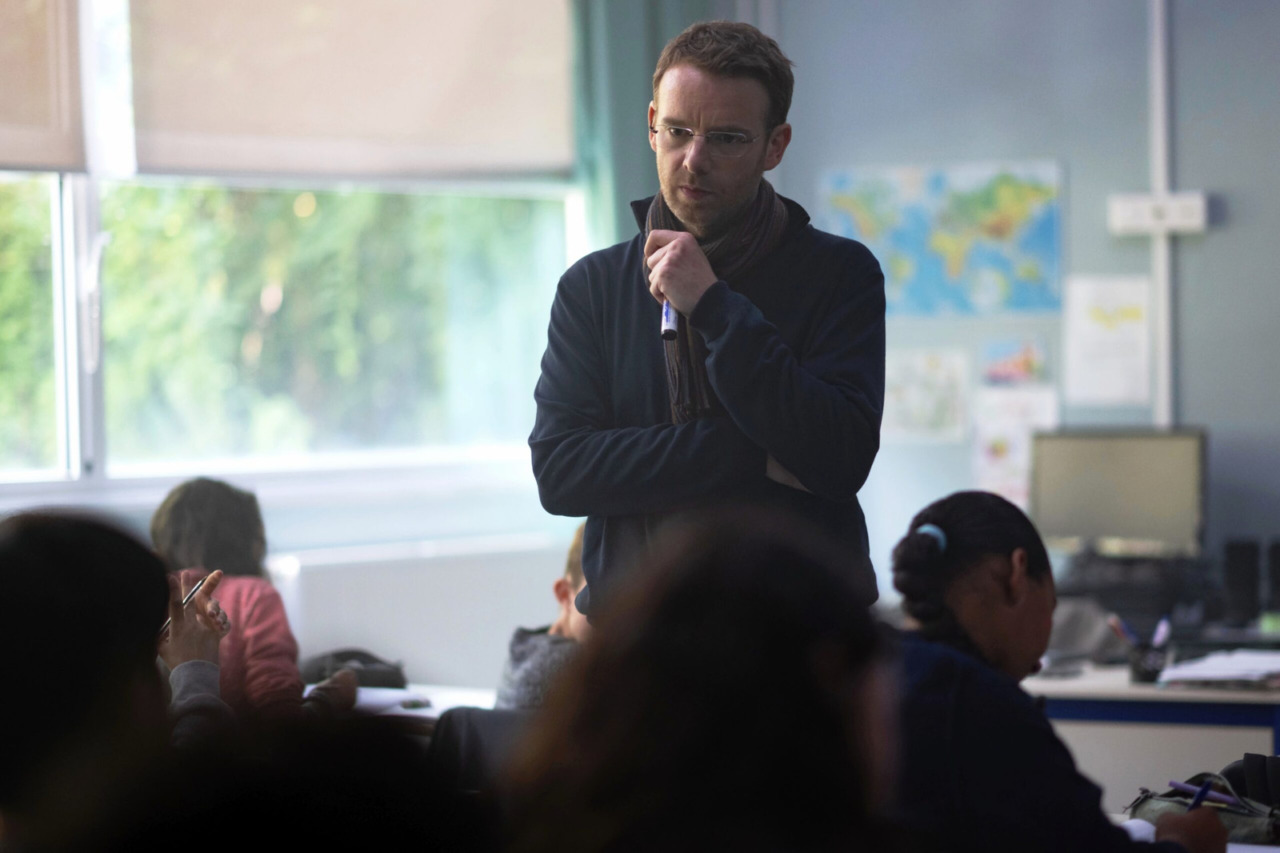

Vincent Garenq’s Forsaken approaches the Samuel Paty case from an angle that initially seems almost counterintuitive. Rather than leaning into the ideological framing that dominated discussion after the French secondary school teacher was murdered in October 2020 for showing Charlie Hebdo cartoons during a lesson on free speech, the film adopts the restrained style of a procedural.
Forsaken follows the final 11 days of Paty’s (Antoine Reinartz) life as false accusations from student Bachira (Emma Boumali), her father (Nedjim Bouizzoul), and local religious figure Hadj Tahar Amara (Azize Kebbouche) intensify into something far beyond the control of the school itself. Garenq is less interested in inviting debate than in tracing escalation: how a classroom faux-pas can spiral once social media outrage, opportunism and institutional failure begin feeding off each other.
Reinartz gives Paty a subdued, gentle presence, grounding the character in ordinary routines: the easy co-parenting relationship he maintains with the mother of his young son, and the notebook of handwritten jokes he reads from at the end of lessons when prompted by students. As things worsen, Paty starts absentmindedly pulling the hood of his beige sweatshirt over his head whenever he leaves a building; later, unable to properly relax, he sleeps stiffly above the covers of his bed. Garenq charts his growing anxiety with restraint, though there are flashes of more overt cinematic tension, particularly in the recurring image of Paty rewatching the viral accusation video in his dark living room, its glow reflected ominously in his glasses.
Forsaken also resists simplifying the people around Paty. The school principal (Emmanuelle Bercot) appears with a weary determination as she tries, increasingly unsuccessfully, to secure support from the authorities. Paty is not entirely abandoned – a handful of colleagues rally behind him, while his student Alma, a foil to Bachira, who was initially upset by the cartoons being shown in class, later delivers a touching speech at his wake. The failure, the film suggests, lies less with individuals than with institutions unable to react decisively once the situation begins spiralling. In one bleakly funny sequence, the principal’s desk disappears beneath piles of sticky notes bearing the names of government offices and officials to contact, each conversation ending with another number to call. By the time an investigator matter-of-factly outlines the chain of failures surrounding Paty’s beheading, Forsaken has become a scathing portrait of bureaucratic failure.
Christina Yang
Read more reviews from our Cannes Film Festival 2026 coverage here.
For further information about the event, visit the Cannes Film Festival website here.


















Facebook
Twitter
Instagram
YouTube
RSS