
“I loved getting to embody all her weirdness”: Sian Clifford and Samuel Abrahams on Lady
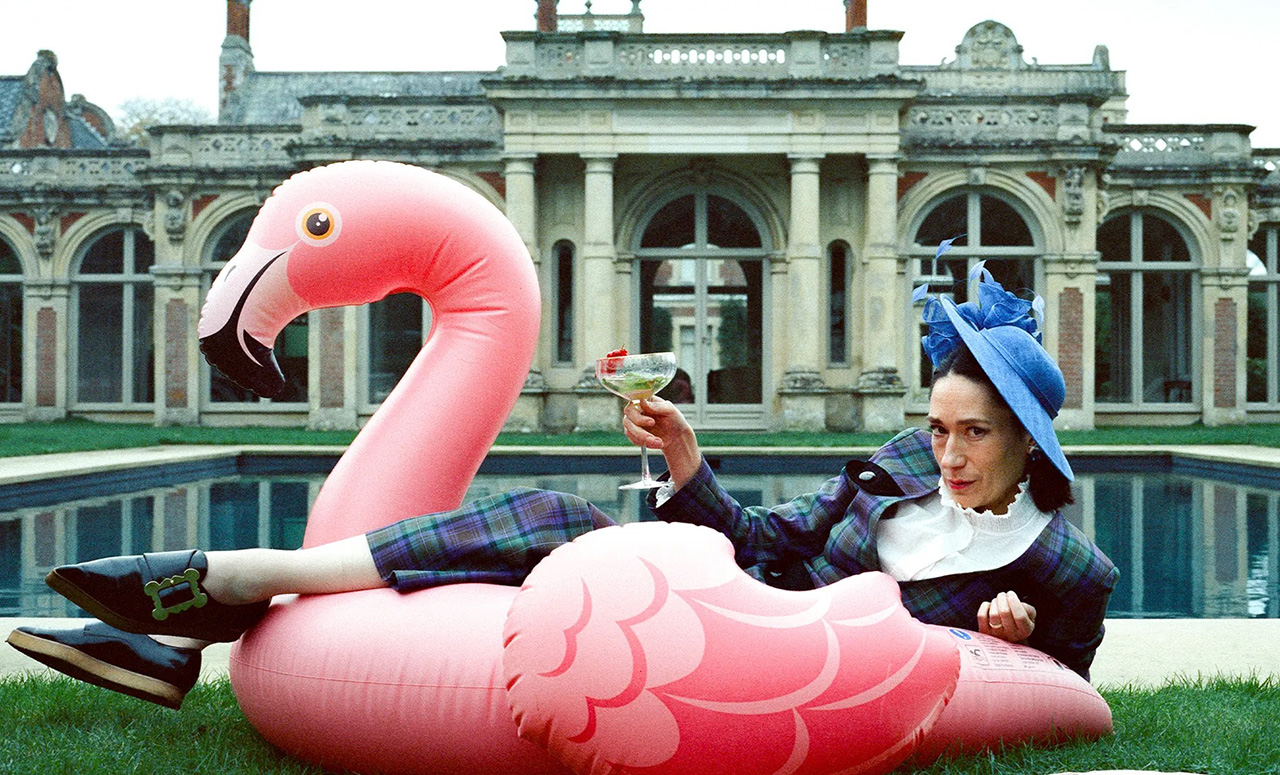

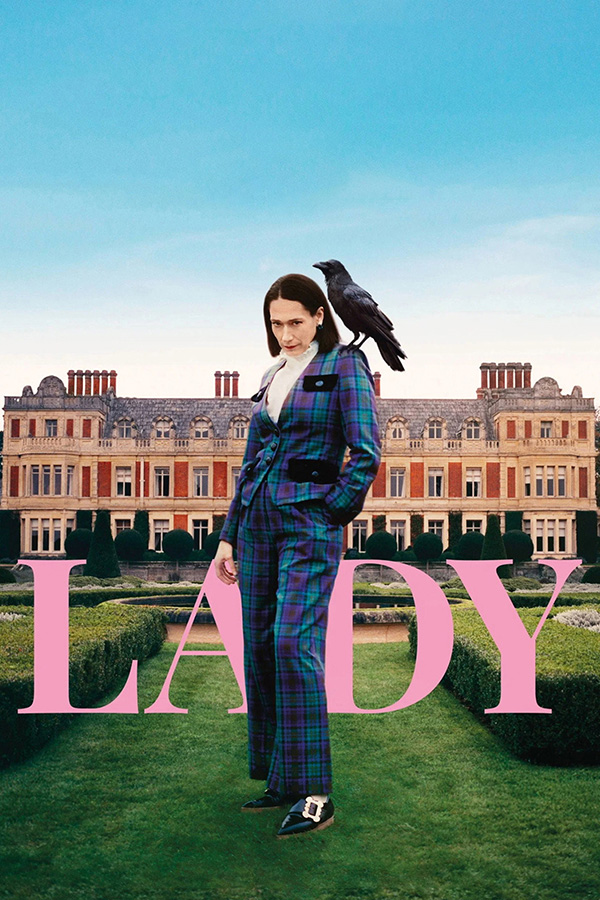
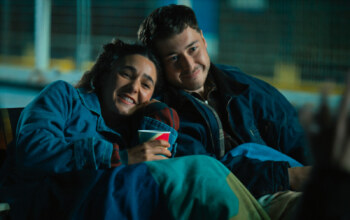
Samuel Abrahams’s feature debut follows Lady Isabella (Sian Clifford), a lonely aristocrat with grand creative ambitions, who recruits struggling filmmaker Sam (Laurie Kynaston) to document her life at the family estate. As Isabella’s pursuit of fame becomes increasingly outlandish, the film itself takes an unexpected surreal turn.
Ahead of Lady‘s theatrical release, Clifford and Abrahams spoke to The Upcoming about the unlikely inspiration behind Lady, the freedom of working in the mockumentary format, and the vulnerability beneath Isabella’s eccentricity.
Hi Sian and Samuel, it’s so lovely to speak with you today. To start things off, could you tell us what audiences can expect going into Lady?
Samuel Abrahams: I think they can expect an eccentric British movie about this very contemporary thing that I think a lot of people are experiencing – this sort of desire to feel seen. People say the movie’s bonkers – I prefer eccentric – but I think there’s a lot of humanity beneath it, and it’s a wild ride. I think it’s really funny, and I hope people dig it and go see it.
What sparked the idea for this project, and why did you want this to be your feature debut?
SA: So the initial spark came from this YouTube video that I’d seen – it’s possibly the most insane video ever uploaded to YouTube. Miranda Campbell Bowling, my co-writer on the script, and I were both completely hooked by the video and immediately subscribed to this person’s channel. They were clearly an aspiring influencer, but it was as if they’d never seen any content before. Every decision they made was wildly off, and we thought there was something really interesting about this character, this person who is, as Isabella says in the film, “chucking out” the content, thinking that perhaps it’s going to fill some void or some sort of hole within her. It immediately resonated with me because I thought, well, I’m not too different – I want to make movies and put them out into the world, and I want people to see them. So I kind of thought, well, there are two different ways of it: I’m someone who wants to hide behind the things they make, whereas this person is just like, “Here I am,” and is putting themselves out there. I thought those were two different takes on the same thing, and wondered what would happen if those two characters were expressing that theme of wanting to be seen.
Sian, what was your first impression of Lady Isabella, and how did that change over time?
Sian Clifford: I was sent a document that wasn’t just a summary of what the film was about, but also how we were going to make it, because our resources were so limited and time was going to be so tight. Our producers sent over this incredible document breaking down how we were going to do everything. The VFX had already been tested; everything was sort of in place. It was the most incredible document I’ve ever received – I’ve worked on massive studio projects, and I’ve never had anything like that; the preparation was incredible. There was also a summary of the character, and that was the first thing I read. I immediately leaned in and messaged my agent saying, “Something has to go horribly wrong with the script for me not to leap at this.” Then I did that classic thing that happens when you’ve got an amazing script in your hands, where you think, “Oh, I’ll just read a couple of pages now.” I was reading it on my computer screen, which is horrendous, but I started, and I couldn’t stop; I just devoured the script. So I want to say my first impression was: “Yes, yes, yes, yes, yes, yes. More, more, more, more.” And my impression of her over time, I would say, is that I just fell in love with her more and more, and empathised with her more and more. Because on the surface, you could perceive her as someone totally delusional, totally selfish, and pretty vile in many ways. But I don’t see her as that now: I see her humanity, I see her pain, and I see her vulnerability. And I loved getting to play her and to embody all her weirdness.
What interests you about the mockumentary format, and why did it feel right for this particular story and character?
SA: For me, it was the way into the story. It all started with the character of Lady Isabella. What is it that she wants? Well, she wants the world to see her, so she’s inviting a film crew into her house. And, as I’m making a small movie, that gives me a great way into what kind of format this takes. I can watch the film that’s being made as it’s being made, and my other character is a director who is sort of losing control of the film, so I get to watch it unravel as well. That just seemed like a really fun thing to do with the mockumentary format. There’s an awful lot of stuff out there in that genre, and some people could say it’s a bit of a tired format. I suppose I wanted to make sure it was something that also had a kind of cinematic language, not just a televisual one. So that idea of the director losing control of it and Isabella kind of taking it away from him was just fascinating to me. And it allows you a really fun sort of freedom, not just with the actors, but also with the camera and the way in which we shot it. It’s all a dance between the camera and the actors, and it was just a really fun format to play with.
SC: I second all of that. I rewatch a lot of things, but two of the shows I go back to again and again are the US The Office and Parks and Recreation. They’re two of my favourite things ever made, so the idea of getting to work in that genre really, really appealed to me. It was honestly something I’d thrown out into the universe as something I’d love to do. And, as Sam says, it’s such a forgiving format to work in. You can really play with it and test the boundaries of it. The whole idea of Isabella beginning to take control of the film – wanting to call “cut” and “action” and all of that – a lot of that started to happen quite naturally during filming. I don’t want to say I was doing any kind of method acting, because I don’t and I’m not an advocate for that, but the dynamic within the film did start to bleed into our consciousness. So it definitely appealed to me as a genre, and I loved working within it because there’s so much freedom within the form. It’s such an elastic way of working in film. It was great fun.
On the subject of performance, where did the idea for Isabella’s performance art come from, and what was it like filming those sequences?
SA: Well, there’s a little backstory to it. Firstly, the location we filmed at is called Somerleyton Hall. It’s in Suffolk, and at the time, the owners of the estate had a pet raven. I was like, this is great. When you’re making a low-budget movie, you’re looking for anything you can beg, borrow and steal, and I thought, that is just a great symbol of Isabella’s loneliness and grief. There’s so much it can represent, so I’m going to use that. And I went to art school, so designing her artwork was really fun for me. It was like going back to the kind of crazy stuff I was around at art school and having fun with that again. It became a question of: what would Isabella do? How would she express the things she doesn’t necessarily have the tools to articulate or be open about? How would those feelings come out through her visual work? I had so much fun with that. It was wild. A lot of it came from looking at where she was emotionally in the script and thinking, “Okay, she can’t deal with this directly, so how might she express it through art?” And then, for the final performance at the end, we knew it was always going to build up to this raven costume because the house is called Ravenhyde Hall, and she has this pet raven, Ricky, who is her buddy. So it was designed to build towards that. Then, of course, the question became: okay, how are we going to realise this? What’s the costume? What is the dance? What kind of shape is it going to take? Because an awful lot of story has to happen in that sequence – and I’m very, very proud of it.
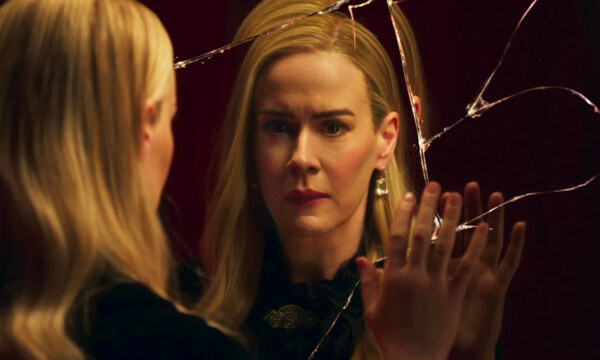
SC: They were real set pieces, so in many ways they were actually the most structured and the hardest scenes to shoot. Weirdly, they took the longest to film, even though they’re some of the shortest moments, because they’re so stylised. The one with the mirrors took about half a day to shoot. It was interesting because the art pieces actually took a lot longer to film than some of the massive dialogue sequences, where we’d be walking through the whole house.
Christina Yang
Lady is released in select cinemas on 14th August 2026.
Watch the trailer for Lady here:









Facebook
Twitter
Instagram
YouTube
RSS