Venice’s Golden Lion weekend: How London fans are turning premiere night into a watch party
 24 August 2026
Someone in a WhatsApp group called Flat 4B Lido Nights sent a poll last week asking whether the dress code should be black tie or “just nice trousers.” Black tie won, 9 to 3. That’s the kind of granular debate happening across London right now as the Venice Film Festival’s 83rd edition approaches, running from 2nd to 12th September 2026 on the Lido. Danny Boyle and Martin McDonagh both have new films premiering. Robert Pattinson is bringing Primetime. George Clooney is set to collect an honorary Golden Lion. And an Oasis documentary is landing at exactly the moment the Gallagher brothers are already dominating every music conversation in the country.
For a certain kind of London film fan, that’s not a festival happening somewhere else. It’s an excuse to close the curtains, invite six people round, and pretend, for one evening, that Fitzrovia is the Lido. The trend isn’t new exactly, London has always had its Oscars-night gatherings, but Venice hits differently because it’s less predictable. You don’t know who wins Best Actress until the jury says so on the closing Saturday. That uncertainty is what makes a premiere-night watch party worth planning around.
Recreating the Lido without leaving zone 2
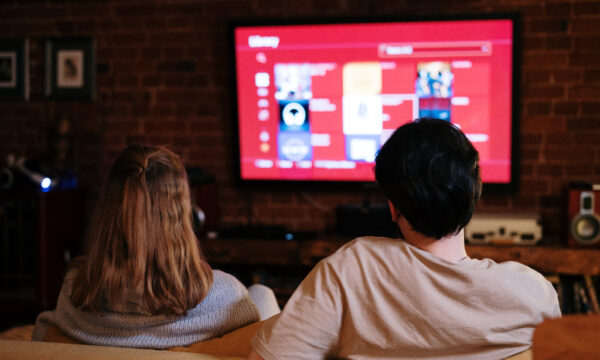
The formula people are landing on is fairly consistent. A big screen, obviously, whether that’s a projector borrowed from a housemate or just the largest television in the flat angled so everyone can see. A cocktail menu that leans Italian, Aperol spritz, Negroni, something with Prosecco, because nobody wants to serve a pint while pretending to be at a red carpet. And a dress code that gets enforced with surprising seriousness. One group in Peckham fined latecomers a fiver for turning up in trainers.
What’s changed this year is how people fill the dead time. A three-hour premiere with red carpet build-up, the screening itself, and post-screening reaction streams leaves gaps, and gaps get filled with games. Prediction rounds on which film takes the Golden Lion are the obvious one, with guests making selections before La Biennale confirms the winner at the close of the festival. But increasingly, hosts are layering in a second kind of entertainment for the gaps between red carpet arrivals and screening starts. Card games, obviously. Quick pub-quiz rounds on festival trivia. And on a few phones seen doing the rounds, entertainment apps including sweepstakes casinos have become another option for exactly this, something to dip into during the twenty minutes between the red carpet segment ending and the film actually starting, without turning the whole evening into a more elaborate gaming session. Puzzle games, film quizzes and quick mobile challenges fit the format particularly well, offering something short enough to occupy a gap without distracting from the main event, and they have spread largely through app stores and word of mouth, which is presumably how they ended up on a phone in Peckham in the first place.
It’s a small detail, but it tells something about how these watch parties are evolving. They’re not just passive viewing anymore. They’re structured the way a proper event is structured, with a build-up, a main event, and side activities that keep the energy up when the screen goes to adverts or commentary filler.r.
What the red carpet actually looks like from a London sofa
Here’s the thing about watching Venice from home: you get more of the red carpet than you would if you were actually queueing outside the Sala Grande. Live streams and rolling photo galleries mean London viewers often see the arrivals in sharper detail and with faster turnaround than journalists filing from the Lido itself. WWD’s coverage of last year’s arrivals ran near-instant updates as stars hit the steps, and that immediacy is part of what makes a watch party feel live rather than delayed.
That access isn’t accidental. The festival itself has leaned into remote viewing for years, with its own Sala Web streaming initiative giving audiences outside Venice a way to watch selected screenings as they happen. It’s a small, formal acknowledgment of something informal groups in London have been doing anyway: treating Venice as an event you participate in remotely rather than one you simply read about afterwards.
Fashion plays its part too. The Mara sisters, Pattinson, and whoever else turns up on the steps this year will set the tone for what’s discussed in group chats the next morning, and outlets are already previewing who’s likely to dominate the red carpet conversation. One host in Islington told me her group does a running best-and-worst-dressed vote via a shared spreadsheet, updated live during the arrivals segment. It’s basically Fashion Week energy grafted onto a film festival, and it works because London already does both separately. Combining them into one evening isn’t a stretch.
Why this trend has legs beyond one weekend
None of this is happening in a vacuum. Cinema-going habits have shifted hard toward home viewing over the past decade, and festival culture has had to adapt. Streaming didn’t kill the communal experience of watching something together, it just moved the couch from the cinema to the living room. That shift was already being discussed a decade ago in coverage of how online viewing habits reshaped audience behaviour around major festivals, and Venice premiere watch parties are arguably the logical endpoint of that trend. If you can’t be on the Lido, you build the Lido experience wherever you actually are.
What’s notable about the 2026 edition specifically is the density of hooks. Boyle and McDonagh both have significant premieres, covered in full in our Venice Film Festival 2026 preview. Clooney’s honorary Golden Lion guarantees a red carpet moment worth building an entire evening around. And the Oasis documentary lands squarely in the middle of a cultural moment that has nothing directly to do with cinema but everything to do with why people in London are paying closer attention to Venice than usual this year.
Groups planning their own version of premiere night are, in effect, running a small production themselves. Someone handles the screen and the streaming logins. Someone handles the drinks. Someone runs the prediction pool. And somewhere in the mix, there’s usually a phone getting passed around during the slow bits, whether that’s for a quiz, a quick game, or just checking whether the spreadsheet needs updating after the latest arrival. It’s less about recreating Venice exactly and more about giving a Tuesday or Wednesday night in London the shape of an occasion.
Whether this becomes a fixture on the London social calendar the way Oscars night has, or fades once the novelty wears off, probably depends on how good this year’s ceremony actually turns out to be. If Clooney’s Golden Lion speech lands, expect the WhatsApp groups to already be planning next September’s edition before the credits roll on this one.
If you’re planning a night in around the festival, Legado’s new wine tastings in Shoreditch would make a solid pre-screening stop before the group reconvenes for the main event.
The editorial unit










Facebook
Twitter
Instagram
YouTube
RSS