
Could GLP-1 medications have a role after bariatric surgery?
 30 September 2026
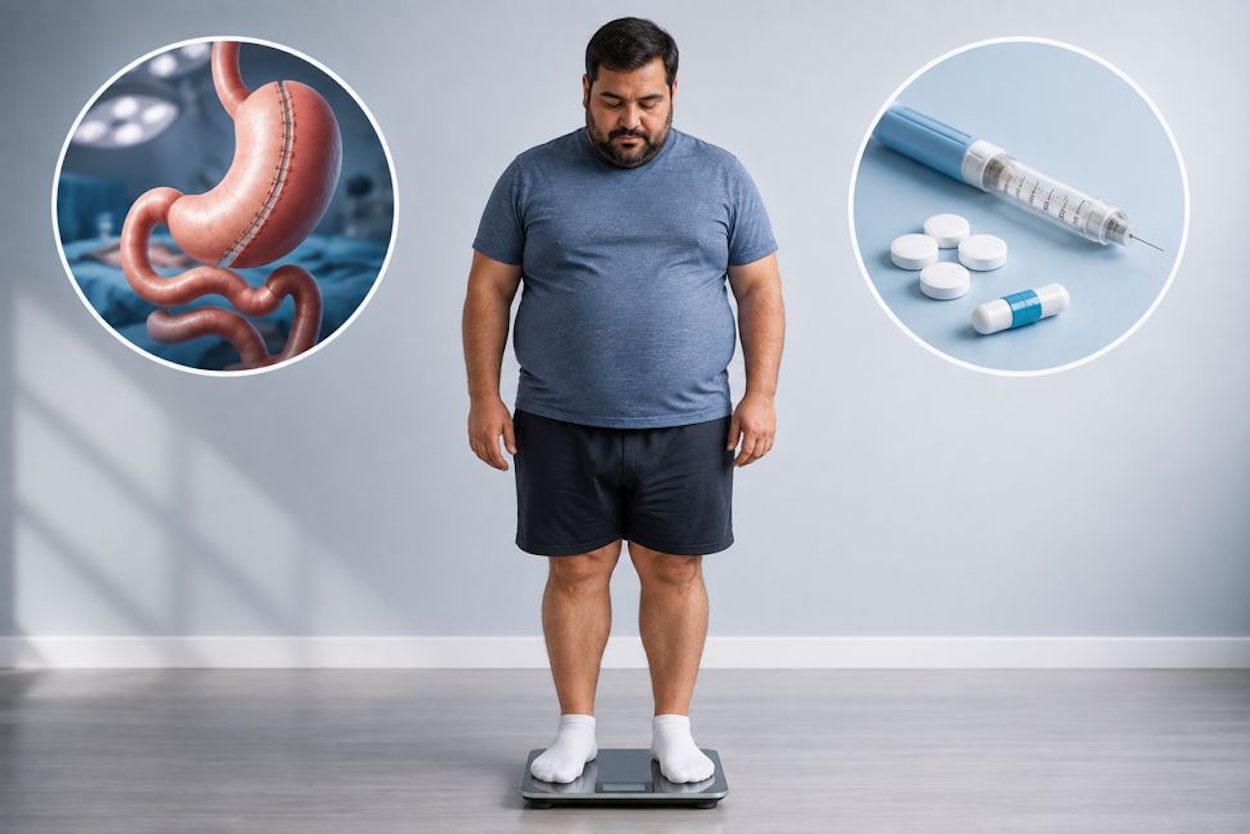
Bariatric surgery, while being potentially life-changing for patients with a weight problem, is not the end of the road for their treatment. Some patients lose less weight than they had anticipated. Others may lose a lot of weight in the first few years after their surgery, but then start to regain it as the years pass by.
Obesity is a long-term disease and therefore needs to be treated in the long term. Sometimes, after a while, a change of treatment is necessary. For some patients with obesity, GLP-1-based medicines, like semaglutide, could be the next step in their treatment.
Weight regain is a reason to reasses
Assoc. Prof. Dr. Nadir Adnan Hacim, an Obesity and Metabolic Surgery specialist at Erdem Hospital says that in cases where patients have gained weight after their bariatric surgery, the first step is to figure out the reasons for the weight gain instead of immediately looking for other treatments.
“First of all, we try to find out whether the patients are still following a healthy diet. Then we find out whether the patients are still active enough, what kind of medicine they are taking, how they are sleeping and whether their metabolism is still in order. We also check whether there are any possible anatomical problems with the operation,” he says.
There are many reasons for weight regain after bariatric surgery. In fact, there are studies conducted by researchers at University College London, in which they found that in about one in five individuals who have undergone bariatric surgery, either they lose less weight than expected or they even gain weight back after some time.
Bariatric surgery is a serious operation and patients who have lost weight after the operation can return to their normal way of life. However, after some time patients can start to gain weight again. Dr. Hacim explains that weight gain after bariatric surgery is not a failure of the operation. “It’s not a failure but the need for a change in treatment,” he says.
“Even though the patient hasn’t reached the ideal weight after the operation, they have in the meantime already experienced huge improvements in their overall health and in the condition of their existing diseases. For example, in the case of diabetes, they might have even been able to stop their medication entirely. In addition, their mobility has improved, etc. Therefore, even if the patient starts to gain the weight back after a while, it doesn’t mean that the operation has failed. It is important to find out what has changed for the patient and then to decide on the best course of treatment for them.”

Where GLP-1 medication can fit
Assoc. Prof. Dr. Hacim also notes that for patients who have already lost weight with bariatric surgery, GLP-1-based medications could be used to improve weight loss and other aspects of their health.
“Medication after bariatric surgery is not contradictory to the surgical treatment of obesity” he says. “The GLP-1-based medications work through additional hormonal pathways, therefore in certain cases a combination of both treatment options may be the best solution for a patient. The surgery has already been used to alter the digestive system and how the body can deal with food.”
Follow-up determines what comes next
If weight is returning after bariatric surgery, a number of issues need to be cleared up before deciding on weight loss medication.
Problems such as vomiting and in particular acid reflux need to be investigated before any consideration of using GLP-1-based medications for weight loss. Also, problems with nutrition after weight loss surgery are common. Therefore, in the first place, it is necessary to check for deficiencies and in the case of problems related to the bariatric operation, a surgical assessment is required.
In addition to measuring the volume of food that patients are eating, monitoring the nutrition of patients with bariatric surgery is important, particularly as they take GLP-1-based medication. This is because such medication will have an additional effect on appetite, on top of the effect of the small amounts of food that patients with bariatric surgery are already eating. This is why the amount of protein in their diet, as well as their fluid intake and levels of vitamins and minerals, need to be monitored.
Bottom line is, even years after an apparently successful operation, long-term follow-up of the patient is important.
“Someone comes back two or three years after surgery. We need to understand what has happened during that whole period. Sometimes the answer is nutritional support. Sometimes medication may help. Occasionally we need another surgical assessment. In some patients, it will be a combination,” Dr. Hacim explains.
Weight fluctuations in the long-term, nutritional problems and the patient’s overall metabolic health, symptoms and experiences are all taken into consideration in the follow-up process. Weight loss treatment after bariatric surgery does not have to be disappointing for patients as there is a growing amount of positive evidence for the use of GLP-1-based medicines for weight loss in post bariatric patients.
The editorial unit




















Facebook
Twitter
Instagram
YouTube
RSS