
Strawberries
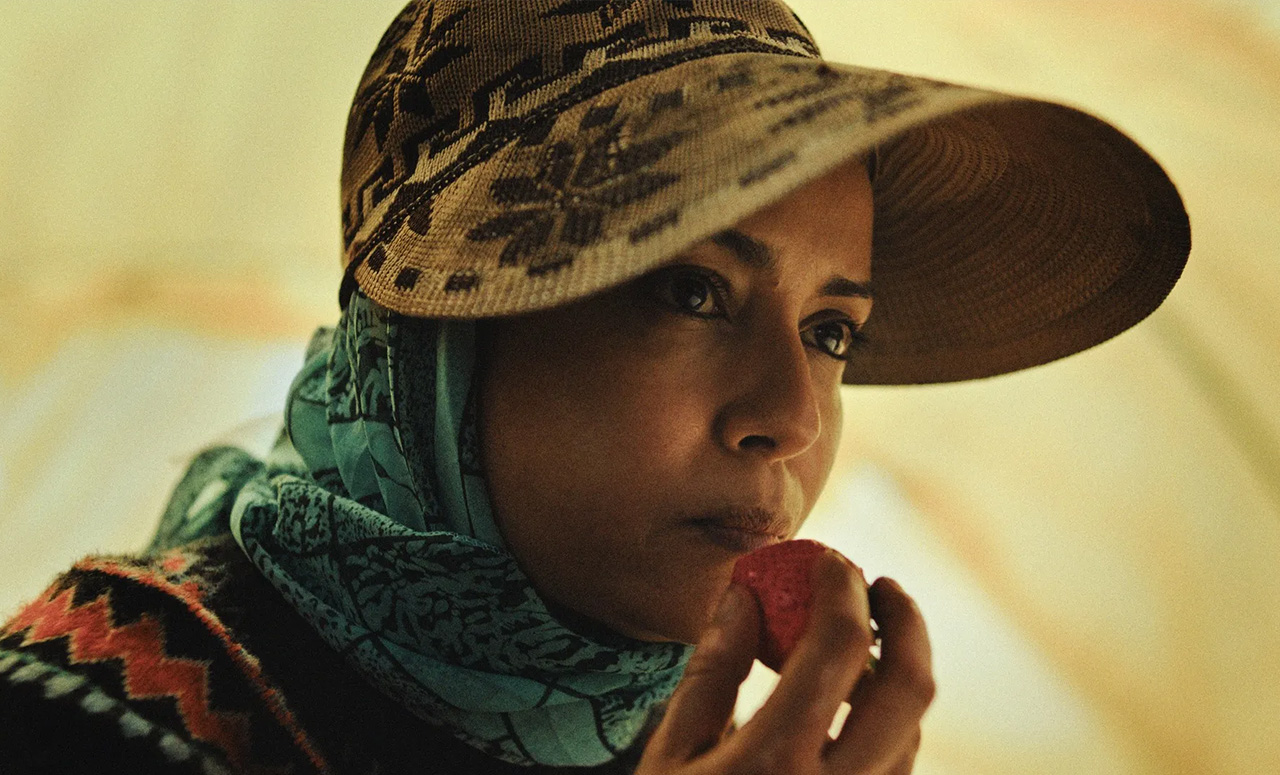


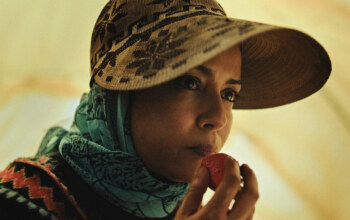
While discussions of migration tend to focus on young, single men, Laïla Marrakchi turns her attention to women of varying ages, many with families back home who depend upon their earnings. Her latest feature, Strawberries, follows a group of Moroccan women recruited as seasonal agricultural workers in southern Spain. At its centre is Hasna (Nisrin Erradi), a former taekwondo champion whose athleticism and strong will make her an unconventional protagonist for this kind of drama. Quick to anger, confrontational and not always particularly sympathetic, she challenges the expectation that victims must be likeable to deserve sympathy. Erradi delivers a forceful performance, leading a strong ensemble of women whose differing ages, temperaments and circumstances prevent them from becoming interchangeable figures of suffering.
Among them is Hasna’s best friend, Meriem (Hajar Graigaa), whose gentle, soft-spoken demeanour contrasts with Hasna’s combative personality. Her vulnerability leaves her especially susceptible to exploitation, and her increasingly tragic circumstances follow a more familiar trajectory for this kind of social realist drama. Their contrasting personalities lend the film considerable emotional range, although Meriem’s storyline occasionally feels too calculated to illustrate the worst possible consequences of their predicament.
Strawberries also displays an almost documentary-like attention to detail, particularly in its portrayal of the mundane economic realities of the women’s daily lives. They shop for cheap goods in corner shops, occasionally steal small luxuries and carefully calculate what they can afford on their meagre earnings. Meanwhile, their employers charge them for internet access, withhold wages and restrict toilet breaks. These details are more effective than the film’s overt confrontations, revealing how exploitation is sustained through the regulation of even the most ordinary aspects of daily life.
The treatment of resistance is similarly convincing. Marrakchi recognises that speaking out carries considerable risks for women who cannot afford to lose their employment, while the eventual involvement of a lawyer offers no miraculous solution. At one point, the women find themselves sleeping on mattresses spread across the floor of a law firm’s office, a particularly effective illustration of the precariousness that persists even after they have sought legal assistance. The film understands that challenging an exploitative system does not necessarily provide the means to escape it.
As the story progresses, the script occasionally resorts to predictable dramatic developments, piling further misfortunes upon its characters long after the point has been made. Yet these excesses are not enough to overshadow the strength of the performances or Marrakchi’s precise, unsentimental approach. Strawberries remains a compelling drama, at its most persuasive when it recognises that the everyday indignities of exploitation are quite damning enough without further embellishment.
Christina Yang
Read more reviews from our London Film Festival 2026 coverage here.
For further information about the event, visit the London Film Festival website here.
















Facebook
Twitter
Instagram
YouTube
RSS