
“I invite my audience to dance with us”: Gabriel Mascaro on The Blue Trail at Berlinale 2025
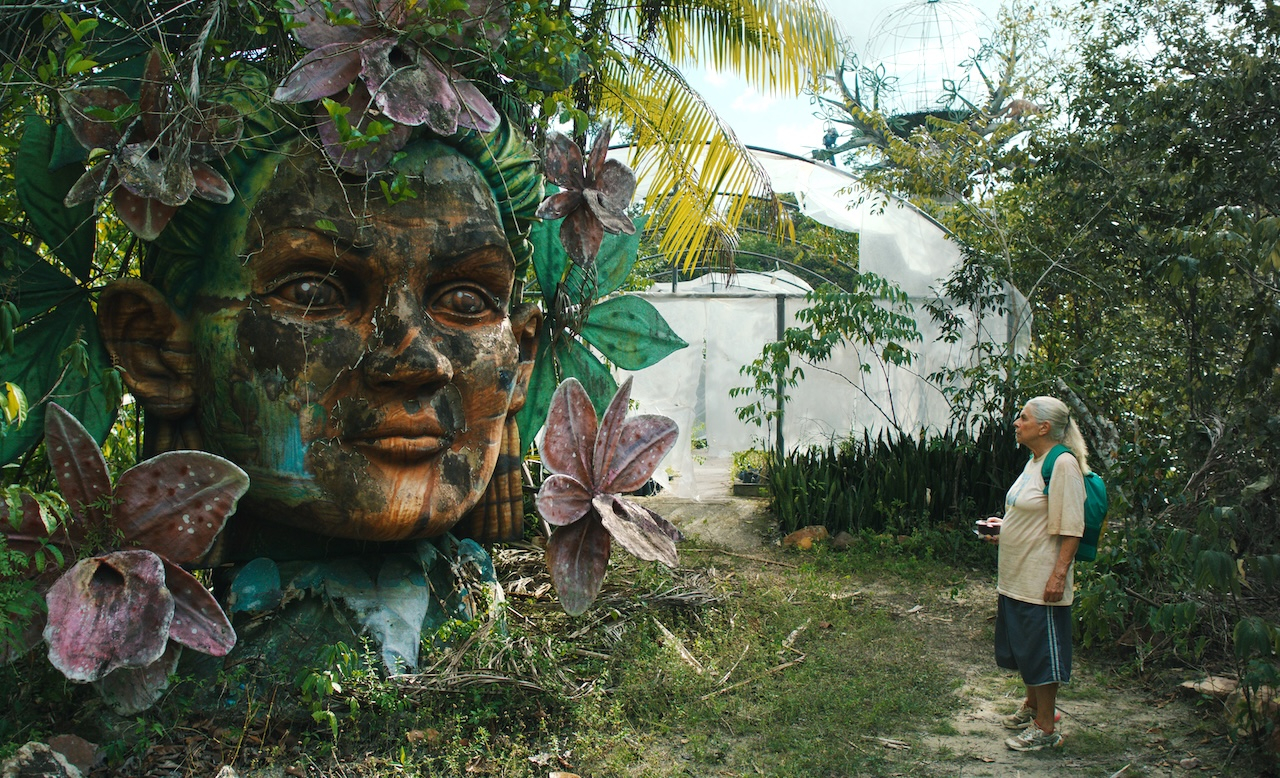


In this Brazil-set dystopian film, Gabriel Mascaro tells a story of Tereza (Denise Weinberg), a 77-year-old woman, who suddenly loses her job. As she doesn’t want to be put in a senior housing colony, she embarks on a life-defining journey along the Amazon River to fulfil her last desire. The Upcoming sat down with the director during Berlinale 2025 to learn more about his approach to dreaming and hope, his depiction of old age on screen, and his work on this oneiric tale.
Why did you decide to portray old people on a big screen? It feels like a challenge for a much younger director.
I started this project almost ten years ago. I’ve always been interested in portraying the elderly in cinema, and I’ve realised it’s not a popular topic. The story of The Blue Trail is a blend of tradition with a more personal approach. I wanted an elderly character to be a focal point of this journey instead of being somewhere in the background. She’s the one experiencing things, and we, the audience, follow the film through her senses. We have fantastic films about elderly people, like Ozu’s Tokyo Story (1953), but they mostly talk about the past instead of focusing on the present time. I invite my audience to a dance with me and my cast. I want to show them we can perceive oldness differently. In a more humanistic way. But I need the viewers to trust me on this. In the end, we are all dancing with each other, just like Tereza in one of the sequences. “Let’s just have fun,” I tell my audience through this film.
How did you work on your relationship with Denise Weinberg? I know she’s a well-known figure in Brazil, but I’m curious why you cast her as Tereza, a woman who is actually older than her.
Brazil has a huge industry of soap operas and melodramas. That being said, we have many famous (and older) actresses who are today considered stars in our culture. However, none of them is able to age gracefully. As they try to modify their beauty and go through all those facial corrections, whenever I turn on TV, I see all of those actresses look the same. They’re like the same character, without any expressions or traits of ageing. When I found Denise, I felt this is an actress born to play Tereza. She was very confident in playing this role, and I also needed someone who would be able to accept becoming old and embody this through her character. She has a very young soul, and her attitude breaks all those stereotypes about becoming old. Denise even told me that now she feels even more confident about herself than 20 years ago. Her spirit shaped the entire dynamics of The Blue Trail.
When writing Tereza, did you have any specific woman in mind? Or she consists of multitudes, of all those different women you have met.
It’s more about me and how I perceived all those emotional affections depicted in the film. But, of course, I was inspired by my grandmother, whose life-affirming approach somehow inspired me. When my grandpa passed away, she didn’t surrender. My grandma found a new passion: she started painting. She rediscovered her talent; now she’s 96, and she still paints whenever she can. Every picture done by her is a tiny masterpiece. I’m still in awe of her work. I’ve always had her at the back of my head while working on the script and Tereza’s attitude.
Are there any specific cultural references embedded in Brazilian traditions? If so, would you like to elaborate?
I was thinking about how I can show the ritual of Tereza’s rebirth through Brazilian culture. All of it is more connected to the woman part of my character, deeply hidden in me. I’ve been living in a house full of women for many years, and they all inspired me and made me a better man. I’m interested to listen, so it felt natural to give a voice to a woman character in my film. You need to be passionate about your character to succeed. I know I’m a man, but I’m also happy that more and more Brazilian female directors receive recognition in our country and get platforms to have their voices finally heard.
Can you discuss the importance of the Amazon River in your film? It is one of the most important characters in The Blue Trail. The river becomes Tereza’s new home, allowing her to dream and live again.
I wanted to play with reality and show it in a different light. The river becomes an allegory for a new life for Tereza. It was interesting to show an elderly person in a future world, while simultaneously exploring how she reconciles with nature, which is one of the most important elements of our film. I’ve come up with this dystopian idea for Brazil, but we still need to discuss how crucial the Amazon River is for our culture. We wanted to show it all through humour and passion.
Ultimately, The Blue Trail is a film about hope, dreaming and finding the right path when everything around you seems to collapse. What is hope for you?
Living in Brazil is tough. We have many social gaps, a lot of violence and poverty, too. Yet, we have this carnal hope that keeps us going. I think I have it in me as well. I always try to look for the bright side of every situation, even the hardest one. This is how I would define hope.
Jan Tracz
The Blue Trail (O Último Azul) does not have a release date yet.
Read more reviews from our Berlin Film Festival coverage here.
For further information about the event, visit the Berlin Film Festival website here.

















Facebook
Twitter
Instagram
YouTube
RSS