
Samurai at the British Museum
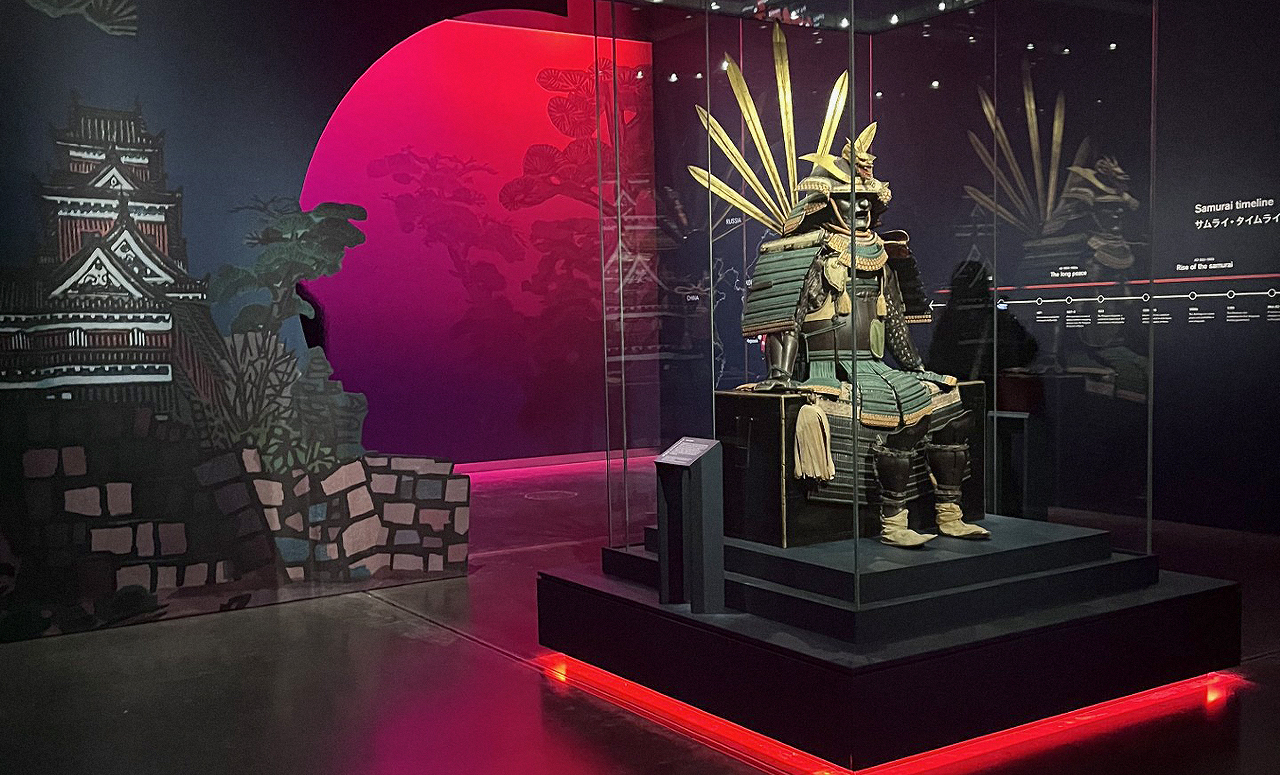


In the dimly lit halls of the British Museum, an informative journey into Japanese culture takes place. Samurai, a brand-new exhibition, covers three eras of the title, from its rise through periods of war, a time of peace, and finally to the modern-day perception of these warriors. Through this intriguing mixed-media showcase, where history and mythology collide, Samurai deconstructs misconceptions and educates visitors on these figures’ multifaceted roles across the centuries.
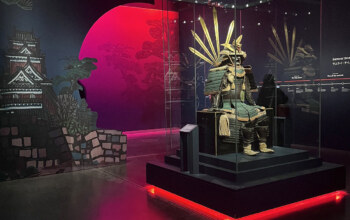
Upon first entry, the most notable aspect is the dark-coloured walls adorned with Japanese scenery and architecture. There’s a cinematic quality to these images that sets the tone. This opening section presents weaponry and armour, steeped in deep red hues and violent lighting that create a menacing aura. The samurai, long associated with sword-wielding prowess, were also proficient archers, as seen in scrolls depicting their long-range combat tactics and the intricate displays of bows and arrows. While swords apparently played a limited role in warfare, they did signify status and fine craftsmanship. The pieces here are accompanied by commentary on how battle attire was tailored to protect warriors in the field. Particularly fascinating are the design inspirations drawn from mythic figures such as goblins and dragons, adding a fantastical touch to these historical artefacts.
Bright lighting floods the second part of the exhibition. During this era of long peace, the samurai became less like warriors and more a class of their own. With an abundance of time, many turned to the arts for various reasons – from supplemental income to forms of protest for those dissatisfied with the regime. This period saw developments in craftsmanship, education, and erotic literature, amongst other pursuits. The latter, in particular, featured androgynous and queer narratives that appealed to both men and women. Clothing from this era was less battle-oriented and served more diplomatic purposes. Armour and weapons still appear sparsely throughout the display cases, highlighting the uncertainty surrounding how long this peace might last.
Plunging visitors back into low lighting, the final section sees the samurai transcending into modern-day pop culture. Some of the work here is video-based, with screens dangling from the ceiling showing montages of the samurai across various visual media, from anime and video games to film and television. The most prominent display in this section is the Darth Vader costume, whose design stems from the samurai helmet that inspired Star Wars director George Lucas. This demonstrates how, beyond retrospective depictions, the history and aesthetics of these Japanese warriors bleed into other franchises. Manga, films, figurines, and even fashion designs are also on display, all proudly taking cues from these historical figures.
Samurai is a thoroughly enjoyable walkthrough with plenty to unpack and immerse oneself in. The execution, particularly through aesthetic choices in lighting and wall art, enhances the overall atmosphere, and witnessing the transformation of these famed warriors across the centuries makes for an all-around educational experience.
Mae Trumata
Photos: Courtesy of the British Museum
Samurai is at the British Museum from 3rd February until 4th May 2026. For further information or to book, visit the exhibition’s website here.













Facebook
Twitter
Instagram
YouTube
RSS