
Nagi Notes
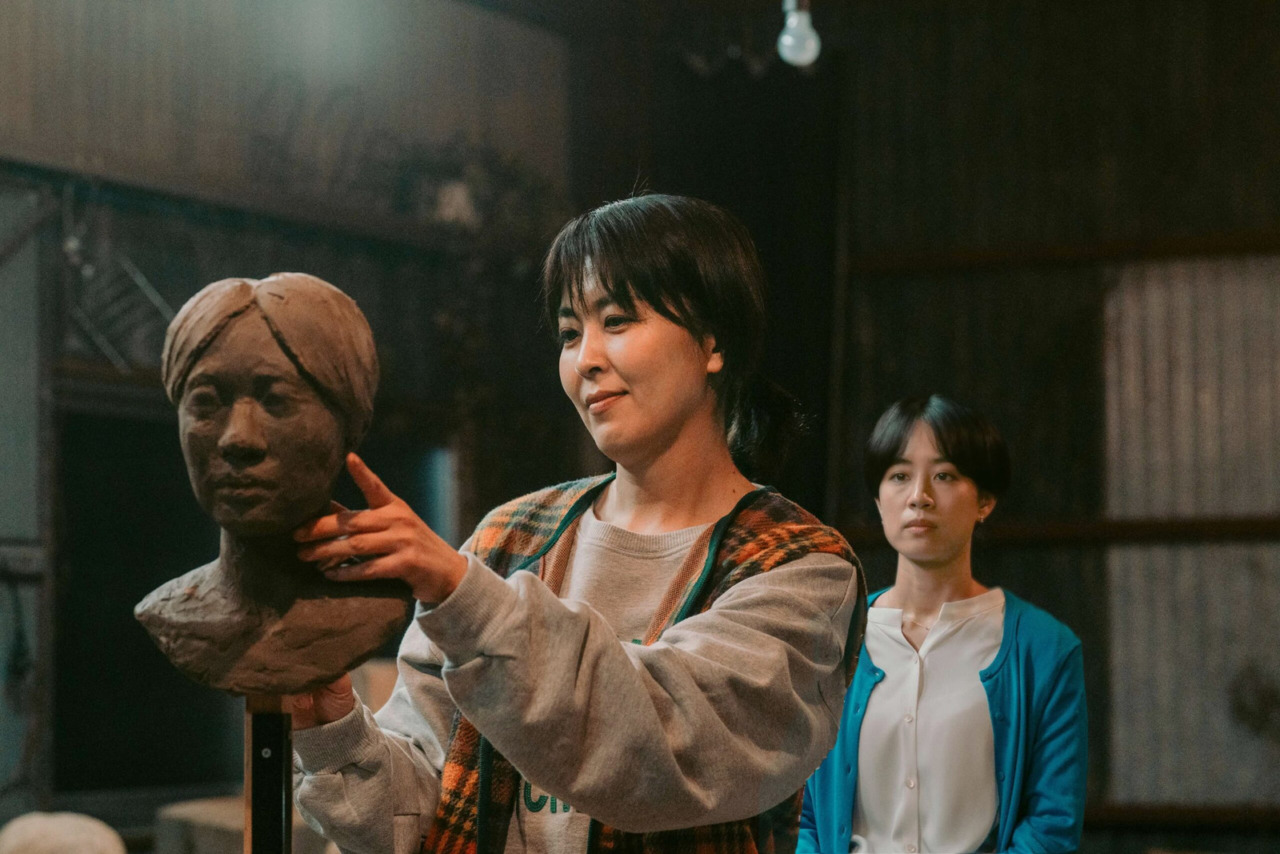


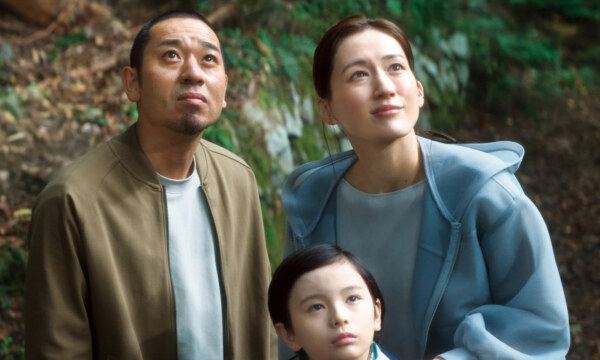
Koji Fukada’s Nagi Notes takes Oriza Hirata’s 1994 play Tokyo Notes out of its museum setting and into the rural town of Nagi, where mountains, hiking trails and ancient gingko trees carry as much emotional weight as the conversations unfolding between them. The stillness of the setting creates a strange intimacy between its residents, private lives constantly overlapping as uncertainty drifts between artist Yoriko (Takako Matsu), her former sister-in-law and current artist’s model Yuri (Shizuka Ishibashi), and the teenage schoolboys Haruki (Kawaguchi Waku) and Keita (Kiyora Fujiwara) attending painting lessons at Yoriko’s studio.
Fukada approaches these interactions with his usual restraint, though Nagi Notes often carries a surprisingly sharp comic edge. Much of the tension emerges through halted conversations, lingering silences and people observing one another slightly too carefully. Brief though they are, the museum scenes become some of the film’s most memorable. Yuri and Haruhi wander through the immersive avant-garde installations of the Nagi Museum of Contemporary Art, the larger-than-life exhibits gradually becoming less objects to interpret than spaces in which they begin cautiously exploring themselves and one another. Fukada avoids the self-seriousness common to the way art is often used symbolically onscreen, allowing emotional and philosophical ideas to emerge naturally through the characters’ encounters with the work.
The same attention carries into the portrayal of Yoriko’s sculpting. Watching her shape Yuri’s face from rough slabs of clay is fascinating precisely because Fukada emphasises process over completion. A sculpture gradually reaches what appears to be a finished state, only for Yoriko to destroy and remake it entirely. Around her studio sit technically perfect works left untouched, suggesting an artist more interested in pursuing an impossible emotional truth than producing beautiful objects. Her studio itself – vast, grounded and functional – feels refreshingly removed from the polished urban artist loft so common in cinema, while the film’s broader reflections on creativity, incompletion and impermanence carry subtle traces of Buddhist philosophy.
The ensemble cast handles Fukada’s restrained register beautifully, with Fujiwara delivering a standout performance as Keita through tightly controlled discomfort and emotional repression. Fukada repeatedly unsettles expectations surrounding the seemingly well-behaved schoolboys and their relationships, weaving together two subtly mirrored queer coming-of-age stories alongside a perceptive portrait of small-town dynamics.
There are moments where the film’s theatrical origins become too apparent. A hazy sequence in which Yoriko’s past intrudes upon the present – wavering between psychological grief and the supernatural – feels awkwardly stage-bound onscreen. Still, Fukada captures what makes Hirata’s writing so compelling: people circling their fears, desires and disappointments without ever fully articulating them.
Christina Yang
Read more reviews from our Cannes Film Festival 2026 coverage here.
For further information about the event, visit the Cannes Film Festival website here.















Facebook
Twitter
Instagram
YouTube
RSS