
Moulin
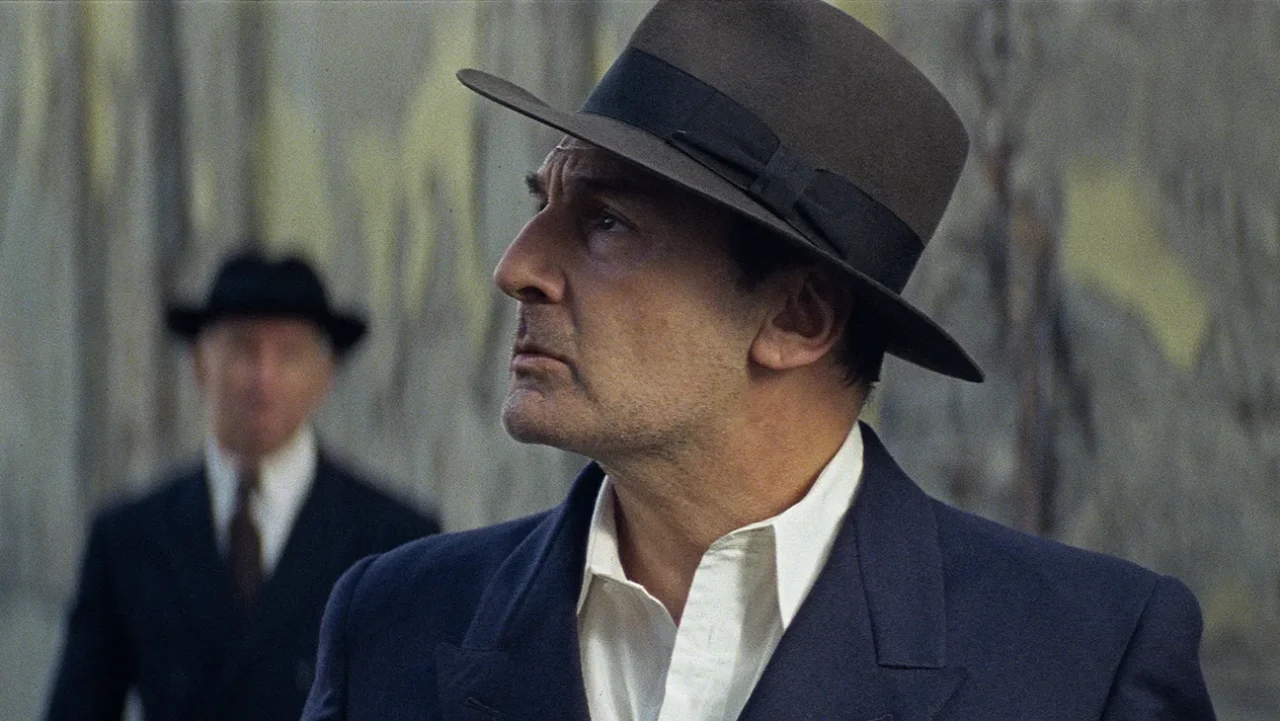

László Nemes’s Moulin opens in March 1943 with Jean Moulin (Gilles Lellouche) parachuting into Nazi-occupied France from London. Sent by Charles de Gaulle to unite the fractured groups of the French Resistance, Moulin arrives in Lyon under the alias of interior designer Jacques Martel, travelling by train to a clandestine meeting of resistance leaders held inside a doctor’s office.
Nemes treats the material less as a patriotic war drama than a noir thriller. The atmosphere is established immediately through cold, voyeuristic framing. The camera rarely settles comfortably inside a room, lurking behind windows, doorframes and car seats as though eavesdropping on conversations. Characters are constantly boxed in by corridors, staircases and narrow interiors, giving the impression that somebody is always observing from a hidden corner. One particularly striking sequence follows Moulin after his first night in prison. One of the film’s best shots looks down from the top of a sweeping staircase as Moulin is led towards Klaus Barbie’s office after his first night in prison, the camera observing him with the detached watchfulness that defines the film.
Lellouche plays Moulin with remarkable restraint. There are no attempts to make him a mythic symbol of resistance, nor any obvious attempts to sentimentalise his suffering. Even under interrogation, he remains composed, speaking carefully, measuring every gesture. His scenes with Comtesse de Forez (Louise Bourgoin), the wealthy widow posing as Jacques Martel’s latest client, offer brief moments of human connection without ever easing the film’s atmosphere of paranoia. The film’s most memorable presence is German officer Klaus Barbie (Lars Eidinger). His last name instantly evokes laughter, and Eidinger plays him with the comical yet terrifying menace of a Tarantino villain. The performance works as a perfect foil to Moulin’s quiet caution; Barbie gliding through conversations with the smug ease of somebody who already knows he controls the room. He is more threatening while offering Moulin a cigarette or casually asking for decorating advice than during the scenes of outright violence.
Nemes stages the torture without turning suffering into spectacle. There are no speeches about sacrifice or gestures of patriotic defiance, only humiliation, fear and the effort to endure. By stripping away the mythology that usually surrounds stories of resistance, Moulin takes a far more severe view of heroism. It gives the film a strikingly unusual edge for a story about wartime resistance.
Christina Yang
Read more reviews from our Cannes Film Festival 2026 coverage here.
For further information about the event, visit the Cannes Film Festival website here.



















Facebook
Twitter
Instagram
YouTube
RSS