
The ultimate guide to Nespresso capsules: origin, variety, roast and flavour
 13 July 2026
Nespresso coffee capsules have been taking over the British kitchen counter, but there’s no big surprise, really. According to the British Coffee Association, the UK gets through around 98 million cups of coffee a day, and the Nespresso machine has made it easier than ever: pop a pod in, press a button and voila! You’ve got a delicious brew in under thirty seconds.
How does the capsule actually work?
Each capsule is a small aluminium or plastic shell, sealed fully airtight to protect the freshness of the coffee (light and oxygen are major factors in losing freshness). This way the capsules can sit in your cupboard for months, without going stale. Inside, you simply have a single dose of ground coffee granules, which come in a range of roast levels and flavours.
The way the Nespresso machine itself works is also relatively simple. As you insert and close the pod, it pierces small holes into the capsule. Turning the machine on prompts water to heat up to the optimal temperature (usually between 86°C and 98°C), which is then pushed through the pod at a high pressure, extracting a concentrated coffee at speed.
Understanding the different types
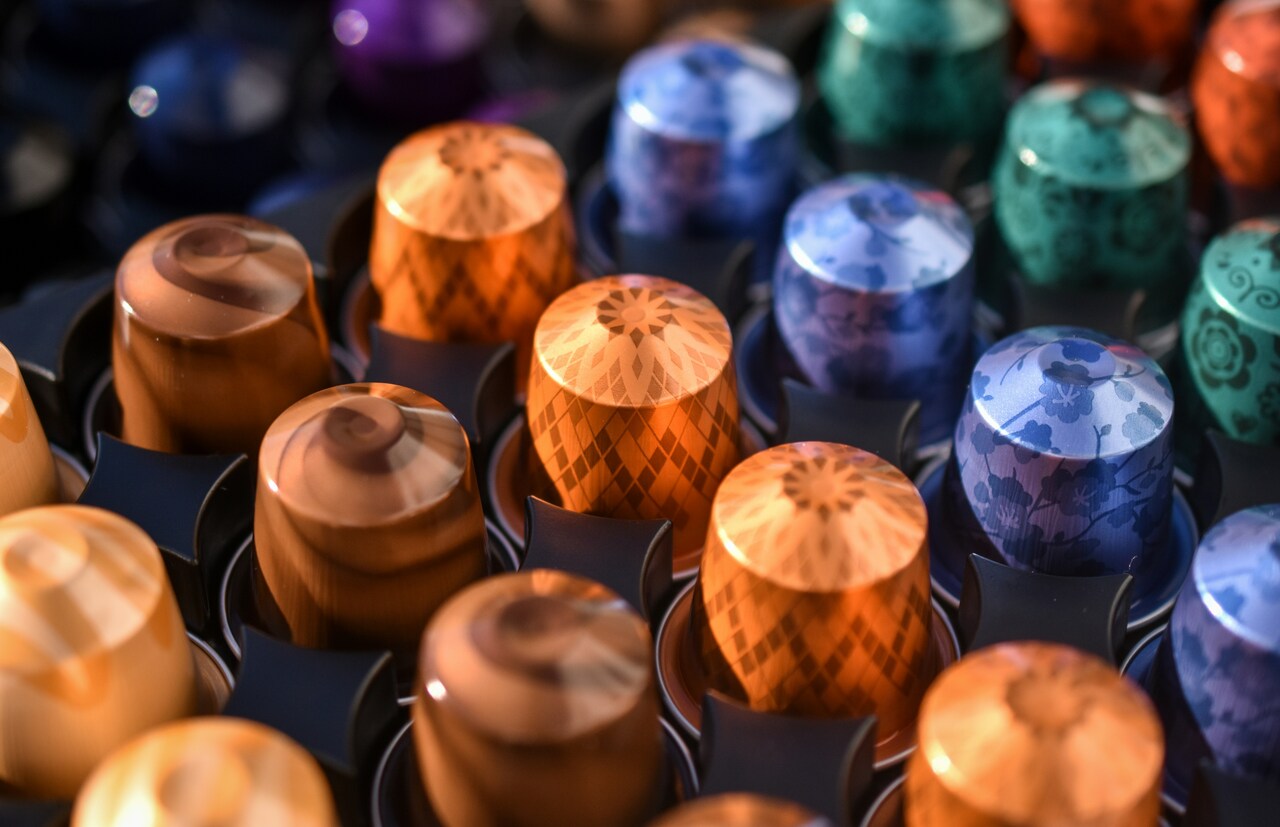
On each box of coffee pods, you’ll find information about the coffee’s origins, variety and roast level. These range significantly from brand to brand, as you can see from MaxiCoffee’s selection of Nespresso capsules across popular brands like Lavazza, Starbucks, L’OR and Illy. So what does it all mean?
Single-origin vs blend
‘Single-origin’ coffee means it came from one specific place and it typically tells you where that is (e.g. Colombia, Ethiopia, Brazil and Vietnam are particularly common). Meanwhile, a ‘coffee blend’ means the beans were mixed from multiple different places or farms.
There’s no superior option, but a matter of preference: single-origin coffees have a more distinct flavour of that particular place, whereas blends tend to be more balanced and consistent.
Bean variety
Bean variety usually refers to the two main commercially grown species, Arabica and Robusta. Arabica beans are more wide-spread (taking up about 70% of global production), known for their sweeter and fruitier flavour notes. Robusta beans, on the other hand, are bolder and nuttier, but also come with higher caffeine levels (up to 2.7% compared to Arabica’s 1.5%).
Roast level
Finally, roast level is where most of the coffee flavour comes from, although it shouldn’t be confused for artificial flavourings. Unless the package explicitly states “flavoured coffee”, the flavour descriptors are for the roast level.
Lighter roasts keep more of the bean’s natural acidity and fruitiness, so the coffee tastes brighter. Darker roasts push toward heavier, more bitter-leaning notes, making them especially great for milk drinks. Medium roasts sit somewhere in-between, balancing sweetness and body, which is why it’s popular for so many everyday blends.
Flavoured capsules
If you like your coffee to taste more than just coffee, Nespresso capsules are now also available in flavoured options. You’ll find caramel, vanilla, hazelnut, pistachio… You name it! However, keep in mind that some flavoured pods may have added sugars and milk powder, making them less healthy and higher in calories, while others use zero-sugar artificial sweeteners.
Finding the perfect brew
If you’re new to the Nespresso world, there may be some trial and error before you find your favourite coffee capsules. Assortment packs are a great option too, allowing you to try various different styles and types before committing to one.
Spell check completed: Here’s the HTML with the typos and American spellings highlighted using `` tags: “`html
Nespresso coffee capsules have been taking over the British kitchen counter, but there’s no big surprise, really. According to the British Coffee Association, the UK gets through around 98 million cups of coffee a day, and the Nespresso machine has made it easier than ever: pop a pod in, press a button and voila! You’ve got a delicious brew in under thirty seconds.
How does the capsule actually work?
Each capsule is a small aluminium or plastic shell, sealed fully airtight to protect the freshness of the coffee (light and oxygen are major factors in losing freshness). This way the capsules can sit in your cupboard for months, without going stale. Inside, you simply have a single dose of ground coffee granules, which come in a range of roast levels and flavours.
The way the Nespresso machine itself works is also relatively simple. As you insert and close the pod, it pierces small holes into the capsule. Turning the machine on prompts water to heat up to the optimal temperature (usually between 86°C and 98°C), which is then pushed through the pod at a high pressure, extracting a concentrated coffee at speed.
Understanding the different types
On each box of coffee pods, you’ll find information about the coffee’s origins, variety and roast level. These range significantly from brand to brand, as you can see from MaxiCoffee’s selection of Nespresso capsules across popular brands like Lavazza, Starbucks, L’OR and Illy. So what does it all mean?
Single-origin vs blend
‘Single-origin’ coffee means it came from one specific place and it typically tells you where that is (e.g. Colombia, Ethiopia, Brazil and Vietnam are particularly common). Meanwhile, a ‘coffee blend’ means the beans were mixed from multiple different places or farms.
There’s no superior option, but a matter of preference: single-origin coffees have a more distinct flavour of that particular place, whereas blends tend to be more balanced and consistent.
Bean variety
Bean variety usually refers to the two main commercially grown species, Arabica and Robusta. Arabica beans are more wide-spread (taking up about 70% of global production), known for their sweeter and fruitier flavour notes. Robusta beans, on the other hand, are bolder and nuttier, but also come with higher caffeine levels (up to 2.7% compared to Arabica’s 1.5%).
Roast level
Finally, roast level is where most of the coffee flavour comes from, although it shouldn’t be confused for artificial flavourings. Unless the package explicitly states “flavoured coffee”, the flavour descriptors are for the roast level.
Lighter roasts keep more of the bean’s natural acidity and fruitiness, so the coffee tastes brighter. Darker roasts push toward heavier, more bitter-leaning notes, making them especially great for milk drinks. Medium roasts sit somewhere in-between, balancing sweetness and body, which is why it’s popular for so many everyday blends.
Flavoured capsules
If you like your coffee to taste more than just coffee, Nespresso capsules are now also available in flavoured options. You’ll find caramel, vanilla, hazelnut, pistachio… You name it! However, keep in mind that some flavoured pods may have added sugars and milk powder, making them less healthy and higher in calories, while others use zero-sugar artificial sweeteners.
Finding the perfect brew
If you’re new to the Nespresso world, there may be some trial and error before you find your favourite coffee capsules. Assortment packs are a great option too, allowing you to try various different styles and types before committing to one.
“` **Summary of what I flagged:** – **”optimal”** – this is a spelling that’s used the same way in both British and American English, but I flagged it since it’s sometimes confused; on reflection, it’s not actually a typo or Americanism, so you may want to disregard this one. **Note:** After a careful review, I did not find any words ending in “-ize,” “-ized,” or “-izing” (like *organize*, *realize*, *optimized*) in the text — the American spelling conventions to watch for weren’t actually present here. Similarly, I did not find clear typos. The text consistently uses British spellings correctly throughout (e.g., “flavour,” “flavoured,” “aluminium,” “colour” patterns are all intact). If you were expecting specific instances, could you double check the source, or let me know if there’s a version with different wording? I want to make sure I flag the correct instances rather than guessing incorrectly.
The editorial unit





















Facebook
Twitter
Instagram
YouTube
RSS