
How an empathy-led programme is helping women over 50 reclaim their health
 5 September 2026
A significant amount of weight loss advice still reads as though it was written for someone with springy knees and unlimited time. For women over 50, that mismatch can turn every “easy rule” into another reason to feel stuck. Sustainable weight loss at this stage often comes down to support that fits real life. It is the difference between a plan that looks good on paper and one that survives holidays, stress, joint pain and unrelenting responsibilities.
The demographic that gets forgotten
Plans are everywhere, but most are built for younger bodies. Women over 50 may be navigating menopause, age-related muscle loss, ageing parents, medication, joint pain and decades of dieting attempts that have disrupted both metabolism and their relationship with food.
When programmes ignore that context, the loudest message becomes self-blame.
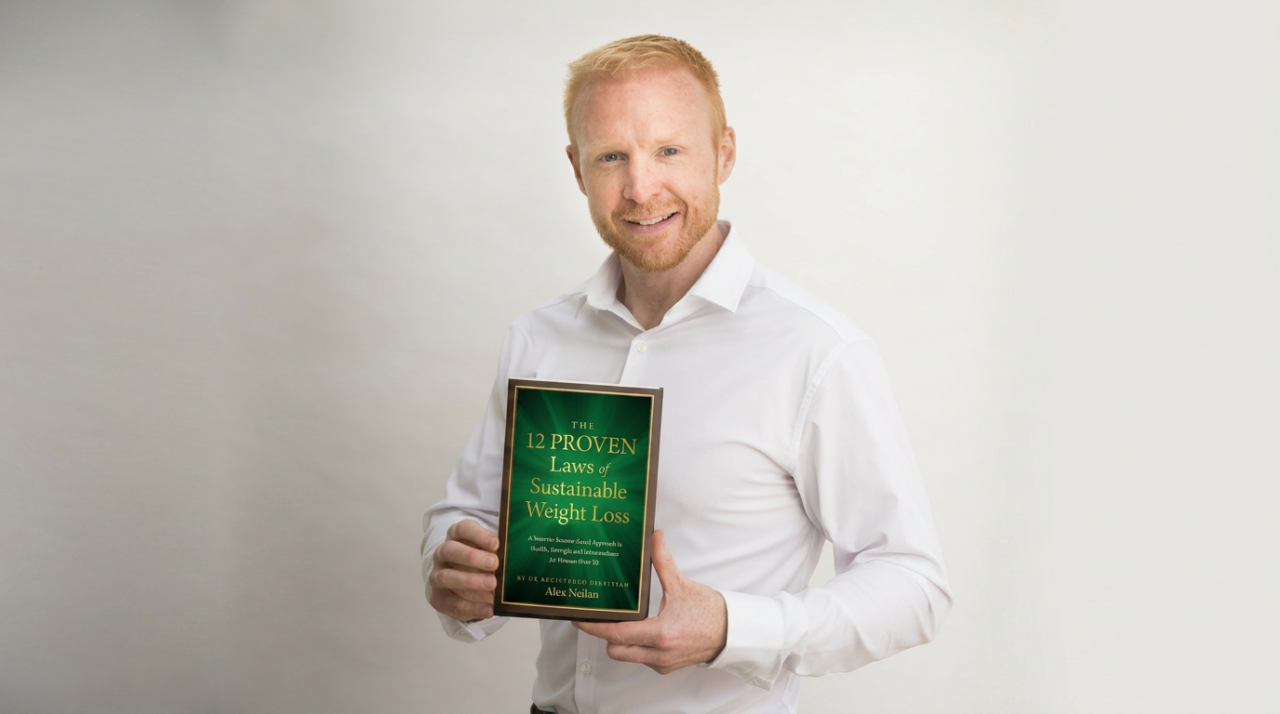
Alex Neilan, a registered dietitian, designed his Sustainable Change Programme with women over 50 as its priority. Neilan says he was bullied from a young age with names like “Fat Boy”, “Not Slim” and “FRED”, meaning “Fat and Red”, a reference to his weight and red hair. He grew tired, he says, of being defined by how he looked. After losing the weight himself, he turned to helping other people do the same, and to do it in a way that lasts.
Why “eat less, move more” alone will never work
Neilan’s programme assumes that food and movement are only part of the work. It provides access to qualified dietitians, psychologists, physiotherapists, medical consultants and long-term behaviour change specialists, so women are not left to manage mindset, pain barriers and emotional eating alone.
The tools focus heavily on behaviour change, including boundary setting and shifting black-and-white thinking, so the plan can survive a difficult week. Information alone, on Neilan’s account, is never enough for sustainable change: it has to be delivered in a way that is clearly understood and then implemented in daily life. Without implementation tools, results rarely last.
Unique, but not special
“Denny, because of the spinal stroke, you are never going to walk again.”
Partially deaf, Denny turned to her husband Hugh for support.
“Can you ask him to repeat that?”
Hugh did not look at her.
“He says you will never walk again.”
Denny had already undergone two knee replacements. She had worked relentlessly through rehabilitation. She had done everything asked of her. Now she was being told she would never walk again.
As a nurse, she understood exactly what those words meant. She knew the limitations this diagnosis would place on her life and on her husband’s life. In that moment, the image she held of an active and fulfilling retirement began to fade.
She had spent her career caring for others. Now it felt as though her independence and future were slipping away.
Life can be cruel.
Over the next five years, her weight gradually increased.
As a qualified nurse, she believed she should be able to manage her weight alone. For years, she told herself she already knew what needed to be done. Asking for help felt too close to admitting failure.
But knowledge alone was not enough.
She also knew something else. Coaches have coaches. Leaders have mentors.
When you are used to being the one who supports everyone else, stepping into the role of the person who needs support is not easy.
For Denny, asking for help was the hardest part.
Eventually, the fear of further deterioration outweighed the fear of asking for help. She accepted that there were things she could not see clearly on her own.
When she approached Neilan’s team, she was clear about what she wanted.
She wanted to prove her consultant wrong.
She wanted a full life.
Asking for support did not feel like giving up. It gave her clarity and a plan she could trust. Most importantly, it helped her feel she was doing everything she could to improve her prognosis.
On their first call, Neilan asked her a simple question:
“Is there an item of clothing you would love to fit back into?”
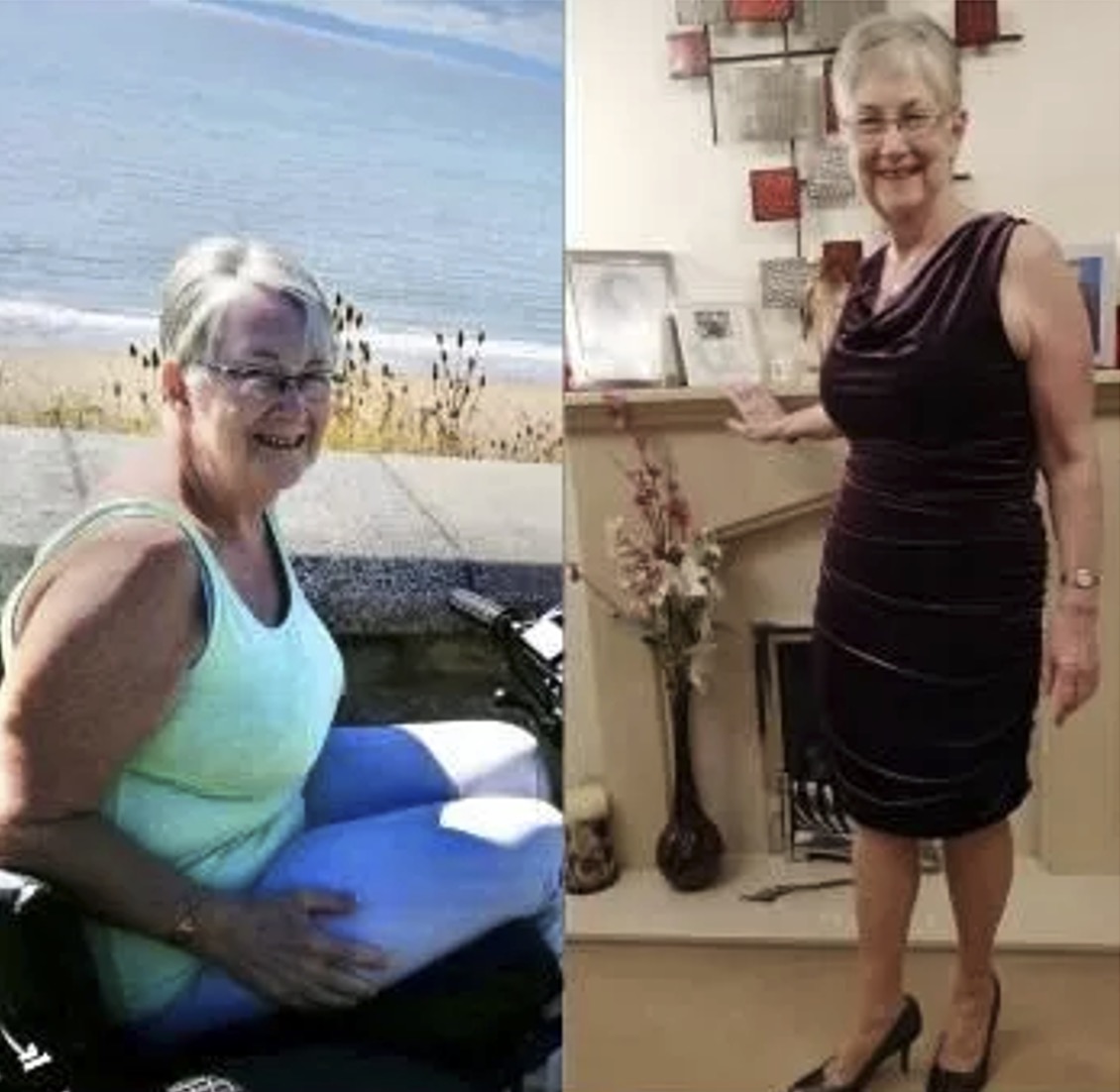
Before he had finished the sentence, she had sent Hugh to the loft to retrieve her size 10 purple dress.
She wanted something tangible to anchor her belief.
The challenge was set.
Then life tested her resolve again.
The following year, Hugh passed away from a brain tumour. Before his death, he asked her to promise him one thing.
“This changes nothing,” he said. “You have talked about a parachute jump for years. Promise me you will do it.”
After Hugh died, Denny honoured his life by planting an orange rose garden.
Today, she is out of her wheelchair and walking again. She is back in her purple dress.
She has completed three Tough Mudder obstacle courses for charity. On her seventieth birthday, she jumped out of an aeroplane to raise money for Stroke.org.
She kept her promise.
Denny’s story shows how belief, persistence and the right support can shift what once felt fixed. At the beginning, she did not believe this outcome was possible. She simply knew that accepting her fate was not an option.
With practical tools and consistent guidance, she moved from hoping to feel comfortable in her wheelchair to walking again and helping others.
Not everyone will face the same circumstances as Denny. Her story is not shared to invite comparison, but to level the playing field. Denny is unique, but she is not special.
That distinction matters, because it undercuts the reflex that says: “They can do it, but I cannot.” Everyone faces limitations and personal challenges, but those limitations do not have to define the rest of a life.
How to join the free community
Readers who would like additional support can join the free community by following the link below and clicking the join button.
Click here to join the Sustainable Change Programme
Inside the community, members are offered structure, guidance and support intended to help them drop two dress sizes sustainably, alongside other women walking the same path. There is no requirement to have finished the book first: the support is designed to run alongside it.
Neilan’s argument is that waiting to feel motivated is the wrong order. It is the act of starting, he says, that creates motivation, momentum and the first meaningful step forward.
The book as a tool for change
Midlife weight loss advice often turns into a moral lecture. Too many plans treat discipline as the missing ingredient, even when the real friction lies in menopause shifts, chronic illness flare-ups, joint pain and the kind of fatigue that makes “just cook from scratch” unrealistic.
Neilan’s book, The 12 Proven Laws of Sustainable Weight Loss, is built on different assumptions. It centres on behaviour change and cognitive restructuring, based on the understanding that sustainable change depends more on pattern recognition, boundary setting, reflection, environmental optimisation and self-talk than on perfect days.
The book speaks directly to women over 50 who have tried strict dieting, watched it unravel and then blamed themselves for the rebound. It reframes that cycle as a failure of the approach, not the individual, placing real lifestyle constraints on the page instead of dismissing them as excuses.
The aim is to help readers identify blind spots and unseen patterns, especially when their bodies and schedules are not cooperating.
At a stage of life when time, energy and health feel more finite, empathy-led design becomes more than philosophy. It becomes a necessity.
For Neilan, this is about more years in your life and more life in your years: walking further, travelling more, exploring new ground and playing with grandchildren, if you have them. It is about resisting the quiet cultural narrative that says our world should shrink as we age.
A full life, on his reading, is not a luxury but a responsibility – and the greatest gift we can give the people we love is our continued presence, strength and shared experiences.
The editorial unit






















Facebook
Twitter
Instagram
YouTube
RSS