
Scientists uncover why ancient artwork retains such vibrant colours
 12 October 2026
Egyptian artefacts are a major focus for UK museums. The British Museum holds one of the largest and most comprehensive collections outside Egypt, with over 100,000 objects that span more than 3,000 years.
The enduring appeal of ancient history
Egyptian art is so well preserved that it has become a visual identity in its own right. The Ancients podcast by History Hit explores this art and how it was used to record real events. 1994’s Stargate opens with an archaeological discovery at Giza and recasts Ra as the alien ruler of a distant world, where pyramids and Egyptian gods are merged with an extraterrestrial civilisation. 2016’s Gods of Egypt transforms Egyptian mythology into a fantasy story focused on Horus and Set, who often feature in ancient artefacts.
Horus also turns up in Egyptian-themed video and online games. Those who explore exclusive Vegas promotions will notice that titles built around ancient Egypt are a familiar sight, as the theme is instantly recognisable and gives newcomers to online gaming platforms a comfortable starting point. Designers borrow the ankh, Anubis, the falcon and the Eye of Horus itself, all of which reference ancient history and artwork.
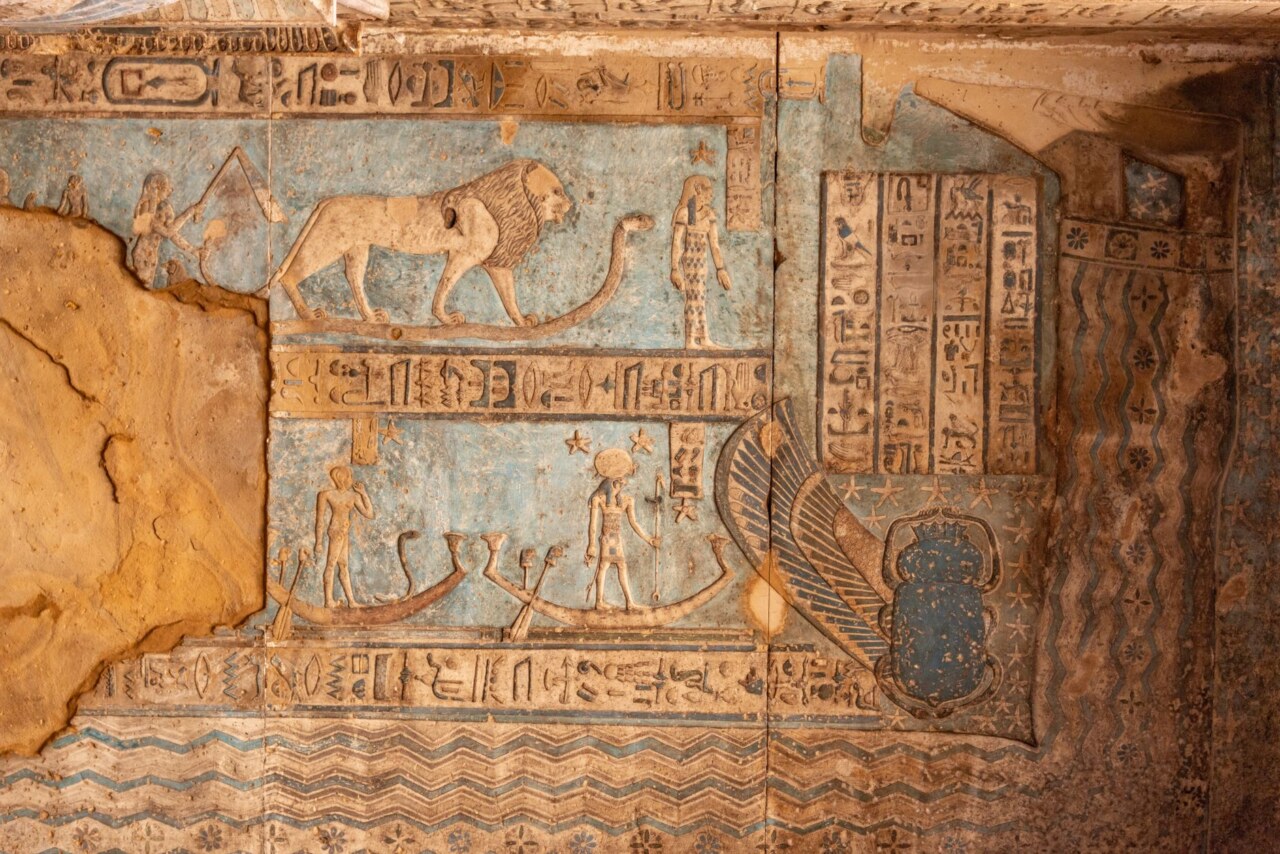
As Egyptian artwork is recognisable, researchers have spent years trying to uncover the secret to its long-lasting vibrancy. Using mass spectrometry-based proteomics, artefacts that date back to 1425 BC were put under the microscope.
Researchers found that proteins remained in the materials used by artists. Glue was made from animal collagen, and plant proteins from moringa and sesame were also among the ingredients. Materials like these had not previously been documented in ancient artwork.
Pigments and binding materials
Paint surviving for thousands of years is not simply the result of a dry climate. Artists spent years blending pigments and binding materials to see whether the paint would adhere to surfaces. Interestingly, moringa is associated with the god Ptah, who is linked to craftsmanship.
Proteins found in wheat, barley and rye were also uncovered, suggesting that flour-based pastes could have been used. Egyptians even invented the world’s first synthetic pigment.
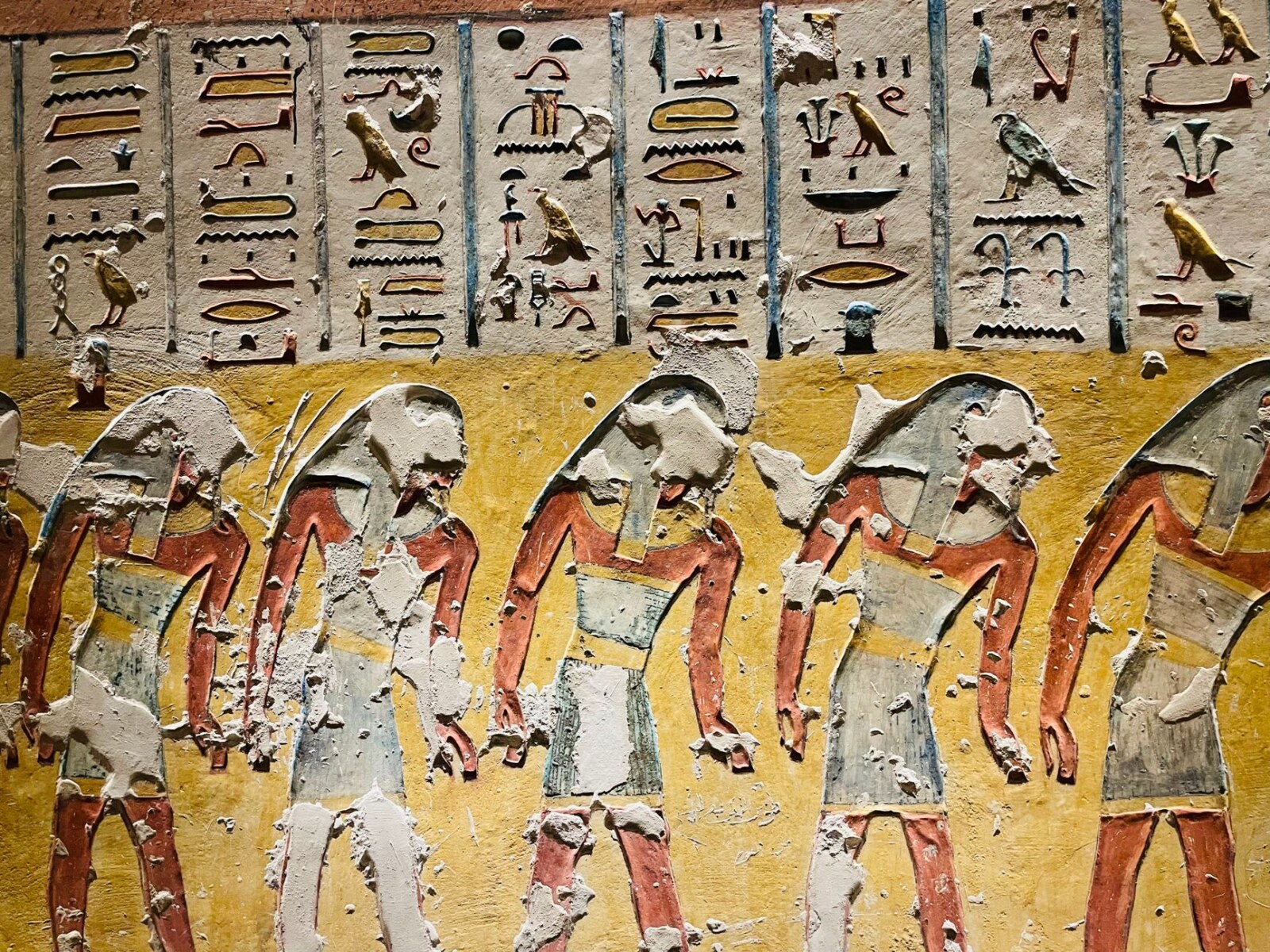
Egyptian Blue was created using calcium copper silicate, along with faience, which helped to give the paint a glowing shimmer. Minerals such as malachite, ochre and huntite were also ground into rich powders to create green, yellow, red and white. These were mixed with a precise recipe of binding agents and glues to ensure that the colour set, preventing fading.
Even though Egyptian art is instantly recognisable, it was not always meant for the public eye. Much of it was sealed inside tombs and temples to help the dead as they navigated the afterlife.
Figures often combined profile and frontal views to show each body part in its clearest form, and important figures such as pharaohs were drawn much larger than servants to show their divine power. Mathematical grids were also used to draw the human body, ensuring fixed proportions. Even though Egypt was home to many artists, the style of ancient art is highly standardised, with little room for individual variation. This is because the art served a purpose and its style was tied to deep-rooted beliefs.
The editorial unit






















Facebook
Twitter
Instagram
YouTube
RSS