Vanessa Bell & Duncan Grant: Inside Bloomsbury at Tate Britain
An intimate portrait of how these British painters challenged conventional boundaries between art and everyday life
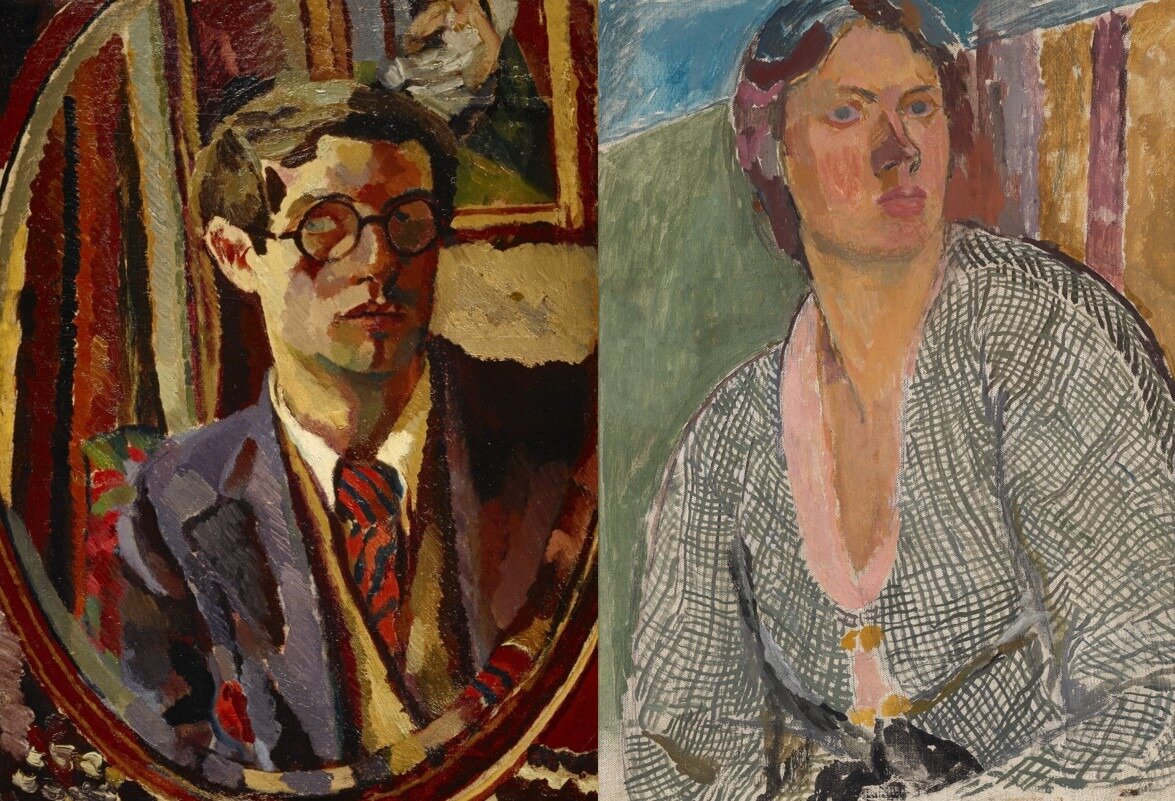
Following a creative partnership spanning more than five decades, the Vanessa Bell & Duncan Grant: Inside Bloomsbury exhibition at Tate Britain offers an intimate portrait of how these British painters challenged conventional boundaries between art and everyday life, and traces their evolving influences. As members of the Bloomsbury Group, Bell and Grant shared unconventional attitudes towards art, relationships, sexuality and social freedom, alongside Bell’s sister, writer Virginia Woolf. Showcasing more than 300 works, the exhibition’s largely chronological arrangement traces their individual development and shared influences, while their reconstructed Charleston home studio provides a particularly evocative culmination.
Beginning with a pastel-pink room of portraits and self-portraits, the exhibition explores identity, attraction and how the artists perceived each other. Grant’s implicitly queer, sensual self-portrait presents an unflinching gaze in Study for Composition: Self-Portrait with a Turban. Bell’s varied brushwork and experimental use of colour reflect Post-Impressionist abstraction in Duncan Grant in Front of a Mirror, capturing a moment of observation that catalysed her love for him. The room introduces their individual artistic identities while conveying their complicated but enduring affection for one another.
The artists’ earlier, more traditional paintings in the second room establish their artistic development. The thicker paint, detailed brushwork and earthy, muted palette reflect a more traditional approach to realism. The black backdrop and sombre darkness in Bell’s portrait of her father exude coldness and restraint, echoing his adherence to restrictive Victorian gender roles and female subordination. Their different upbringings shaped their artistic training, with Grant’s exposure to modernist art in Paris and Bell’s studies at the Royal Academy, alongside founding the Friday Club to provide opportunities for artists excluded from its traditional structures. The exhibition clearly foregrounds their separate identities before tracing their partnership without diluting their individualism.
Visitors are encouraged to adjust to the increasingly abstract compositions, featuring side-by-side comparisons of Grant and Bell’s work on the same subjects. Grant’s collage-based The Mantelpiece provides a point of comparison and helps visitors interpret Bell’s more abstract versions, which can feel disorienting. Roger Fry’s 1910 Post-Impressionist exhibition initially provoked ridicule from British audiences but inspired a new generation of artists. Bell’s The Bathers, Studland Beach and Studland Beach depict the same location a year apart. The earlier work’s detailed figures and subdued colours contrast with the later painting’s simplified forms, heightened colours, sharp lines and reduced facial features, reflecting her growing abstract style.
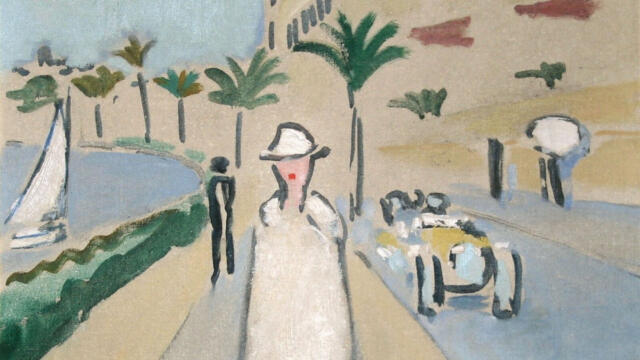
The exhibition also explores the Omega workshops, founded by Fry in 1913, where Bell and Grant became co-directors. These workshops produced vibrant furniture, textiles and ceramics, with works bearing an anonymous Greek omega to signify collective authorship. It also explores their commissioned work, postwar travels and private lives, featuring Virginia Woolf’s book covers and the Famous Women Dinner Service that celebrated historical and contemporary women. Displayed on its own wall, the dinner service offers a striking visual contrast to the framed paintings, and the uncertainty surrounding individual authorship of each plate is a revealing example of their collaborative approach. Their postwar travels through Paris, Italy and the South of France inspired more naturalistic depictions, with an emphasis on colour, light and atmosphere.
A small, enclosed section explores Grant’s sexuality through deep purple walls and displays of male nudes and sexual imagery, reflecting the private nature of the works and the criminalisation of homosexuality in Britain at the time. As the curator suggests, these paintings offered an outlet for desires Grant could not openly express, inviting visitors to consider the more private aspects of his identity.
Surrounded by paintings anchored in peaceful family life, golden hazy pastels and rural, domestic settings, the final room holds the reconstructed Charleston studio, where Bell and Grant lived and worked together. Featuring 550 objects from Charleston, their former home in Sussex, visitors can observe books, records, characterful patterned furniture and children’s drawings hanging from the mantelpiece. Grant’s worn paintbrushes sit in a pot beside his final portrait of Bell in old age, lending a sentimental dimension. Together, these details make the reconstruction feel cosy and personal, allowing visitors to imagine the artists painting, raising their children and exchanging ideas there. Their daughter Angelica’s description of it as a “sanctuary in which I spent the most treasured hours of my life” consequently resonates more strongly. The space feels inhabited and thoroughly lived-in, from the rug to the indented sofa, reinforcing its role as the creative heart of the house.
The exhibition succeeds in presenting art as inseparable from everyday life and its influences, while presenting Bell and Grant as distinct artists and lifelong creative companions.
Jennifer Hensey
Images: 1. Duncan Grant Self Portrait c.1920. National Galleries of Scotland. © Estate of Duncan Grant. All rights reserved, DACS. 2. Vanessa Bell Self Portrait c.1915. Yale Center for British Art, Paul Mellon Fund.
Vanessa Bell & Duncan Grant: Inside Bloomsbury is at Tate Britain from 12th November until 11th April 2027. For further information or to book, visit the exhibition’s website here.
- 1
- 2
- 3
George Michael: The Faith Tour
Antonia Georgiou
- 4
La Roux – Old Flames
Mark Worgan
- 5

Andrew Lloyd Webber’s Starlight Express: Live on Stage
Jennifer Hensey
How to Rob a Bank
Antonia Georgiou
Cloud 9 at the National Theatre
Dionysia Afolabi
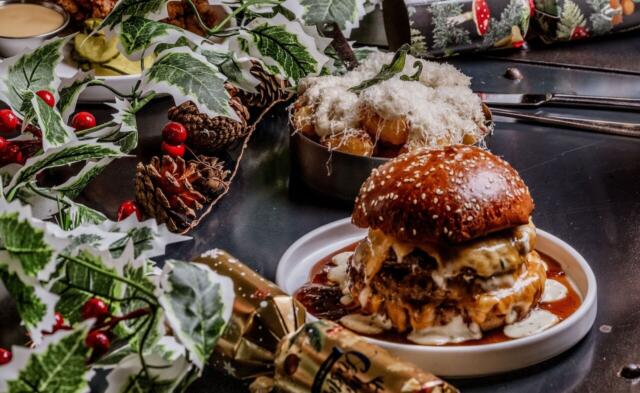
Burger & Beyond launches Christmas menu in London and Brighton
Food & Travel Desk

Fjord
Selina Sondermann
Nick Ward – Year of the Snake
Dionysia Afolabi
Hunting Alice Bell
Antonia Georgiou