
Yinka Shonibare and Thomas Gainsborough: A Conversation at the National Gallery
 28 October 2026
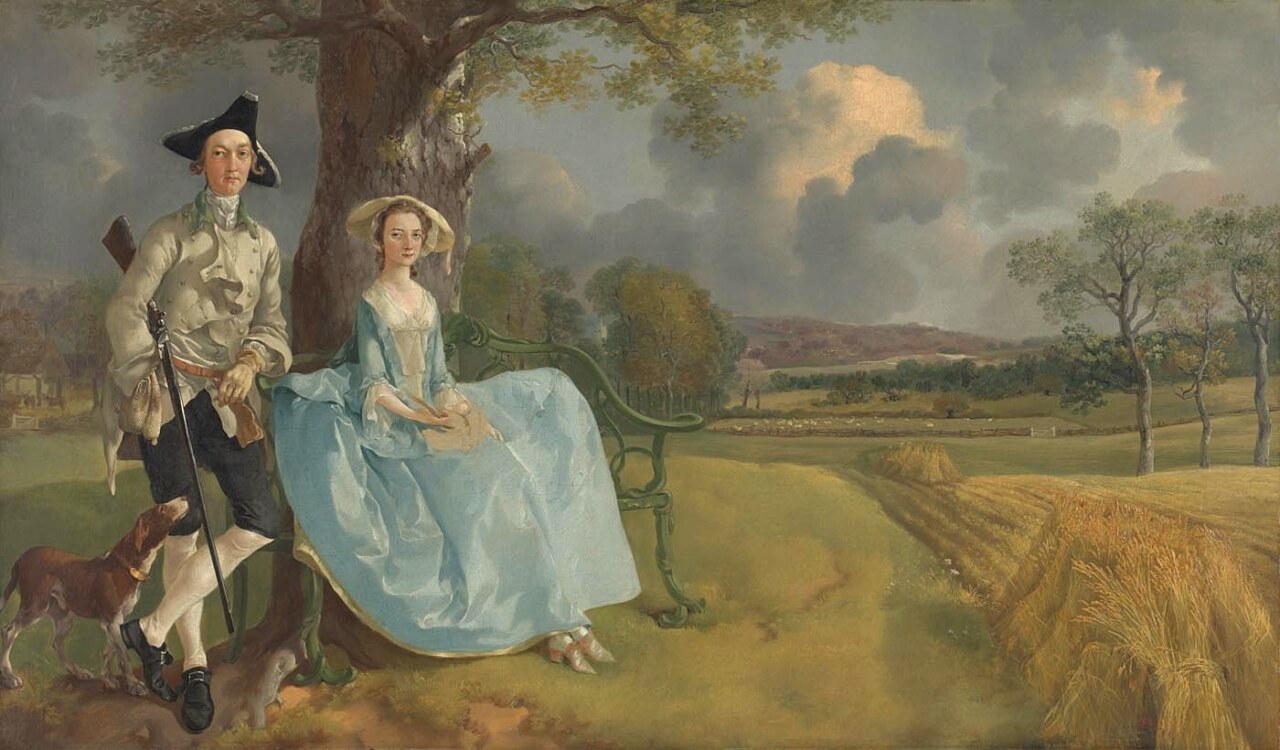
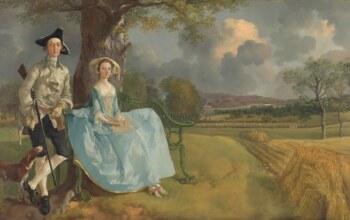
In 1953, an exhibition of four British artworks was held in Paris to mark the succession to the throne of Queen Elizabeth II. One will be familiar to any regular visitor to London’s National Gallery: Thomas Gainsborough’s Mr and Mrs Andrews (1750). A so-called conversation piece blending portraiture and landscape, the work depicts a wealthy, newly married couple in the bucolic setting of their near 3,000-acre country estate near Sudbury. Robert Andrews stands in full hunting garb, gun slung under his arm and loyal dog at his side. His wife, Frances, sits in a bonnet and blue satin dress on a bench beside him, the church where they had been married two years previously visible among a cluster of trees in the distance. An area left unfinished on her lap has led art historians to speculate that it was intended to be a pet, a dead pheasant or an infant. The young couple share the foreground with an oak tree that still stands there today. Long since symbolic of stability at the heart of British society, there’s good reason why its leaves were chosen as the emblem of the National Trust.
Renowned as one of his country’s finest portraitists, Gainsborough expressly would have preferred to devote himself to landscape painting and something of that is borne out by his detailed treatment of the surrounding countryside. The ploughed field of corn is captured with such veracity that the artist evidences the usage of a horse-drawn seed drill. Invented in 1701 by Jethro Tull, the agriculturalist (not the prog rock legend), the drill had revolutionised farming. When all is said and done, the viewer might read the image not as one of marital bliss but as a visual metaphor for the continuity of Britain’s wealth, class and land ownership.
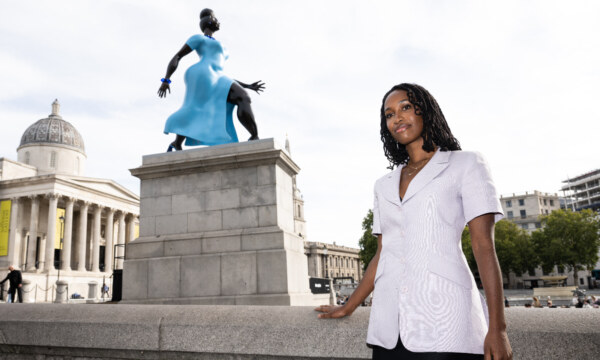
This year, to commemorate the tricentenary of Thomas Gainsborough’s birth, the National Gallery is holding a small but provocative exhibition. Director Sir Gabriele Finaldi and his team have moved Mr and Mrs Andrews to room one to be displayed opposite Anglo-Nigerian artist Yinka Shonibare’s sculptural reimagining of the painting from 1998. As the title suggests, Mr and Mrs Andrews Without Their Heads sees the 18th-century landowners deprived of their rather self-satisfied and disdainful bonces. Perhaps best known for his giant Nelson’s Ship in Bottle work on Trafalgar Square’s Fourth Plinth back in 2010, Shonibare has gained a reputation for his engagement with colonialism, post-colonial hybridity, race and class.
In his life-size reincarnations of Mr and Mrs Andrews, the London-born sculptor clothes the couple in vibrant African wax prints. Although tending to be associated with African identity, the fabrics were originally made in Europe for Indonesian markets before being adopted by West Africa, where they became symbolic of African independence. Regarding himself as a “post-colonial hybrid”, having been born in London but brought up in Nigeria, the artist personally identifies with these cultural tensions. Mr and Mrs Andrews Without Their Heads, however, reveals him alluding to the connection between the couple and networks of global colonial exploitation and exchange. Robert Andrews’s father, it transpires, owned ships which traded with British colonies; the contemporary artist here thus implies those vessels were involved in the slave trade. And the headless state of the figures surely serves to disrupt the original serenity of the painting, conjuring up a sense of the displacement, dehumanisation and loss at the heart of colonialism. It’s classic Shonibare, biting satire wrapped in a playful cloak of humour.
James White
Image: Mr and Mrs Andrews by Thomas Gainsborough (about 1750) © The National Gallery, London
Yinka Shonibare and Thomas Gainsborough: A Conversation is at the National Gallery from 15th October until 7th February 2027. For further information or to book, visit the exhibition’s website here.





Facebook
Twitter
Instagram
YouTube
RSS